
How to Identify the French 40 Francs Gold (Napoleon)
An early 19th-century French gold coin bearing Napoleon Bonaparte's portrait, issued in different styles as he rose from First Consul to Emperor.
Read the full French 40 Francs Gold (Napoleon) encyclopedia entry →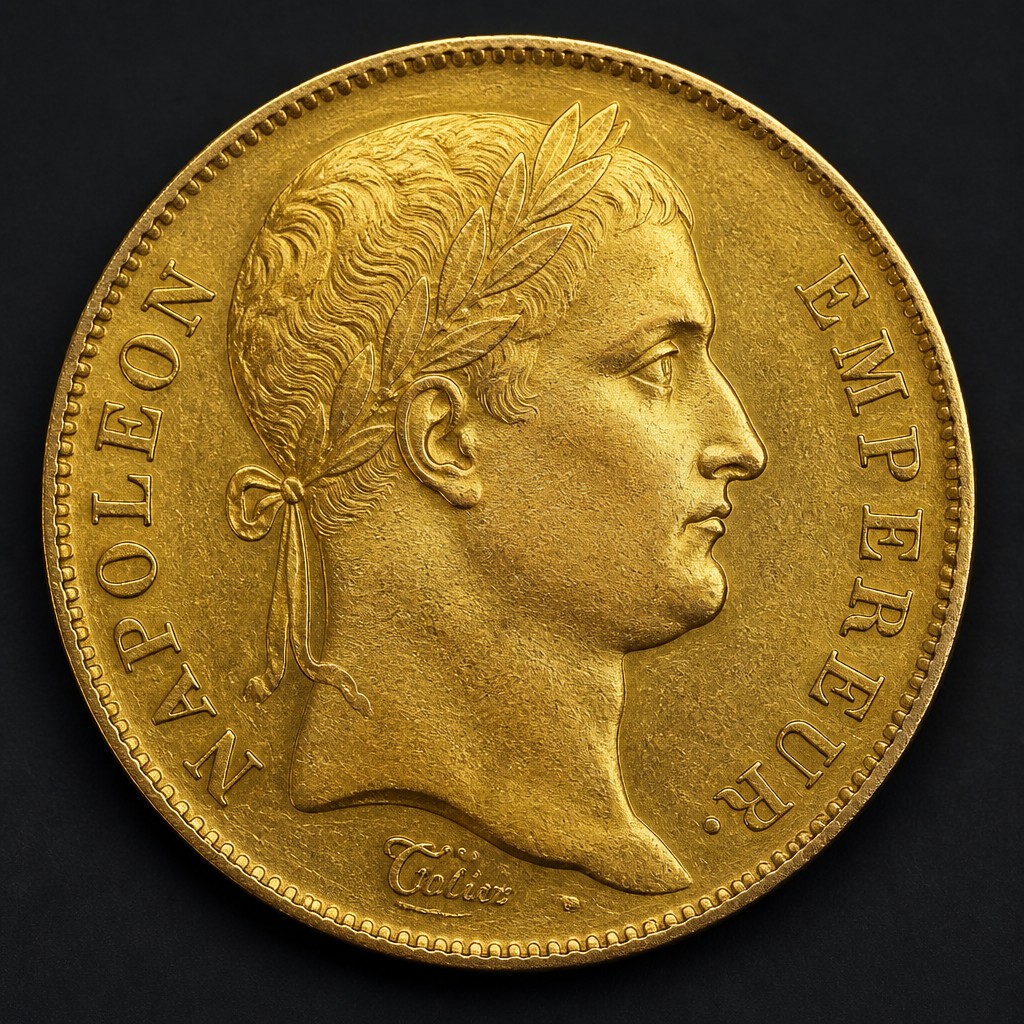
What It Is
The 40 francs gold piece was introduced under the French Consulate and Empire in the early 1800s as part of Napoleon's new decimal gold coinage. It circulated during a period when France was replacing the old livre system, and its portrait changed over time to reflect Napoleon's evolving political status.
Obverse Design
Early strikes show Napoleon Bonaparte as "Premier Consul" with a bare head facing right and the legend "BONAPARTE PREMIER CONSUL." After he became emperor, the obverse was changed to "NAPOLEON EMPEREUR" with a laureate head, showing him crowned with a laurel wreath in the Roman imperial style.
Reverse Design
The reverse carries the denomination "40 FRANCS" within or below a wreath, along with the date and, on Republic-era issues, references to the Republic ("REPUBLIQUE FRANCAISE"); later issues after the Empire was declared show "EMPIRE FRANCAIS" instead.
Size, Weight, and Metal
The coin is struck in .900 fine gold, weighing approximately 12.9 grams with a diameter around 26 mm. The edge carries an incuse or raised lettered inscription depending on the exact type, often a motto used on French gold coinage of the era.
Mint Marks and Where to Find Them
A mint mark letter (identifying the French provincial mint that struck the piece, such as A for Paris) appears on the reverse near the date, along with a mint director's privy mark, a small symbol unique to the official overseeing production at the time.
Telling It Apart from Similar Coins
The 40 francs is often confused with the more common 20 francs gold Napoleon, which shares the same portrait styles but is smaller and lighter. Always compare diameter and weight, since worn coins can look deceptively similar at a glance. Later 20-franc "Napoleon" restrikes from the Second Empire (Napoleon III) also share the family name but show a different, younger portrait and different dates.
Judging Condition at a Glance
Look at the high points: Napoleon's cheek, ear, and hair curls, or the laurel leaves, for signs of flattening. A sharp, well-centered strike with clear denticles around the rim indicates a higher-grade example, while soft details and heavy rim wear suggest a well-circulated coin.
Authenticity Red Flags
Because early Napoleon-era gold has been reproduced and lightly gold-plated in copies for over a century, check weight and diameter carefully, verify the edge lettering matches the correct type for the date range, and be suspicious of coins with mushy details, incorrect coloring, or an edge that shows a plating seam.
Frequently asked questions
Why do some 40 francs coins say 'Premier Consul' and others say 'Empereur'?
The wording reflects Napoleon's changing title: early coins from the Consulate period call him First Consul, while later coins minted after he crowned himself emperor use the imperial title.
How is the 40 francs different from the common 20 francs gold Napoleon?
The 40 francs is larger and heavier, at roughly 12.9 grams versus about 6.45 grams for the 20 francs, even though the portrait styles look similar.
What metal purity is used?
It is struck in .900 fine gold, the standard purity for French gold coinage of that era.
Where is the mint mark located?
Look on the reverse near the date for a single letter identifying the mint city, plus a small privy mark symbol for the mint official.