How to Identify the France 20 Centimes
A collector's guide to recognizing the French Fifth Republic 20 centimes by its Marianne profile, laurel-branch reverse, gold color, size and marks.
Read the full France 20 Centimes encyclopedia entry →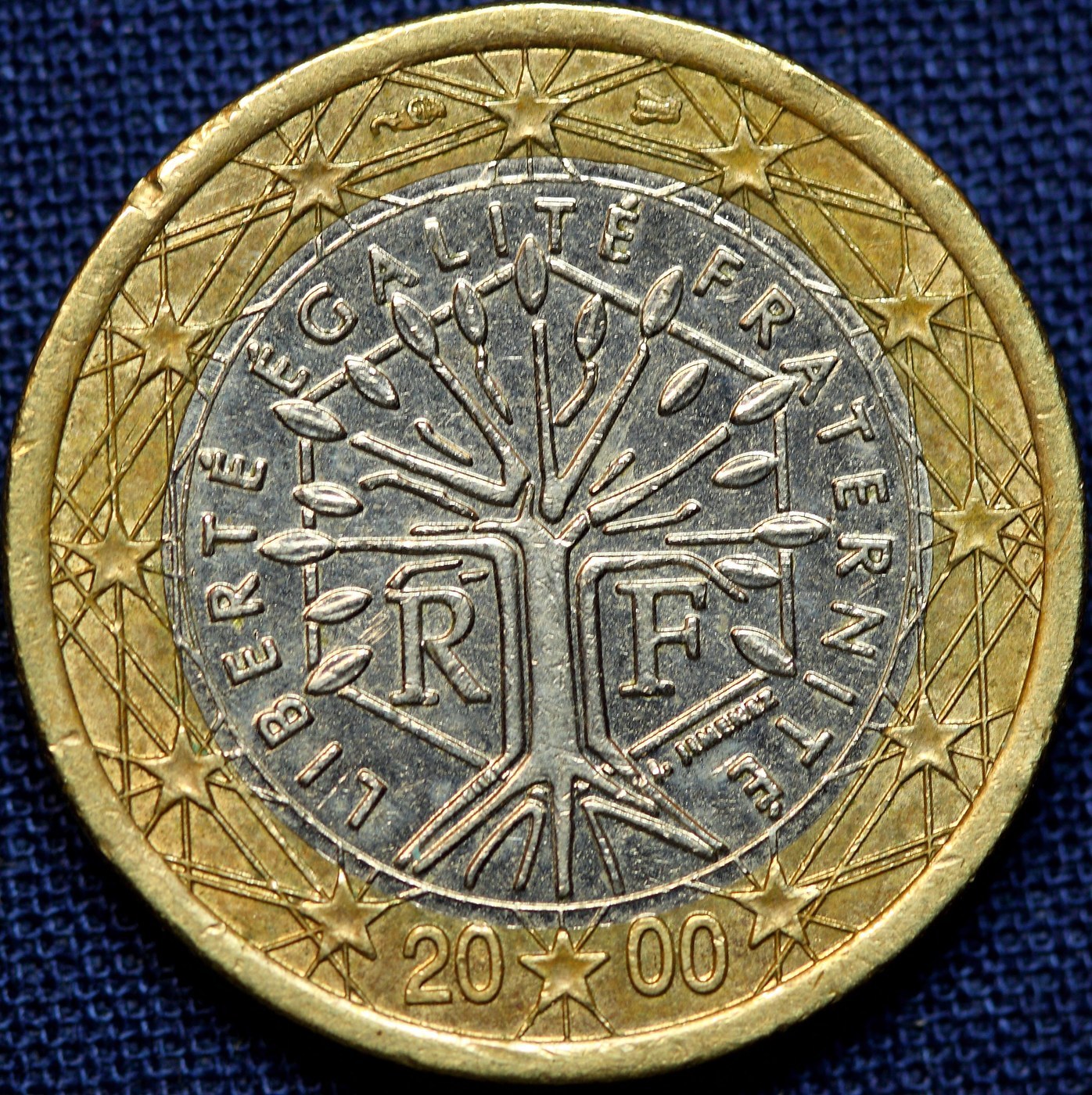
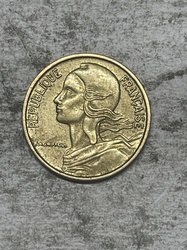
Start with the two faces together. A genuine France 20 Centimes of this type pairs a profile of Marianne with the legend RÉPUBLIQUE FRANÇAISE on the obverse against a reverse showing the value 20 CENTIMES beside a laurel branch. Seeing Marianne on one side and the "20 CENTIMES" value with the laurel and the motto LIBERTÉ ÉGALITÉ FRATERNITÉ on the other confirms you have the Fifth Republic centime type rather than a different French denomination.
Use color and size as a fast screen. The coin is a gold-toned aluminum-bronze — brass-like in appearance — and is small and thin, roughly 23–24 mm across and about 4 grams. That warm color immediately separates it from the silvery French franc coins, while its light weight and non-magnetic feel rule out steel-based look-alikes. If a coin of this design is magnetic or noticeably heavy, treat that as a warning.
Read the date and the small marks. The date sits on the reverse and should fall in the 1962–2001 range; a year-2000 coin like the reference example is a late issue near the euro changeover. Near the date you will find tiny mint marks and engravers' privy symbols (the différents) — small letters or emblems that identify the mint and its officials. These are easy to overlook but matter for precise cataloguing.
Distinguish it from its neighbors and look-alikes. France issued related small centime coins (such as 5 and 10 centimes) with a similar Marianne style and gold color; the deciding factor is the denomination text, so confirm it reads 20 CENTIMES and not another value. Do not confuse it with the later euro-cent coins, which carry euro designs and "EURO CENT" wording rather than "CENTIMES" and the French Republic legend.
Keep authentication in proportion. This is a common, low-face-value circulation coin rather than a high-value target, so elaborate forgery is unlikely; the practical risks are misreading the denomination, confusing it with a sibling centime, or mistaking a cleaned coin for original. Verify the value text, the gold aluminum-bronze color, the size and the date, and judge condition by the sharpness of Marianne's profile and any remaining original luster.
Frequently asked questions
How do I tell the 20 centimes from the 5 or 10 centimes?
They share the Marianne style and gold color, so read the denomination text on the reverse. Only the 20 centimes states 20 CENTIMES beside the laurel branch.
What size and weight should it be?
About 23–24 mm in diameter and roughly 4 grams, in a light, non-magnetic gold-colored aluminum-bronze. A magnetic or much heavier coin of this design is a red flag.
Where are the mint marks?
Look near the date on the reverse for small letters and privy symbols (the différents). They identify the mint and engravers and help pin down the exact issue.
Is it the same as a euro cent?
No. The euro cent carries euro designs and EURO CENT wording. This coin says 20 CENTIMES with RÉPUBLIQUE FRANÇAISE and Marianne, marking it as a pre-euro franc-era piece.
France 20 Centimes identified by the community
Recent France 20 Centimes coins identified with Coin Identifier.