
How to Identify the Five Guineas of George II
A collector's guide to recognizing the George II gold Five Guineas by its left-facing laureate portrait, crowned royal-arms shield, large size, and edge inscription.
Read the full Five Guineas of George II encyclopedia entry →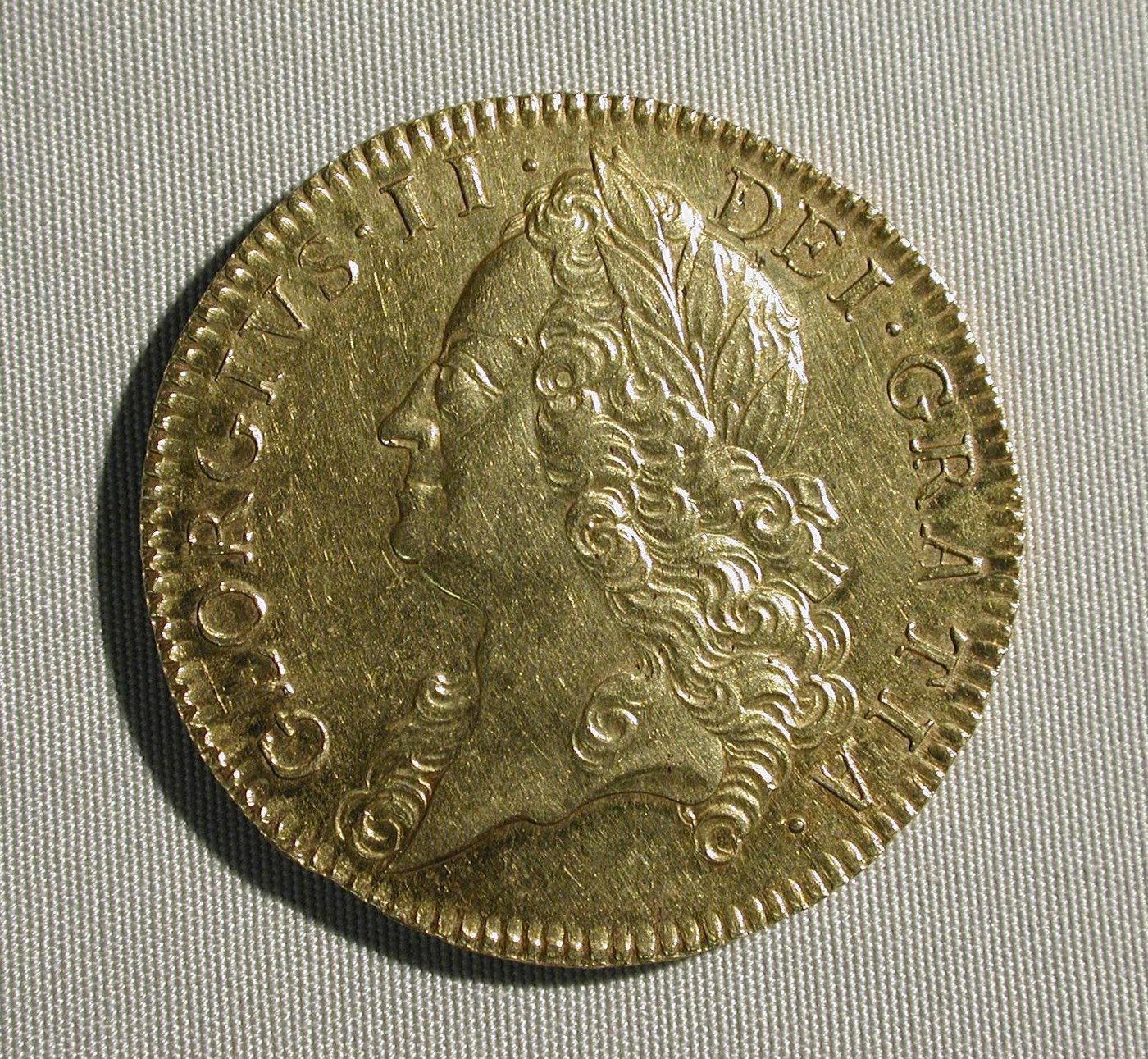
Begin with the portrait. The obverse shows George II facing left with a laureate head, encircled by the abbreviated Latin legend beginning GEORGVS II D G. Confirming that the profile faces left and that the legend names George the Second is the first step, and it immediately separates the coin from the right-facing gold of George I and from the differently styled coinage of earlier reigns.
Read the reverse carefully. Look for a single large crowned heraldic shield bearing the quartered royal arms, richly garnished and set within a Latin legend. This crowned-shield reverse is characteristic of George II's Hanoverian gold; a cruciform arrangement of separate shields or another layout points to a different reign or type.
Assess size, metal, and edge. The Five Guineas is a large, heavy gold coin, the biggest gold denomination of the reign, so weigh and measure the piece and compare it against published specifications to separate it from the smaller guinea, half-guinea, and two-guinea pieces. As a milled coin it should have a regular round flan and, typically, an inscribed edge rather than a plain or merely grained one; the edge lettering is an important authentication feature.
Check portrait type and provenance marks. Note whether the laureate head is the younger style of the earlier issues or the older style of the later ones, and look below the bust for provenance marks such as the East India Company initials or the word LIMA. Confirm the date in the reverse legend, since the denomination was struck only in a limited number of dated issues across the reign, and date and variety matter greatly to attribution and value.
Authenticate with care. Because the type is famous and valuable, cast copies, electrotypes, and modern replicas are common. Watch for casting seams, bubbles, soft or mushy detail, incorrect weight or diameter, a wrong or missing edge inscription, and lettering that lacks the crispness of machine-struck work. For any coin of meaningful value, seek an opinion from a specialist in English milled gold or a reputable grading service before purchase.
Frequently asked questions
Which side is the obverse?
The side with the laureate, left-facing portrait of George II and the legend beginning GEORGVS II D G is the obverse. The large crowned heraldic shield of the royal arms is the reverse.
How do I tell the Five Guineas from a single guinea?
By size and weight. The Five Guineas is much larger and heavier than the guinea, half-guinea, and two-guinea pieces. Weigh and measure the coin against published specifications, since the designs are related but the modules differ.
What are the marks under the bust?
They are provenance marks recording the source of the gold, such as the East India Company initials on certain early strikings or the word LIMA on treasure-gold issues. Coins may appear with such a mark or with none, and noting which is present helps with attribution and value.
Why does the edge matter for authentication?
As a milled coin, the Five Guineas normally carries an inscribed edge. A plain, wrong, or poorly formed edge, along with off specifications for weight and diameter, is a warning sign that a piece may be a copy.