
How to Identify the Finnish Markka
The Finnish Markka was Finland's currency until the euro's adoption, with coins commonly featuring the Finnish lion coat of arms, simple numeral denominations, and clean Nordic design styling.
Read the full Finnish Markka encyclopedia entry →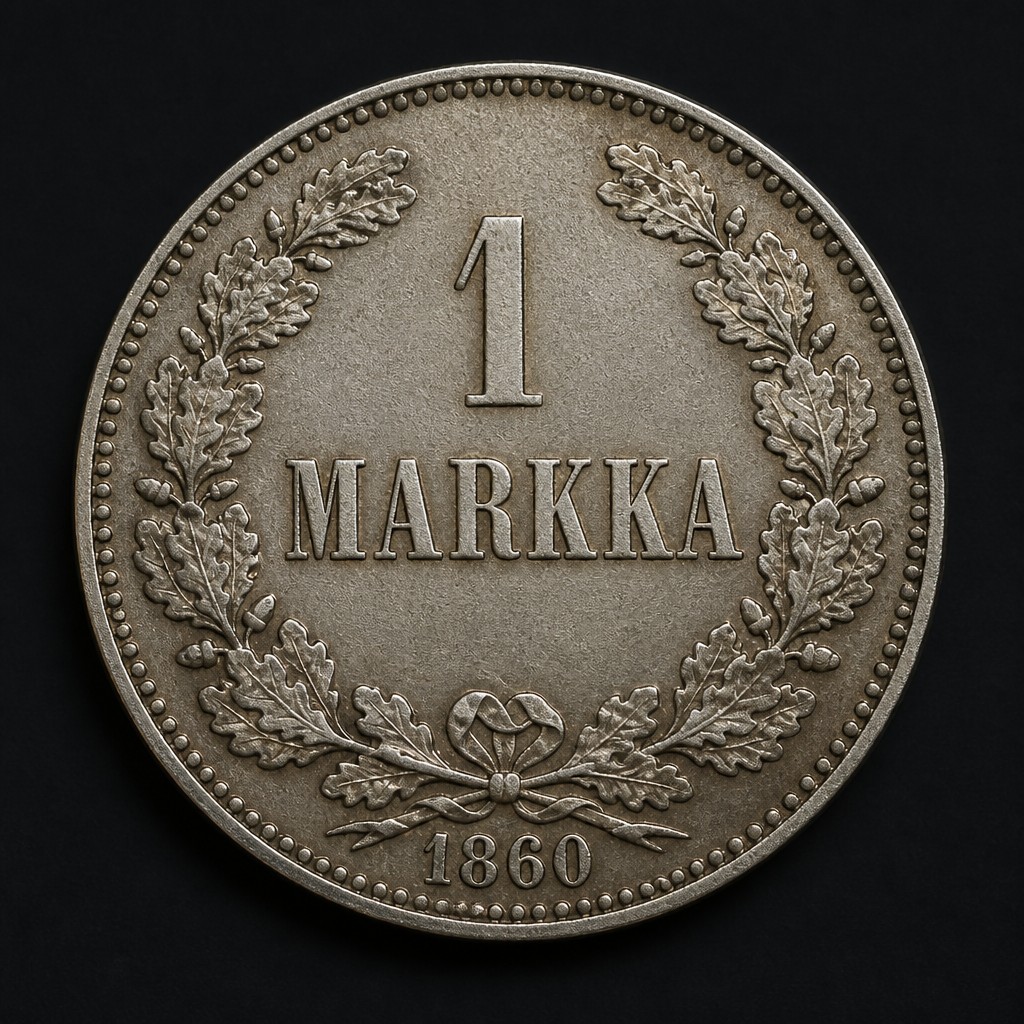
What It Is
The markka (plural markkaa) was Finland's official currency from the 19th century until it was phased out in favor of the euro in 2002. Coins were issued across many decades under both the Russian Grand Duchy period and, later, independent Finland, resulting in a range of design types collectors may encounter. Coins from after Finnish independence in 1917 are generally the most commonly found today and are the focus of most everyday identification questions.
Obverse Design
Independent Finland's markka coins typically feature the Finnish coat of arms: a crowned lion standing on its hind legs, wielding a sword, trampling a curved sabre, set against a field of small roses. This heraldic lion is the most recognizable identifying feature across most 20th-century issues.
Reverse Design
The reverse generally displays the denomination in large numerals (such as "1," "5," "10," or "50"), along with the word "MARKKAA" or "PENNIÄ" (for the smaller sub-unit) and the date, often set within a simple decorative border or wreath reflecting clean Nordic design sensibilities.
Size, Weight & Metal
Markka coinage spans a wide range of sizes and metals depending on denomination and era, from small copper or bronze penniä coins to larger cupro-nickel or nickel markkaa coins. Later 20th-century issues (into the 1990s) generally used durable base-metal alloys suited for everyday circulation.
Mint Marks and Where to Find Them
Finnish coins were produced by the Mint of Finland, and small mint marks or engraver initials can sometimes be found in the field near the base of the lion emblem or close to the date, though many common circulation issues carry minimal additional marking beyond the date itself.
Telling It Apart from Similar Coins
The crowned lion with a sword is distinctive to Finland and should not be confused with similar Nordic heraldic lions used by Norway or Sweden, which differ in pose, crown style, and surrounding elements. Carefully compare the specific posture of the lion and the presence of the sabre underfoot, both unique details of the Finnish arms.
Judging Condition at a Glance
Look at the fine details of the lion's mane, crown, and sword for flatness, since these raised design elements wear down first with circulation. On the numeral side, check that the denomination numbers and any wreath or border details remain crisp and well defined.
Authenticity Red Flags
Since most markka coins are common, low-value circulation pieces, outright counterfeits are rare, but be alert for coins with incorrect weight, a lion emblem that looks stylistically inconsistent with genuine Finnish arms, or numerals and lettering that appear shallow or poorly formed compared to known genuine strikes.
Frequently asked questions
When was the Finnish markka replaced by the euro?
The markka was phased out in 2002 when Finland fully adopted the euro as its currency, following a transition period after the euro's introduction in 1999.
What is the main symbol found on Finnish markka coins?
Most independence-era coins feature the Finnish coat of arms, a crowned lion holding a sword and standing on a sabre, surrounded by small roses.
How is 'penniä' different from 'markkaa' on these coins?
Penniä was the smaller sub-unit of the markka (100 penniä equaled 1 markka), so coins denominated in penniä are lower-value fractional pieces compared to full markkaa coins.
How can I avoid confusing Finnish coins with Swedish or Norwegian ones?
Compare the heraldic lion closely: Finland's lion holds a sword and stands on a curved sabre, a distinct combination not found on Swedish or Norwegian coinage.