
How to Identify the Eritrea 1 Tallero
A collector's guide to recognizing the 1891 Italian Eritrea silver tallero by its crowned arms, Savoy eagle, crown-sized silver fabric, and Italian legends.
Read the full Eritrea 1 Tallero encyclopedia entry →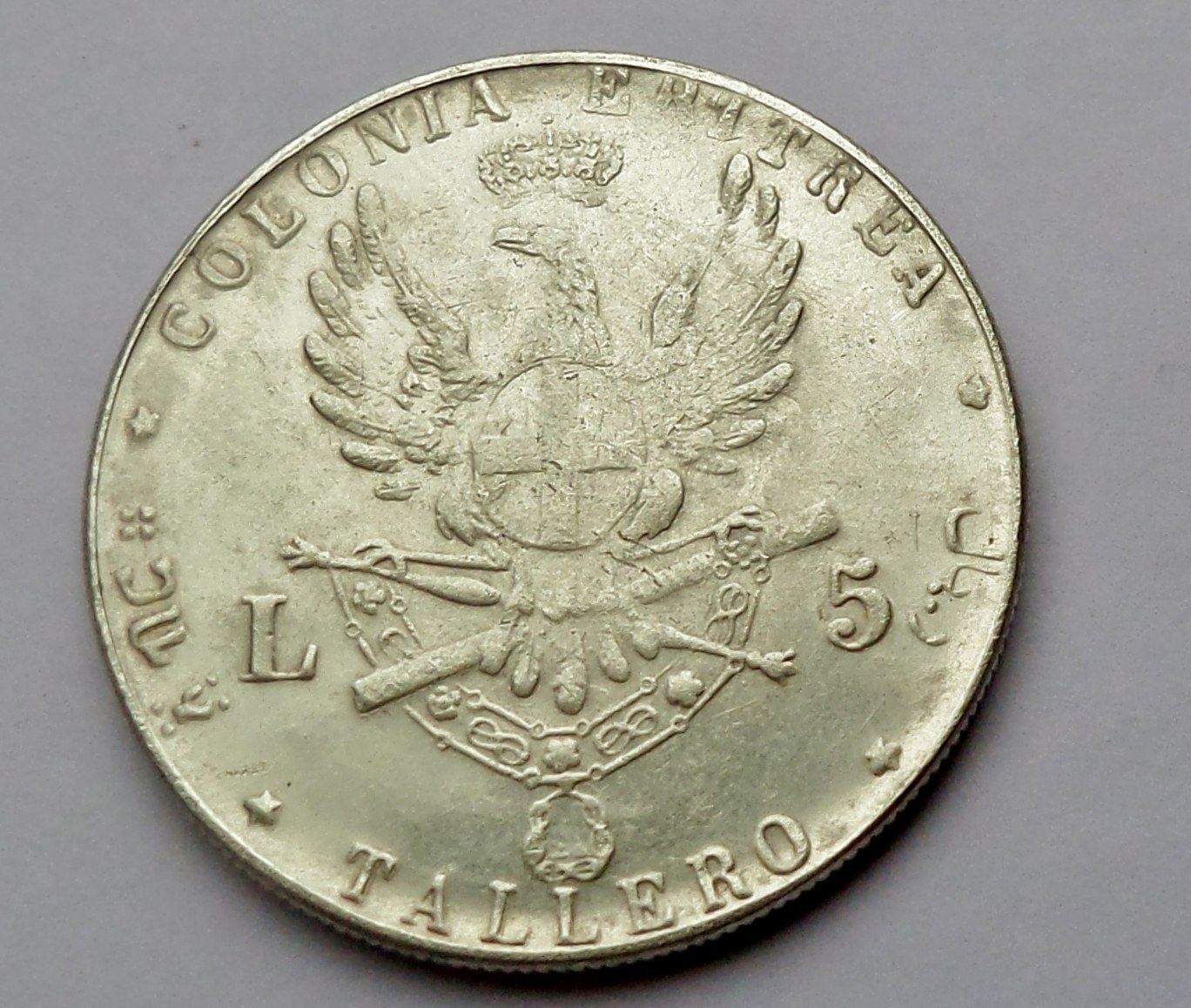
Begin with the date and denomination. A genuine coin shows the year 1891 and identifies itself as a tallero in Italian legends. Confirming both the date and the tallero denomination separates this piece from the Maria Theresa Thaler and other large trade dollars it deliberately resembles.
Read the two heraldic faces together. One side carries an ornate crowned coat of arms flanked by supporters; the other shows a coat of arms with the heraldic eagle of the House of Savoy alongside the value. The legends name King Umberto I of Italy and mark the coin as an Eritrean colonial issue, which is the strongest single confirmation of attribution — check the wording and heraldry rather than relying on the overall look.
Check the metal, size, and weight. The tallero is silver and crown-sized, broad and heavy, close in diameter and mass to the Maria Theresa Thaler that inspired it. Weigh and measure it against catalog figures for the type; a piece that is markedly light, magnetic, undersized, or the wrong thickness is a red flag for a replica or a misidentified coin.
Watch for look-alikes. Because it was patterned on the Maria Theresa Thaler, the Austrian trade coin is the most common source of confusion, and Ethiopian and other regional silver dollars of the era share the same broad format. The distinguishing features here are the 1891 date, the Italian tallero legends, the name of Umberto I, and the specific pairing of crowned arms with supporters on one face and the Savoy eagle arms with the value on the other.
Be cautious about authenticity and condition. As a historic and sought-after trade coin, the tallero has been reproduced and altered, so inspect the edge, lettering sharpness, and surfaces for cast texture, tooling, or added detail. Avoid cleaning, which harms both value and authentication, and when significant money is involved seek third-party grading or an expert opinion before buying or valuing.
Frequently asked questions
What is the fastest way to confirm the coin?
Match the 1891 date, the tallero denomination, and the Italian legends naming King Umberto I, together with the crowned arms and Savoy eagle faces. Those together confirm the Italian Eritrea type.
How do I separate it from a Maria Theresa Thaler?
The two are similar in size and weight by design, so read the inscriptions and heraldry. The Eritrean tallero carries Italian legends, the name of Umberto I, the tallero denomination, and the 1891 date, whereas the Maria Theresa Thaler shows the Austrian empress and Latin legends.
How can I check the silver and size?
Weigh and measure the coin and compare against catalog specifications for the type. It should be silver, crown-sized, dense, and close to the Maria Theresa Thaler in diameter. A light, magnetic, or undersized piece is suspect.
Should I worry about fakes?
For a historic, in-demand trade coin like this, yes. Inspect the edge, lettering, and surfaces for casting or tooling, and consider third-party authentication before assigning significant value. Do not clean the coin.