
How to Identify the Eighth Thistle Merk
A collector's guide to attributing James VI's small hammered silver eighth thistle merk by its shield, thistle, size, and marks.
Read the full Eighth Thistle Merk encyclopedia entry →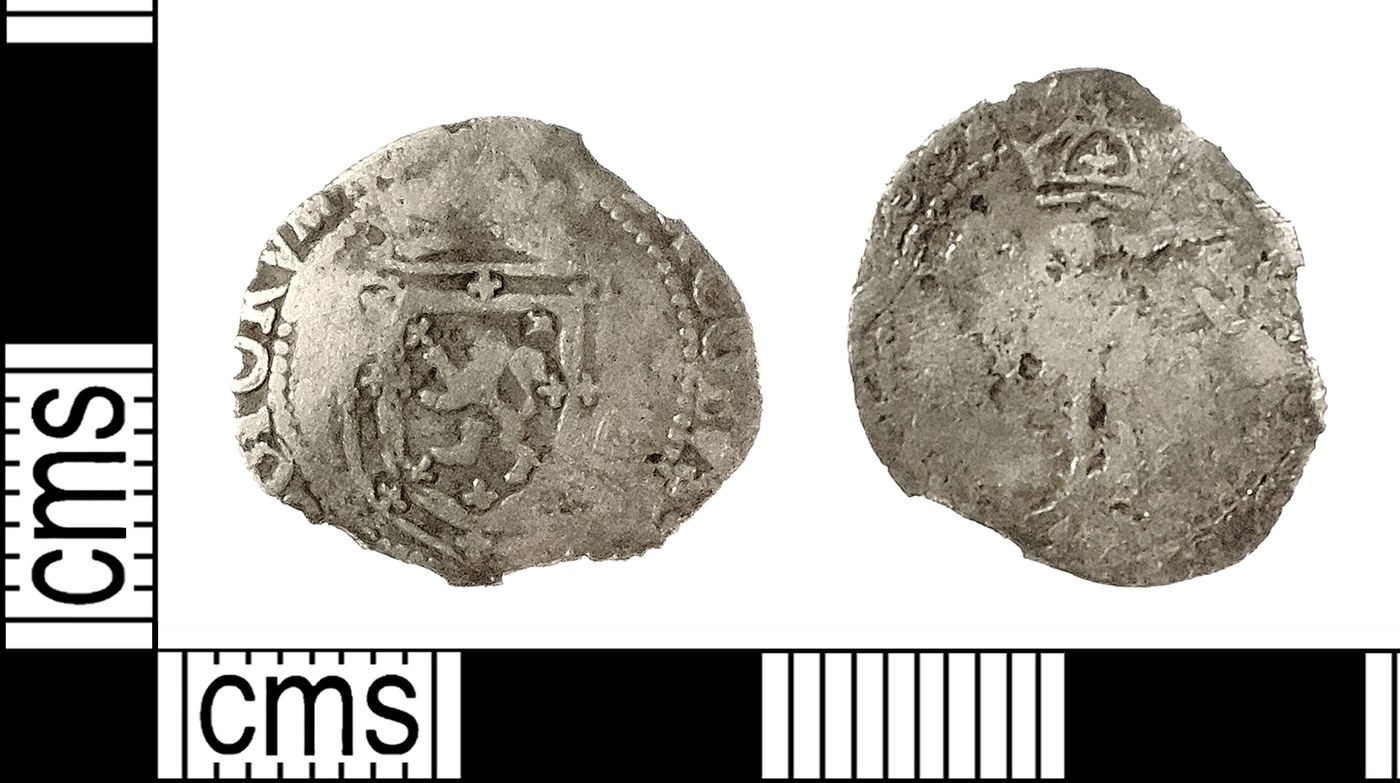
Start with the reverse, because the thistle is the fastest way into this series. A thistle — normally crowned — surrounded by a legend marks the coin as part of the thistle merk family of James VI. If the reverse shows any other emblem, the coin is not a thistle merk, whatever its size.
Turn to the obverse and read the shield. You should see a heraldic shield bearing the Scottish coat of arms within a decorative border, ringed by a Latin legend giving the king's royal titles. The pairing of this armorial shield with the crowned thistle reverse is the core signature of the type. Note the ornamental frame around the shield and confirm the legends match published descriptions.
Check size, weight, and metal carefully, since this is the step that separates the eighth merk from the rest of the series. The merk, half merk, quarter merk, and eighth merk share the same designs, so the denomination is told mainly by diameter and weight. This is small hammered silver, so expect a slightly out-of-round flan, uneven rims, and the soft or occasionally doubled relief of hand striking. Weigh and measure the coin and compare against published specifications rather than judging the denomination from a photograph.
Locate any mint or privy marks and read the legend spellings. Small symbols and the exact wording of the inscriptions help pin the coin to a specific issue within James VI's long reign, which saw several distinct silver coinages. Cross-reference the marks, legend, and design style against a standard reference for Scottish hammered coinage to settle the attribution.
Be cautious about authentication and clipping. Early Scottish silver is sometimes faked, and cast copies, tooled surfaces, and modern replicas exist; a markedly underweight coin may also have been clipped, which lowers both value and confidence. Watch for casting seams, bubbles, unnaturally smooth fields, or lettering that lacks hand-cut variation. For any coin of significant value, seek an opinion from a specialist in early British hammered coinage or a reputable grading service.
Frequently asked questions
How do I tell the eighth merk from the larger thistle merks?
They share the same shield-and-thistle designs, so the denomination is read from size and weight. Measure the diameter and weigh the coin, then compare against published specifications for the merk and its fractions rather than guessing from a photo.
Which side is the obverse?
The heraldic shield with the Scottish coat of arms is the obverse; the crowned thistle with its legend is the reverse. Both should be present to confirm the type.
How can I be sure it isn't a cast copy?
Genuine coins are hand-struck, showing uneven flans and hand-cut lettering. Watch for casting seams, air bubbles, mushy detail, or incorrect weight. For a coin of real value, professional authentication is strongly advised.