
How to Identify the East African 1 Cent
A collector's checklist for confirming the 1924 holed copper East African 1 Cent: the central hole, crown and rings, the value framing, metal, and authentication cautions.
Read the full East African 1 Cent encyclopedia entry →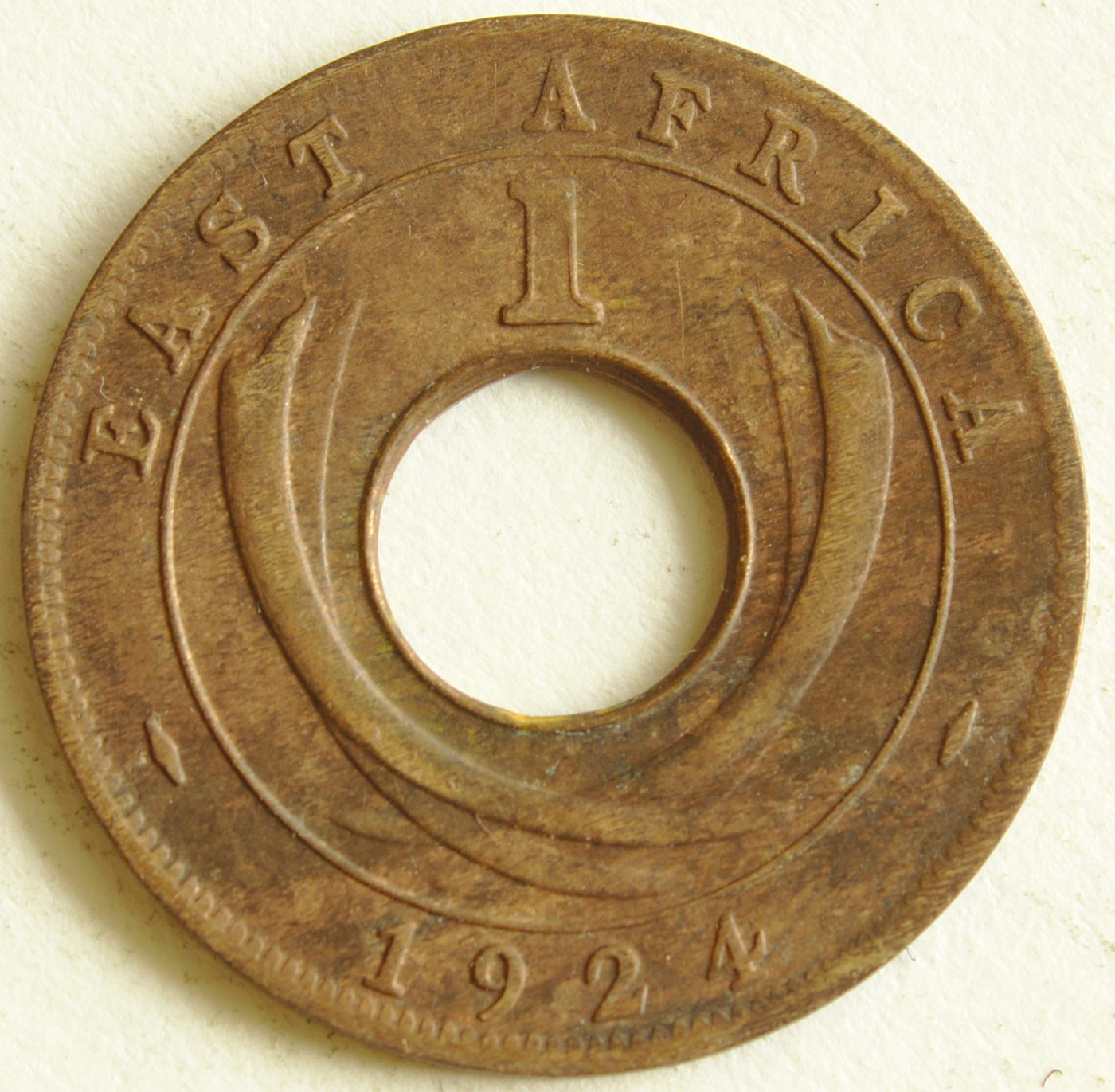
Begin with the coin's silhouette. This 1 Cent is a small copper coin with a round hole punched through its center, and that pierced format dated 1924 is your first and strongest identifier. A solid, unholed coin of similar size is a different type, so the hole is a fast filter before you even read the legends.
Read both faces. One side should show a crown set within ornamental rings with surrounding text referencing East Africa; the other should frame the value in concentric decorative rings around the central hole. Confirm the denomination resolves to one cent and the date reads 1924. A different value or a missing hole points to another coin in or beyond the series.
Check the physical fabric. Expect the density and warm reddish-brown color of copper, not the pale tone of nickel or the bright flash of silver, and a small module consistent with the lowest denomination. The coin should not be strongly magnetic. Corrosion, verdigris, or a damaged hole rim are condition problems rather than proof of authenticity, but they do affect grade and value.
Watch for look-alikes within the same family. The East African two-cent, five-cent and ten-cent pieces share the holed, crown-and-rings look but are progressively larger, so size and the stated value distinguish them from the one cent. Other countries also issued holed coins in this era, so match the East Africa legend and the one-cent denomination rather than judging by the hole alone.
Be cautious of altered pieces. An original central hole is clean and part of the design, with devices arranged around it; a hole drilled after striking often cuts through legends or the rings, shows rough or bright edges, and sits off-center. There is no distinct mint letter you need to hunt for to identify this type, so authentication rests on design, legends, metal, and overall fabric.
Frequently asked questions
What is the fastest way to confirm this coin?
Check three things together: a central hole in a small copper coin, a crown within decorative rings and an East Africa legend, and the value of one cent framed by concentric rings with the 1924 date. All three at once identify the type.
How do I tell the 1 Cent from the larger holed denominations?
The East African series used the same holed, crown-and-rings design across several values. Compare size and read the stated denomination: the one cent is the smallest, while the two-, five- and ten-cent pieces are progressively larger.
How can I tell the hole is original and not drilled later?
An original central hole is clean and consistent with the design, with the crown, rings, and legends arranged around it. A hole drilled after striking often cuts through inscriptions or the decorative rings, shows rough or bright edges, and is off-center, which reduces the coin to a damaged ordinary piece.
Is a corroded or cleaned example still collectible?
It can be, but condition matters. Verdigris, pitting, cleaning, or a damaged hole rim lower the grade and price. Original copper surfaces with even patina and full legends are worth a premium over problem coins.