
How to Identify the Durango 5 Centavos
A collector's checklist for the copper 1914 Durango 5 centavos: numeral 5, national eagle, date, copper module, look-alikes, and authentication cautions.
Read the full Durango 5 Centavos encyclopedia entry →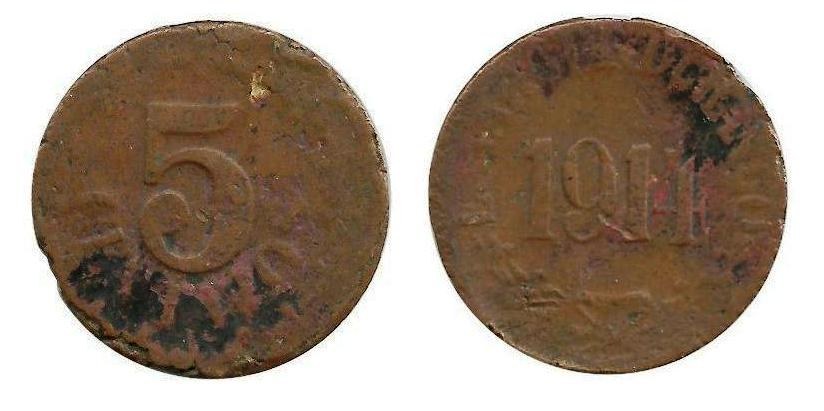
Begin with the denomination side. A genuine Durango 5 centavos of this type shows a large numeral 5 as the dominant feature, clearly marking the five-centavos value. This bold numeral, rather than a small mark tucked into a busy design, is one of the quickest confirmations that you are looking at the right denomination.
Turn to the other side and confirm the Mexican national eagle with spread wings. The eagle is the national emblem and should read as a deliberate central device, not an afterthought. Because the eagle appears on a great many Mexican coins, do not stop here: use it together with the numeral, the date, and the Durango attribution rather than treating the eagle alone as proof of type.
Check the date and the state reference. This issue is dated 1914, which places it in the Mexican Revolution, and it is a State of Durango product, so inscriptions referencing Durango and the centavos denomination are part of the identification. Reading the visible legends and the date, even where wear has softened them, helps separate this coin from other revolutionary coppers of the same era.
Confirm the physical characteristics. This is a small copper coin, so expect a brown to reddish or darkened surface and a low-value module size. The look is typically a bit crude, with uneven strike and occasional off-center design, because revolutionary coins were made locally under difficult conditions. Honest wear softens high points evenly; weak spots from an incomplete strike are normal and are not the same as damage or tooling.
Watch for look-alikes and reproductions. Many revolutionary authorities struck eagle-and-numeral coppers around 1914, so a similar-looking coin may belong to a different state or issue; rely on the Durango attribution plus the 1914 date and numeral 5 to be sure. Be alert to cast copies, which can show seam lines, a grainy or bubbled surface, or soft, blurry lettering. For any valuable example or a coin whose surfaces look suspicious, seek an opinion from a specialist in Mexican revolutionary coinage before buying.
Frequently asked questions
What is the fastest way to confirm this is a Durango 5 centavos?
Look for the large numeral 5 on one side and the Mexican national eagle on the other, then confirm the 1914 date and the Durango attribution. That combination identifies the type; the eagle alone is not enough because it appears on many Mexican coins.
How do I tell it apart from other revolutionary coppers?
Many states struck eagle-and-numeral copper coins around 1914. Use the specific Durango reference in the inscriptions together with the 1914 date and the five-centavos numeral to separate this issue from similar coins of other jurisdictions.
Is a crude, uneven strike a sign of a fake?
Not by itself. Revolutionary coins were made locally under wartime conditions, so uneven strikes, off-center designs, and rough surfaces are normal. Concern should focus instead on cast seams, bubbled surfaces, and unnaturally soft lettering.
How can I spot a cast copy?
Look for a seam line around the edge, a granular or bubbled surface, and mushy detail that lacks the crispness of a struck coin. If the coin's value or surfaces raise doubt, have it examined by a specialist in Mexican revolutionary coinage.