
How to Identify the Disarmament Commemorative Ruble
Spot the 1988 Soviet INF-Treaty ruble by its value side, disarmament reverse text, cupronickel color, and 31 mm size.
Read the full Disarmament Commemorative Ruble encyclopedia entry →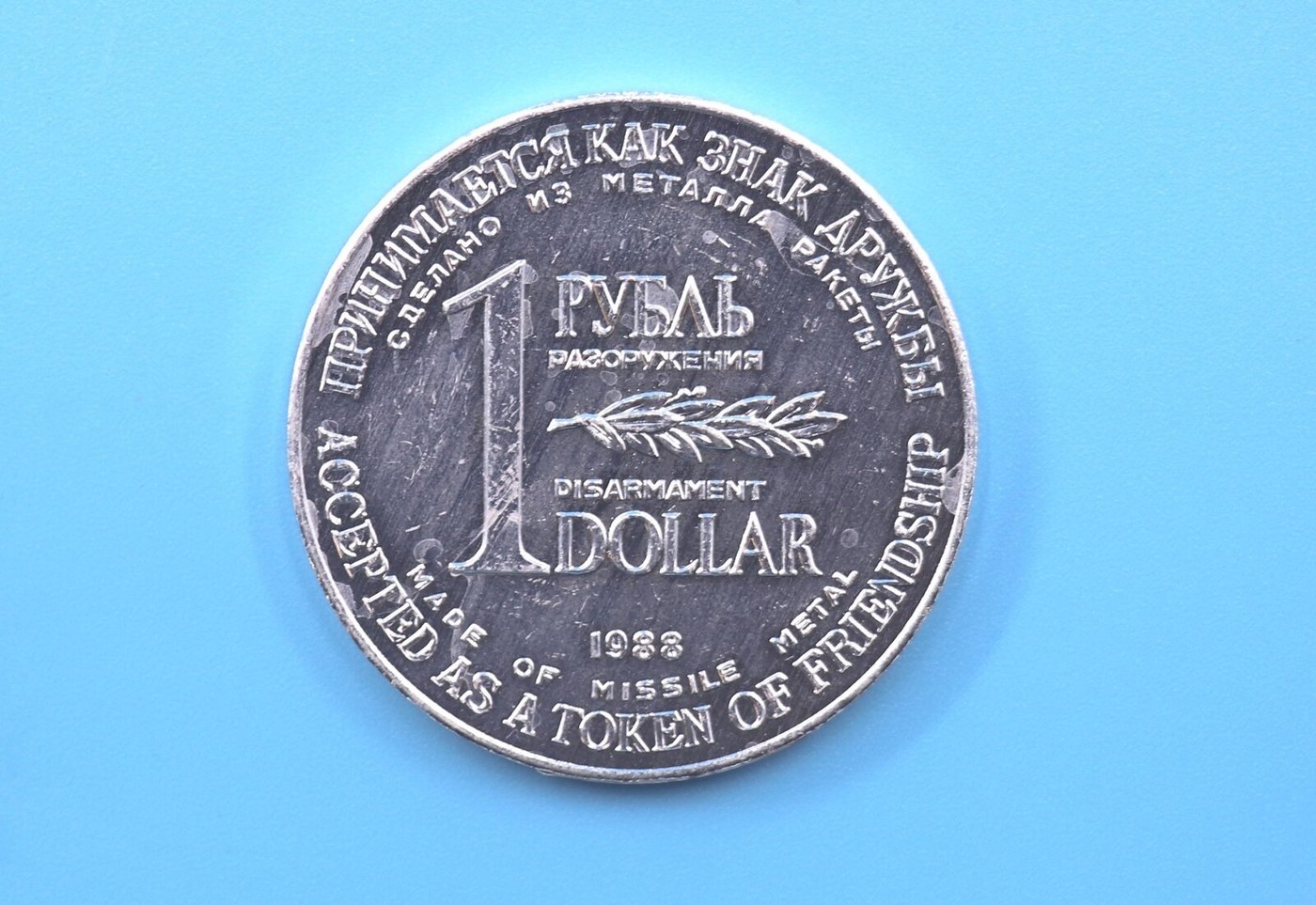
Start with the date and denomination. The value side of this type shows the large Cyrillic 1 РУБЛЬ, the letters СССР, a branch device, and the year 1988. Confirming the 1988 date is essential, because the Soviet commemorative-ruble series reused a nearly identical value-side layout across dozens of different issues from 1965 to 1991 — only the reverse subject and date distinguish them.
Next, read the reverse. On the Disarmament Ruble the reverse is devoted to the treaty theme, carrying Cyrillic inscriptions that reference the agreement on the elimination of intermediate- and shorter-range missiles. If the reverse instead honors a person (a portrait), a building, a sporting event, or a different anniversary, you are holding a different commemorative ruble, not this one.
Check the physical traits. Genuine examples are copper-nickel, about 31 mm across and roughly 12.8 g, with a reeded edge. The metal is a bright silvery cupronickel — do not mistake this for silver; no precious-metal version of this circulating type was issued. Weigh and measure a questionable piece: significant deviation from ~12.8 g or ~31 mm is a warning sign.
Distinguish finishes and mint marks. Most Soviet rubles of this era carry no conventional mint mark; the difference to note is finish. Proof strikes have deep mirror fields with frosted, cameo-like devices and came in sealed collector sets, while ordinary business strikes have a flat, satin luster. Proofs are worth more, so finish affects both identification and value.
Finally, watch for cleaning and damage rather than counterfeits — this is a low-value coin, so fakes are uncommon, but harshly cleaned, polished, or artificially "proof-like" pieces do appear. Compare surfaces against known genuine images, and be skeptical of any seller describing this coin as "silver" or "rare," which usually signals a misdescription.
Frequently asked questions
How do I tell this from other Soviet commemorative rubles?
The value side is nearly identical across the series, so rely on the 1988 date plus the disarmament-treaty inscriptions on the reverse. A portrait, building, or sports theme means it is a different ruble.
How can I confirm it isn't silver?
The type was only struck in copper-nickel. Its silvery tone is the cupronickel alloy. Weight (~12.8 g) and the base-metal ring, not sound alone, confirm it; there is no genuine precious-metal version.
Does it have a mint mark?
Like most Soviet rubles of the period it generally carries no visible mint mark. The meaningful distinction is finish: mirror-field proof versus satin business strike.
Are counterfeits a concern?
Rarely, given the low value. Cleaning, polishing, and misleading 'silver' or 'rare' listings are the more common issues to guard against.