
How to Identify the Denarius of the Pompeia Family
A collector's guide to recognizing a Pompeia-family silver denarius by its portrait, Victory-in-chariot reverse, size, and legends.
Read the full Denarius of the Pompeia Family encyclopedia entry →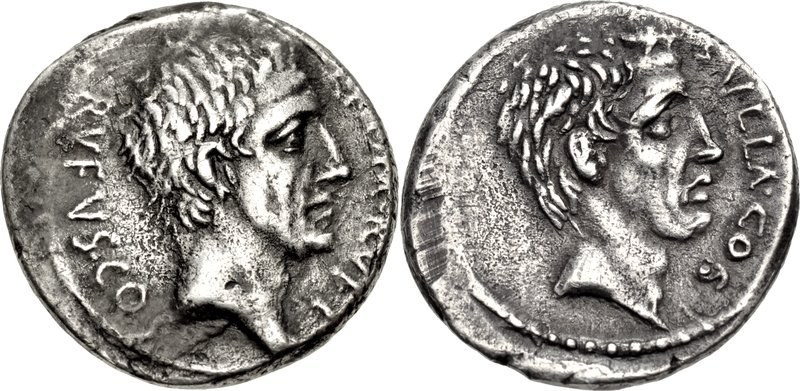
Start with the two design elements that define this type: a male portrait head in profile on the obverse and a Victory driving a chariot on the reverse. Victory appears as a winged female figure holding the reins of a horse team, often with a wreath, palm, or whip; the chariot may be a two-horse biga or a four-horse quadriga. If your coin lacks the charioteer Victory, or pairs the portrait with a different reverse (a deity's head, a she-wolf, prows, or a standing figure alone), it is a different Republican type, not this one.
Read the legends. Roman Republican denarii carry Latin inscriptions naming the moneyer and often the family. Look in the field and especially the exergue — the strip beneath the chariot — for lettering tied to the name Pompeius / Pompeia. The moneyer's name is the most reliable route to a precise attribution, since the gens Pompeia issued more than one type across the 1st century BC.
Check size, weight, and metal. A genuine denarius of this era is a small silver coin, broadly 3.5 to 4 grams and roughly the diameter of a modern small coin, with a slightly irregular or oval flan. Weigh and measure it: a piece that is markedly heavy, oversized, or magnetic is a warning sign. The metal should read as toned silver — white to grey, sometimes with iridescent hues — not brassy or yellow.
Watch for look-alikes and later imitations. Victory-in-chariot reverses were used by many Republican families, so the portrait plus the legend, not the chariot alone, confirm the Pompeia attribution. Be aware too of tooled, cast, or entirely modern fakes: casts show soft, mushy detail, seam lines on the edge, and repeated surface bubbles, while struck copies often have unnaturally uniform, glassy fields.
Apply authentication caution. Ancient silver is widely faked and frequently "improved" by cleaning or tooling. Compare the portrait, the Victory, and the lettering against verified reference images of the specific Pompeia type, look for honest wear and die variation rather than crisp machine perfection, and for a valuable example rely on a reputable ancient-coin specialist or third-party authentication. Documented provenance strongly supports both genuineness and value.
Frequently asked questions
What is the fastest way to recognize this type?
Look for a male portrait head on one side and the winged goddess Victory driving a chariot on the other, on a small hand-struck silver coin, with Latin legends tied to the name Pompeius. That combination points to a Pompeia-family denarius.
Where do I find the moneyer's name?
Check the field around the figures and especially the exergue, the flat strip beneath the chariot. Republican denarii place the moneyer's name there; reading it is the surest way to attribute the coin to the correct Pompeia issue.
What size and weight should a genuine example be?
Expect a small silver coin of roughly 3.5 to 4 grams and about the diameter of a modern small coin, often on a slightly irregular or oval flan. A coin that is much heavier, larger, or magnetic is likely a fake or replica.
How can I tell a real coin from a cast copy?
Genuine coins were struck from engraved dies and show crisp but slightly varied detail and honest wear. Casts tend to look soft or mushy, may show an edge seam or surface bubbles, and repeat identical flaws; struck fakes often have unnaturally uniform, glassy fields.