
How to Identify the Congo 5 Francs
A collector's guide to recognizing the Democratic Republic of Congo 5 franc coin by its legends, denomination, size, metal, and look-alikes.
Read the full Congo 5 Francs encyclopedia entry →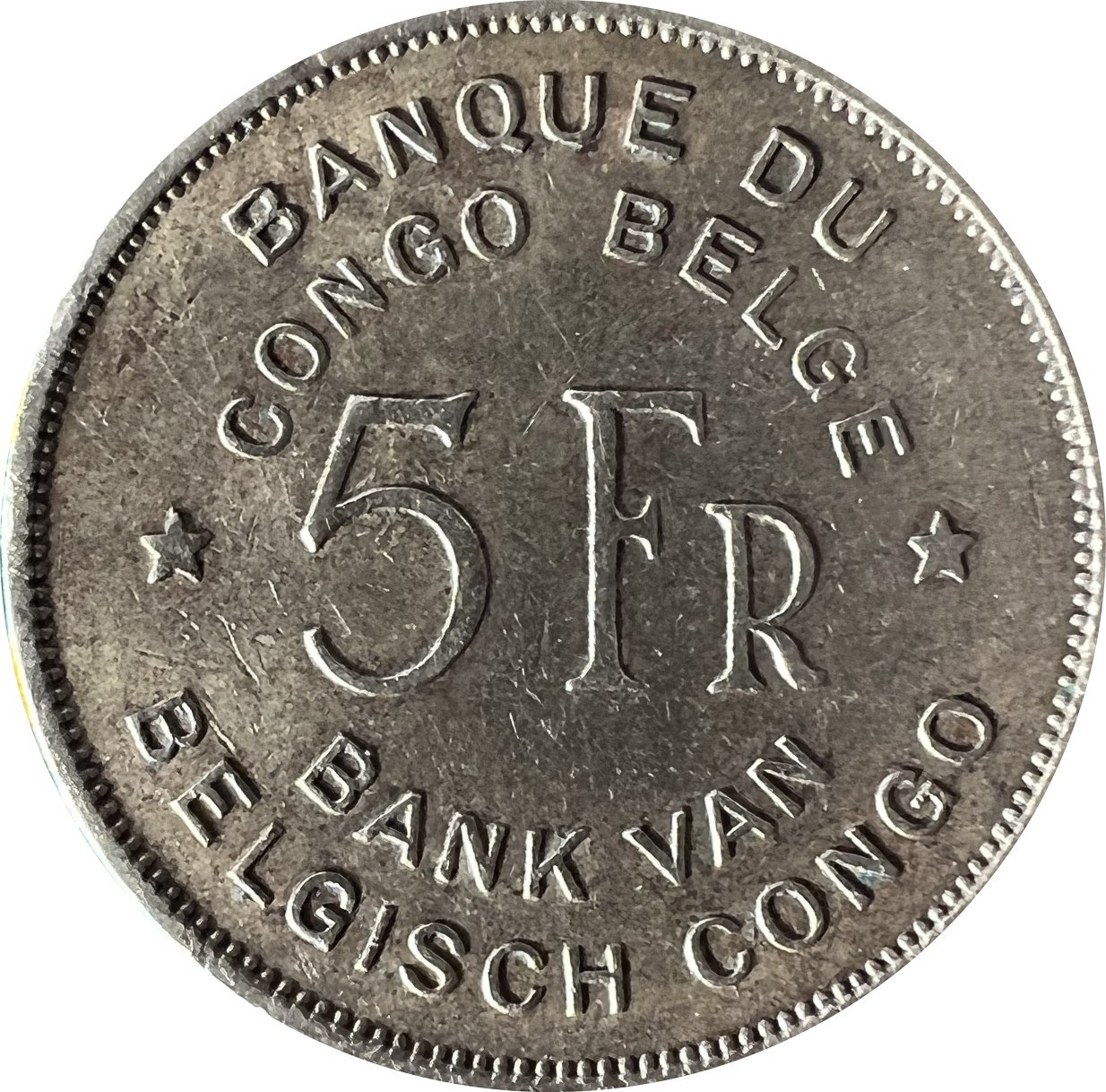
Begin with the legends, because they place the coin. A genuine Congo 5 francs carries the issuing central bank's name in French together with the value 5 FRANCS and a reference to CONGO. Reading these inscriptions is the single most reliable identifier, since many African coins share a silvery appearance and the franc unit.
Compare the two faces. One side presents the denomination with the large numeral 5 and the word FRANCS; the other carries decorative devices and inscriptions rather than a portrait of a person. The absence of a ruler's bust, combined with the French legends, helps separate this modern Congolese coin from colonial-era or CFA pieces.
Check size, weight, and metal. The 5 francs is a small, thin, lightweight coin in a pale base-metal alloy, never precious metal. Nickel or nickel-clad and plated coins of this type are commonly magnetic, so a magnet test plus a weight and diameter measurement against catalog specifications can confirm the piece and flag a misidentified coin that is heavier, thicker, or a different color than expected.
Watch for look-alikes. West African (BCEAO) and Central African (BEAC) CFA franc coins use the same franc unit and a similar silvery finish, so do not rely on color alone. The decisive test is the wording: only a Congolese coin names the Democratic Republic of Congo's central bank and CONGO, whereas CFA pieces reference the West or Central African states.
Authentication is rarely a concern at this low value, so focus on reading the date and legends correctly. Locate the year of striking near the design to pin down the exact issue, and judge condition on the numeral and decorative devices before assigning any small collector premium; wear, corrosion, or cleaning can obscure the date and should be noted.
Frequently asked questions
How do I confirm this is a Congolese coin and not a CFA franc?
Read the legends. A Congo 5 francs names the Democratic Republic of Congo's central bank and includes CONGO, while CFA coins reference the West African (BCEAO) or Central African (BEAC) states. The wording, not the color, is decisive.
How can I test the metal?
The coin is a pale base-metal alloy, not silver. Nickel or nickel-plated and clad coins of this kind are usually magnetic, so a magnet test together with a weight and diameter check against catalog figures helps confirm it.
Where is the date on the coin?
The year of striking usually appears near the design, close to the denomination or decorative devices. It identifies the specific modern issue and helps assess condition and any scarcity.
Is it worth authenticating a Congo 5 franc coin?
Rarely. Its low value means counterfeiting is not a practical concern. Focus instead on reading the legends and date correctly and on judging condition for any modest collector premium.