
How to Identify the Colombian Peso Silver
A guide to identifying Colombia's historic silver Un Peso coins, known for their Liberty cap and radiant condor motifs, national legends, and crown-size silver specifications.
Read the full Colombian Peso Silver encyclopedia entry →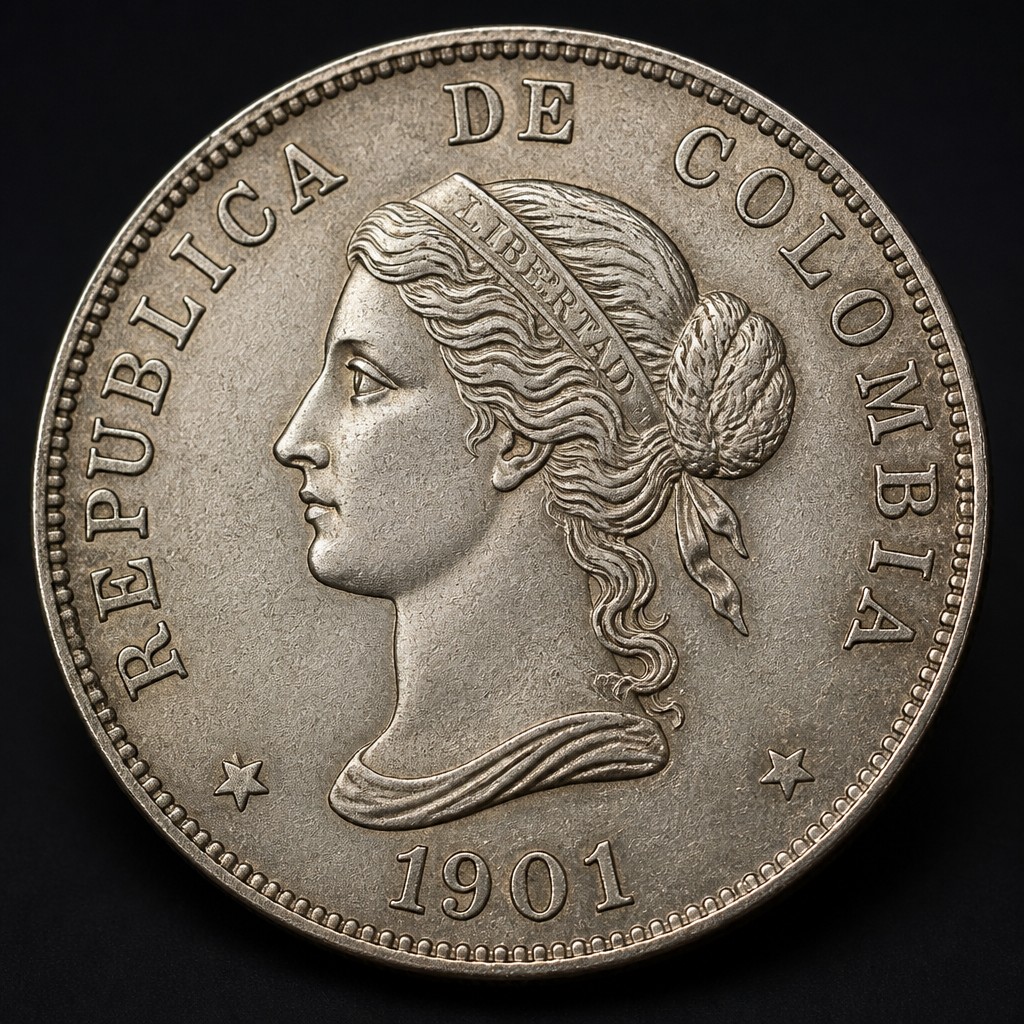
What It Is
The silver Un Peso was Colombia's principal large silver coin from the mid-1800s through the early 1900s, issued under names such as the Republic of New Granada, the Granadine Confederation, the United States of Colombia, and finally the Republic of Colombia as the country's name and government changed over time. Despite these changes, the coin kept a consistent crown-dollar size and weight familiar from other Latin American silver pesos of the era.
Obverse Design
Most 19th-century issues show a radiant Liberty cap (Phrygian cap) mounted on a pole, sometimes within a wreath, with the word "LIBERTAD" and the date. Some later issues instead carry a national shield or an allegorical bust in place of the cap design.
Reverse Design
The reverse typically features Colombia's Andean condor with wings spread, standing on a rock or globe, encircled by the country's official name at the time and the denomination "UN PESO." Small stars often border the legend, one for each state or department in the federation on some issues.
Size, Weight, and Metal
These are large silver coins, roughly 35-37 mm in diameter and weighing around 25 grams, typically struck in .835 to .900 fine silver depending on the specific year and issuing authority. The edge is reeded on most dates.
Mint Marks
Mint marks and assayer initials appear in small letters near the rim or below the main device, most often on the reverse. Bogotá pieces usually show "B" or "NR" style abbreviations; always compare the letters against a reliable reference for the specific date, since mint operations shifted over the century.
Telling It Apart From Similar Coins
The Colombian peso's condor and Liberty cap motifs are echoed by several neighboring countries, including Ecuador and Venezuela, which also used condors and liberty symbolism. The exact legend wording (the country's official name at the time) and denomination lettering are the most reliable way to confirm origin.
Judging Condition
Wear first appears on the high points of the cap or bust and on the condor's breast and wing tips. A coin with a fully legible legend, sharp star points, and clear rim beading is in solid collectible condition; smoothing across the central devices indicates significant circulation.
Authenticity Red Flags
Because 19th-century Latin American silver coinage was produced with varying quality control, some genuine pieces show minor die flaws that are not defects. However, be cautious of coins with incorrect diameter or weight, a dull or grainy surface texture suggesting a cast copy, or blurred lettering that looks mushy rather than crisply engraved. Comparing a suspect coin's ring when gently spun, along with its weight and diameter, against a known example is a useful first check.
Frequently asked questions
What does the Liberty cap on the coin represent?
It is the Phrygian cap, a classical symbol of freedom adopted by many newly independent Latin American republics on their early coinage.
How can I tell which mint struck my Colombian peso?
Check the small mintmark letters near the rim or below the main device on the reverse, and compare them to reference letters for the coin's specific date.
How much silver is in a Colombian Peso?
Most issues are .835 to .900 fine silver, weighing roughly 25 grams, though exact fineness varies by year.
Why do some Colombian pesos show different country names?
Colombia's official name changed several times in the 19th century (New Granada, the Granadine Confederation, the United States of Colombia, and Colombia), and the coinage legend reflects whichever name was in use at the time of striking.