
How to Identify the Colombia 8 Reales
A large silver coin from the colonial Nuevo Reino de Granada mint and early independent Colombian issues, following the classic Spanish American piece-of-eight format.
Read the full Colombia 8 Reales encyclopedia entry →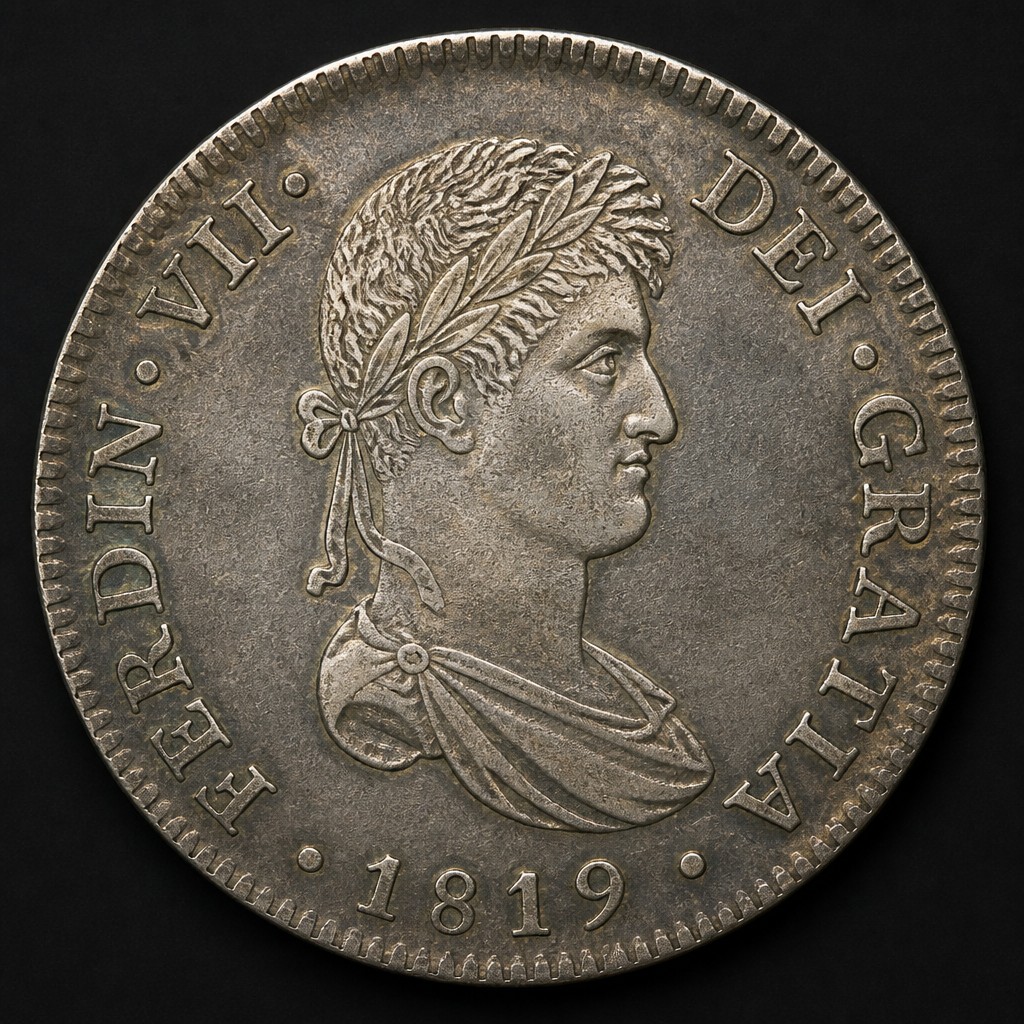
What This Coin Is
The Colombia 8 Reales covers large silver coins struck at the Bogota mint (Nuevo Reino de Granada) under Spanish colonial rule and continuing, with modified designs, into the early independence period of Gran Colombia and the Republic of New Granada. These coins are part of the broader Spanish American "piece of eight" tradition that circulated globally, moving through trade networks reaching as far as Europe and Asia.
Obverse Design & Inscriptions
Colonial-era pieces show the bust of the reigning Spanish monarch with his name and title in Latin around the border, while post-independence issues replace the king with a liberty cap on a pole, a condor, or a national shield depending on the specific date and government. The date generally appears in the legend or below the main device.
Reverse Design & Inscriptions
Colonial coins typically show the crowned Spanish arms flanked by the Pillars of Hercules with "PLUS ULTRA" on ribbons, while independence-era types substitute national symbols such as a radiant sun, cornucopias, or a shield, with "8 R" or "8 REALES" indicating the denomination. The mint city abbreviation "NR" for Nuevo Reino de Granada (Bogota) commonly appears near the design.
Size, Weight, Metal, and Edge
Following the standard Spanish colonial dollar-size format, these coins measure roughly 39 mm in diameter and weigh about 27 grams, in silver around .896 to .900 fine. The edge is generally engrailed with a wavy or diagonal pattern, a traditional anti-clipping security feature of milled Spanish American coinage.
Mint Marks and Where to Find Them
Look for the "NR" mintmark (for Nuevo Reino/Bogota) along with assayer's initials near the base of the design on either the obverse or reverse, depending on the exact date and type. These small letter combinations confirm both the mint and the specific assay official responsible for the coin's fineness.
Telling It Apart From Similar Coins
Other Spanish American mints, such as Mexico City, Lima, or Potosi, used different mintmark letters ("Mo," "LIMA," "P") on otherwise similar-looking colonial 8 reales, so the "NR" abbreviation is the key to confirming a Bogota origin. Post-independence Colombian types are distinguished from colonial pieces by the absence of a royal portrait, replaced instead by republican symbols like liberty caps or condors.
Judging Condition at a Glance
Examine the monarch's hair or the folds of the coat of arms (colonial types) or the liberty cap and sun rays (republican types) for wear, since these raised details flatten first. A coin with strong, legible legend text and a clear central device is in notably better condition than one with a smooth, worn design.
Authenticity Red Flags
Be cautious of coins with blurry lettering, incorrect weight for the standard 27 gram format, or a grainy, seamed surface suggesting a cast copy instead of a genuine milled strike. Confirm that the mintmark and assayer initials form a combination documented for the claimed date, as mismatched pairings can point to an altered or fantasy piece.
Frequently asked questions
What does the 'NR' mintmark mean?
NR stands for Nuevo Reino de Granada, identifying the Bogota mint as the coin's origin.
How can I tell a colonial coin from an early republic coin?
Colonial pieces show a Spanish king's portrait, while early republic issues replace the portrait with symbols like a liberty cap, sun, or national shield.
What is the coin's edge like?
It typically has an engrailed, wavy-patterned edge, a security feature used on milled Spanish American silver coinage.
How much does the coin weigh?
About 27 grams, consistent with the standard Spanish American 8 reales weight.