
How to Identify the Christopher Columbus Quincentenary Silver Dollar
A collector's checklist for confirming a 1992 Columbus silver dollar — standing-Columbus obverse, ship reverse, silver specs, mint marks, and authentication tips.
Read the full Christopher Columbus Quincentenary Silver Dollar encyclopedia entry →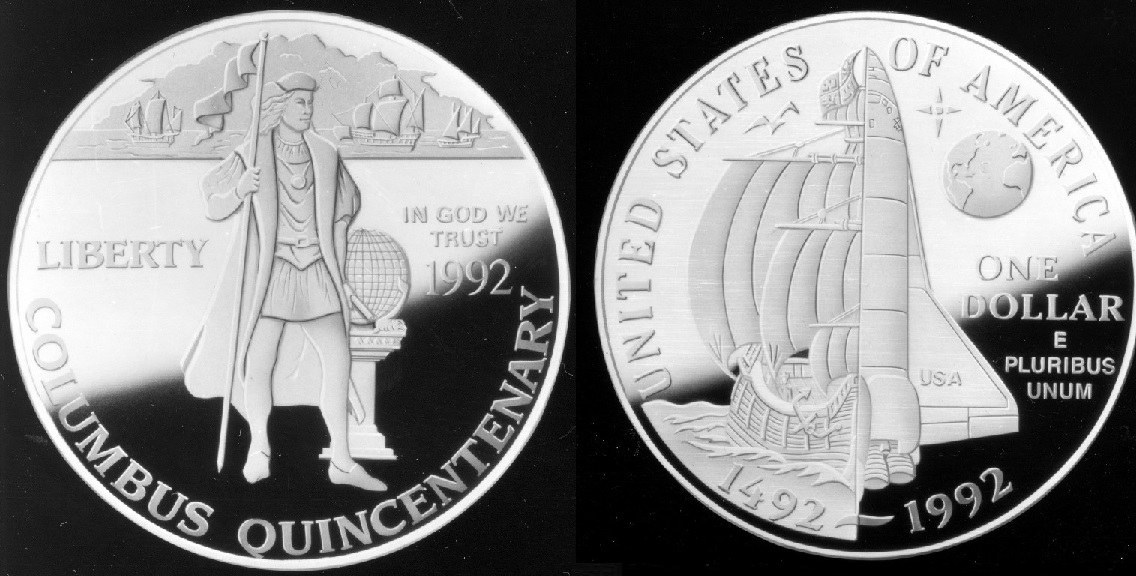
Begin with the obverse scene and inscriptions. A genuine Christopher Columbus Quincentenary Silver Dollar shows a full-length standing figure of Columbus set among navigational instruments, with sailing vessels behind him and the wording 'IN GOD WE TRUST' along with the date '1992'. This narrative, standing-figure obverse immediately separates it from circulating dollars such as the Eisenhower or Susan B. Anthony, which carry a Liberty or portrait head rather than a full scene.
Turn to the reverse to confirm the type. It depicts a three-masted period sailing ship together with the legends 'UNITED STATES OF AMERICA', 'ONE DOLLAR', and 'E PLURIBUS UNUM'. The ship-and-exploration reverse, paired with the 1992 date, is the fastest way to confirm you are holding the Columbus dollar rather than another 1990s commemorative.
Verify the physical specifications. The coin is a standard commemorative silver dollar: roughly 38.1 mm in diameter, about 26.7 grams, struck in 90% silver with a reeded edge. A calibrated scale and calipers are the best tools here; a piece that is off in weight, diameter, or edge reeding for a silver dollar is a warning sign, and the bright color should match 90% silver rather than a plated base metal.
Locate the mint mark on the obverse. An Uncirculated example carries a 'D' (Denver) and a Proof example an 'S' (San Francisco). Proofs show mirrored fields and frosted devices, while Uncirculated pieces have a satin business-strike finish; matching the finish to the expected mint mark is a useful cross-check.
Be reasonable about authentication. Because this is an affordable, common-date commemorative, deceptive counterfeits are uncommon, but the same silver content makes cleaning, damage, and altered surfaces the more likely concerns. Watch for polishing, rim dents, or environmental spotting, and note that original mint packaging and the certificate of authenticity support both grade and value. For higher-grade purchases, favor examples certified by PCGS or NGC over eye appeal alone.
Frequently asked questions
How do I tell it from an ordinary dollar coin?
The Columbus commemorative shows a standing figure of Columbus with instruments and ships and a sailing-ship reverse dated 1992. Circulating dollars like the Eisenhower or Susan B. Anthony instead show a Liberty or portrait head, not a full exploration scene.
Where is the mint mark and what should it be?
Look on the obverse. An Uncirculated coin carries a 'D' for Denver and a Proof coin an 'S' for San Francisco. Match the mark to the finish: 'S' pieces have mirrored proof fields, 'D' pieces a satin business-strike look.
What should a genuine example weigh and measure?
About 26.7 grams and roughly 38.1 mm in diameter, struck in 90% silver with a reeded edge. Figures that do not match a standard silver commemorative dollar are a counterfeit or plating warning sign.
Does original packaging matter for identification and value?
Yes. The coin was sold in U.S. Mint packaging with a certificate of authenticity. Intact original packaging helps confirm the finish (Proof or Uncirculated) and supports the coin's collector value.