
How to Identify the China Panda Gold Coin
A collector's checklist for the Chinese Gold Panda: reading the Temple of Heaven obverse, confirming the 30-gram gold spec, and spotting fakes.
Read the full China Panda Gold Coin encyclopedia entry →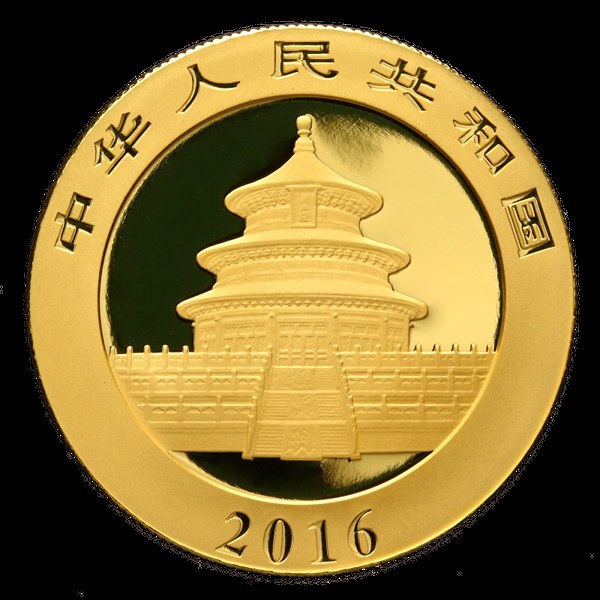
Start with the obverse in front of you. A genuine Gold Panda shows the Hall of Prayer for Good Harvests at the Temple of Heaven -- a round, multi-tiered building -- above the Chinese characters Zhonghua Renmin Gongheguo (People's Republic of China), with the year along the lower rim. On this example the date reads 2016. This obverse is nearly unchanged across the series, so it confirms the coin is a Panda and gives you the year, but you must check the reverse for the exact specification.
Turn the coin to read the reverse markings. The panda side carries the weight, fineness, and face value: a genuine 2016 gold issue is marked in grams (30g for the flagship) with Au .999 purity and a yuan denomination. Because 2016 was the first year of metric sizing, seeing a gram weight rather than an ounce weight is itself a useful date and type check. Match the panda scene to catalog images for the year to confirm both the date and that it is the 30-gram size rather than a fractional coin.
Verify the physical specs. The 30-gram gold coin has a defined diameter and weight; a careful weight and caliper measurement should match published specifications for the 2016 30g issue. Gold's high density means an authentic coin feels heavy for its size, and dimensions that run too thick or too wide for the stated weight are a warning sign.
Distinguish it from look-alikes. Pandas exist in silver as well as gold, and in many sizes from small fractional grams up to the 30-gram coin and larger commemoratives, so read the metal and weight markings carefully. Silver Pandas, gold fractions, and gilded copies can resemble this coin at a glance but differ in weight, color, and stated fineness.
Apply standard authentication caution. Counterfeit and gold-plated Pandas exist; be wary of coins whose weight, dimensions, or sound do not match specifications, of soft or mushy details, and of incorrect fonts or inscriptions. For anything of value, rely on weight and purity testing and, ideally, third-party grading, and compare against verified images of the same 2016 30-gram issue.
Frequently asked questions
How do I know this is the obverse and not the panda side?
The obverse shows the Temple of Heaven building and the inscription Zhonghua Renmin Gongheguo with the year. The panda appears on the opposite face (the reverse). If you see the temple, you are looking at the obverse, and you should flip the coin to read the weight and fineness.
How can I confirm it is the 30-gram gold version?
Read the reverse markings for the weight and fineness. A 2016 gold Panda is marked in grams (30g for the flagship coin) with Au .999 purity, and weighing the coin should match the published specification. Ounce markings would indicate a pre-2016 coin instead.
How do I tell a gold Panda from a silver one?
Check the color, weight, and stated fineness. Gold Pandas are marked with Au and a gold fineness and are much denser, while silver Pandas are marked with Ag. Weighing and measuring the coin against published specs is the most reliable check.
What are the signs of a counterfeit?
Watch for a coin that is the wrong weight or dimensions for its stated size, soft or blurry details, incorrect inscriptions or fonts, or a color suggesting plating over base metal. For valuable pieces, use weight and purity testing and third-party grading, and compare with verified images of the same year.