
How to Identify the Charles II Half Guinea
A collector's guide to recognizing the Charles II gold Half Guinea by its laureate portrait, crowned cruciform shields, small size, and milled fabric.
Read the full Charles II Half Guinea encyclopedia entry →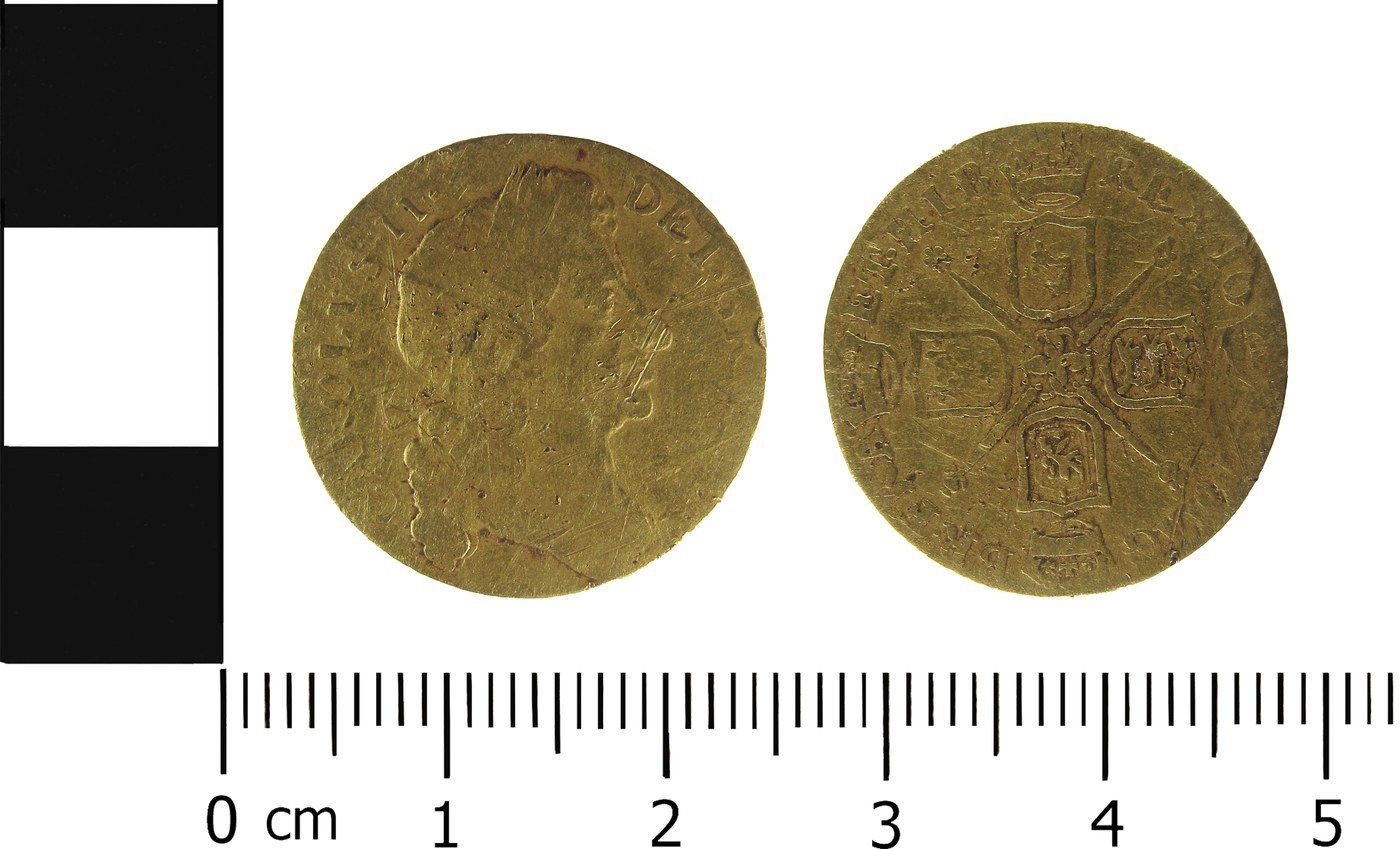
Begin with the portrait. The obverse of a Charles II Half Guinea carries a laureate bust of the king facing right, wearing a classical wreath rather than a crown, with a Latin legend naming Charles around the rim. A right-facing, wreathed profile in fine machine-cut relief is the first thing to confirm; the style of the bust was updated during the reign, so noting its exact form helps date the coin within 1660 to 1685.
Read the reverse. Look for four crowned shields arranged in a cross, bearing the arms of England, Scotland, Ireland and France, with small emblems filling the angles between the shields and the date worked into the surrounding legend. This crowned cruciform-shield layout is the core diagnostic of the reverse and should be read together with the obverse before attributing a coin.
Check size, weight, and metal. The Half Guinea is a small gold coin, clearly smaller and lighter than the full guinea it accompanies, so weigh and measure the piece and compare it against published specifications for the denomination. Confirming both the reduced size and gold metal is essential, because the full guinea shares much of the same design and can be mistaken for it at a glance.
Look for mint marks and varieties. Some coins carry a small elephant, or elephant and castle, beneath the bust, marking gold supplied by the Africa Company; its presence or absence, along with the date and bust type, defines the variety and affects value. Examine these details under magnification, as they are easily missed on worn coins.
Authenticate with care. Seventeenth-century gold is widely faked, and cast copies, gilt forgeries, and modern replicas exist. Watch for casting seams, bubbles, unnaturally smooth fields, incorrect weight or diameter, and lettering or portraiture that lacks the crispness of genuine milled work. For any coin of meaningful value, obtain an opinion from a specialist in early milled British gold or a reputable grading service before purchase.
Frequently asked questions
Which side is the obverse?
The side showing the laureate, right-facing portrait of Charles II with the Latin legend is the obverse. The side with the four crowned shields arranged in a cross is the reverse, and it carries the date.
How do I tell a Half Guinea from a full guinea?
The two share very similar designs, so rely on size and weight: the Half Guinea is distinctly smaller and lighter. Measuring and weighing the coin against published specifications is the surest way to distinguish them.
What does the elephant mark mean?
A small elephant, or elephant and castle, below the bust indicates the coin was struck from gold supplied by the Africa Company. Not all coins have it, and its presence can affect a coin's collector value.
How can I spot a fake?
Genuine coins show crisp milled detail, correct weight, and correct diameter. Casting seams, surface bubbles, soft or blurred lettering, gilt over a base-metal core, or wrong specifications are warning signs; specialist authentication is strongly advised.