How to Identify the Canadian Silver Maple Leaf
Spot a genuine Silver Maple Leaf by its single maple-leaf face, 9999 fineness, one-ounce weight, and modern radial-line and micro-privy security marks.
Read the full Canadian Silver Maple Leaf encyclopedia entry →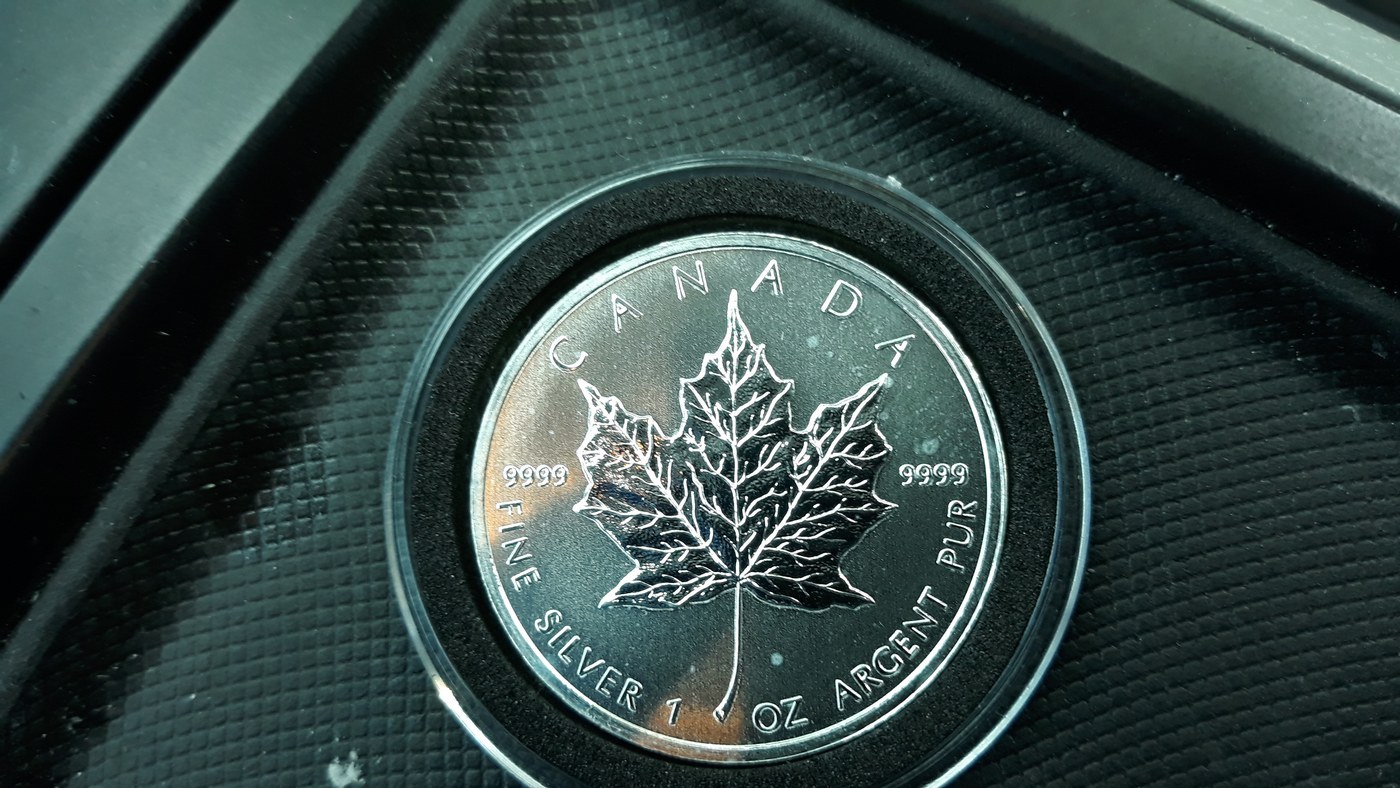
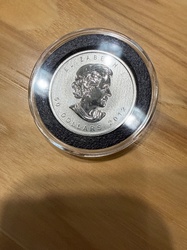
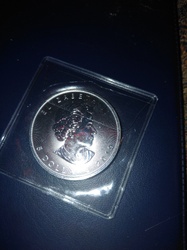
Start with the two faces. One side shows a single, finely veined sugar-maple leaf with CANADA arched above and the metal statement below, typically reading 9999 (for .9999 fineness) and 1 oz of pure silver in English and French (argent pur). The other side bears the effigy of the reigning monarch, the surrounding legend, the year of issue, and the 5 DOLLARS face value. If the leaf face and a monarch's portrait are both present, you are looking at the right coin type.
Confirm the physical specs. A genuine Silver Maple Leaf weighs one troy ounce (about 31.1 grams), measures roughly 38 mm across, and has a reeded (grooved) edge. Precise electronic scales and calipers are the simplest check: significant deviation in weight or diameter is a red flag. The metal should be bright silver-white; a grey, yellowish, or plated look suggests a fake or a clad copy.
Use the modern security features. Coins from about 2014 onward carry fine radial lines that fan out across both fields and produce a subtle light-diffraction effect when tilted, plus a laser-engraved micro maple-leaf privy mark containing a tiny two-digit year, readable only under magnification. Genuine examples show these crisply and correctly; missing, blurry, or mismatched marks on a coin that should have them warrant suspicion.
Watch for look-alikes and counterfeits. The Silver Maple Leaf can be confused with other national silver ounces or with rounds that merely depict a maple leaf but are not RCM legal tender; only the RCM coin carries the CANADA legend, the 5 DOLLARS denomination, and the monarch's effigy. Counterfeits may be underweight, magnetic, off-color, or struck in silver-plated base metal. A magnet test (silver is non-magnetic), a precise weight-and-size check, and, if needed, a specific-gravity or professional test help confirm authenticity before a significant purchase.
Finally, assess condition. Because the .9999 silver is soft, expect the possibility of contact marks and milk spots even on unused coins. These affect eye appeal and premium but not the underlying silver content, so grade the surfaces separately from the question of authenticity.
Frequently asked questions
What quick test separates a real Silver Maple Leaf from a fake?
Weigh it and measure it: a genuine coin is one troy ounce (about 31.1 g) and roughly 38 mm wide, is non-magnetic, and shows a bright silver-white color. Off weight, magnetism, or dull plating point to a counterfeit.
Where are the security marks and what should they look like?
On issues from about 2014 onward, look for fine radial lines across both fields and a laser micro-engraved maple-leaf privy mark with a tiny two-digit year, visible under magnification. They should be sharp and correctly placed.
How do I tell it apart from a plain silver 'maple leaf' round?
Only the Royal Canadian Mint coin carries the CANADA legend, the 5 DOLLARS denomination, and the monarch's effigy. Private rounds may show a maple leaf but lack these legal-tender markings.
Do milk spots mean my coin is fake?
No. Milk spots are a known cosmetic effect on high-purity silver and do not indicate a counterfeit. They can lower the premium a buyer offers but do not change the coin's silver content.
Canadian Silver Maple Leaf identified by the community
Recent Canadian Silver Maple Leaf coins identified with Coin Identifier.