
How to Identify the Canadian Platinum Maple Leaf
A visual guide to the Royal Canadian Mint's Platinum Maple Leaf, covering the monarch obverse, maple leaf reverse, purity, and fake-spotting tips.
Read the full Canadian Platinum Maple Leaf encyclopedia entry →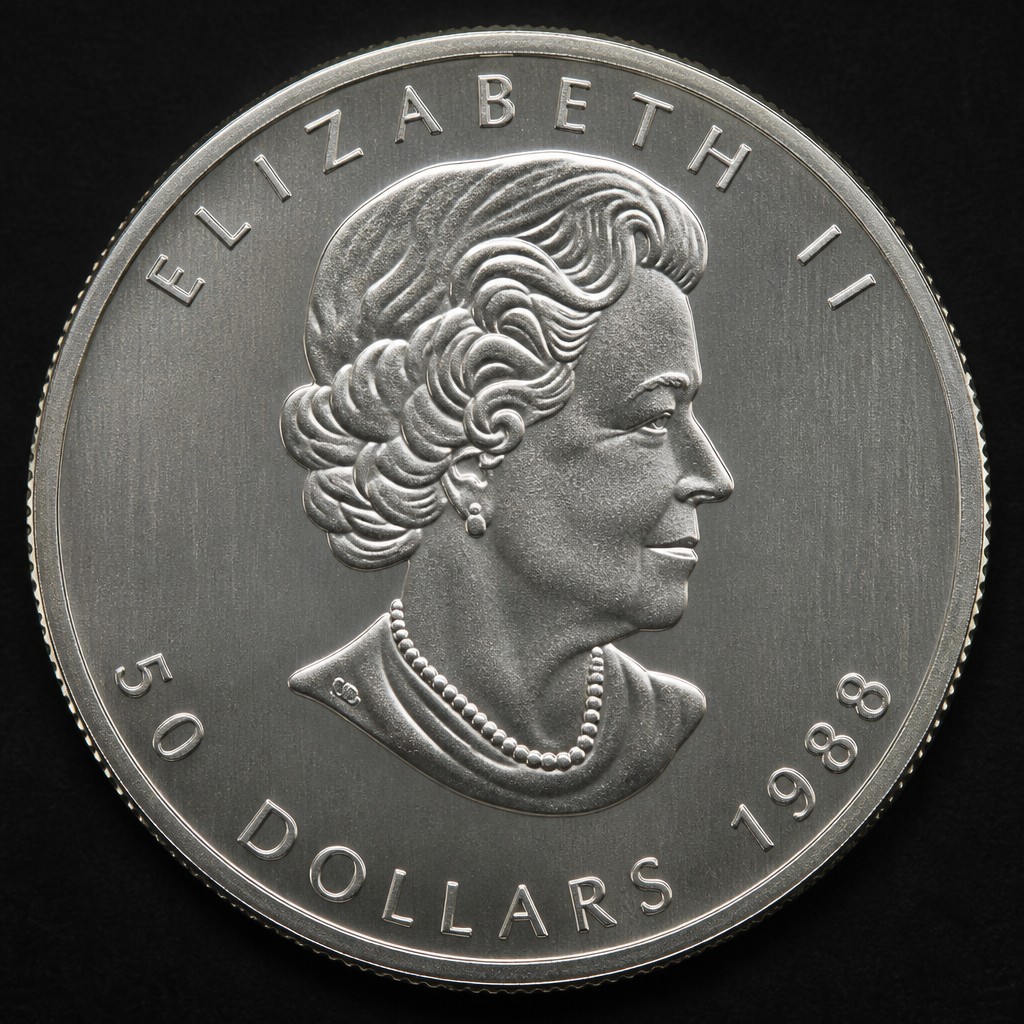
What This Coin Is
The Canadian Platinum Maple Leaf is a bullion coin produced by the Royal Canadian Mint, first issued in 1988 as a platinum companion to the long-running Gold Maple Leaf series. It quickly became known for its exceptionally high purity and remains one of the most recognized platinum bullion coins worldwide.
Obverse Design
The obverse bears the reigning Canadian monarch's portrait. Older coins show Queen Elizabeth II in one of several official effigies used over the decades, while coins from 2023 onward carry King Charles III's portrait. The legend includes "ELIZABETH II" or "CHARLES III," "CANADA," and the face value in Canadian dollars.
Reverse Design
The reverse features a single detailed maple leaf, Canada's national symbol, centered in the field with fine vein texturing. The weight and fineness statement, such as "PLATINUM 1 OZ 9995," appears along with the year of issue.
Size, Weight, and Metal
The series has included one ounce, half ounce, quarter ounce, tenth ounce, and even smaller fractional sizes over the years, struck in .9995 fine platinum, one of the highest purities offered in bullion coinage. The one-ounce coin measures approximately 30mm in diameter with a reeded edge.
Mint Marks and Inscriptions
Many Royal Canadian Mint bullion products include a micro-engraved security mark, such as a tiny maple leaf with a laser-etched number, visible only under magnification, introduced in later years to combat counterfeiting. Standard bullion strikes do not carry a separate mint mark letter, relying instead on the fineness and weight text for identification.
Telling It Apart From Similar Coins
The maple leaf reverse is distinctive to Canadian coinage and should not be confused with other platinum bullion coins like the American Platinum Eagle's Statue of Liberty obverse or the Australian Platinum Koala's koala reverse. When comparing to the Canadian Gold or Silver Maple Leaf, check the metal color and the fineness inscription, since all three metals share a nearly identical overall design.
Judging Condition at a Glance
Well-preserved coins show sharp, unbroken vein lines across the maple leaf and a bright, satin-like platinum luster. Handling marks, hairline scratches, or a dull, grayish haze on the surface indicate wear or improper storage, though platinum itself does not tarnish the way silver does.
Authenticity Red Flags
Check for the RCM's micro-engraved security mark under magnification on coins from years when this feature was introduced, since counterfeits often omit or blur this detail. Verify weight and diameter precisely, as platinum's high value makes it a target for tungsten-core or plated fakes, and inspect the maple leaf's vein detail for crisp, consistent engraving rather than soft or mushy lines.
Frequently asked questions
When did the Canadian Platinum Maple Leaf debut?
It was first issued in 1988, alongside the well-established Gold Maple Leaf program.
What purity is the platinum?
It is struck in .9995 fine platinum, among the highest purity levels used in bullion coins.
What denominations were produced?
One ounce, half ounce, quarter ounce, tenth ounce, and other fractional sizes have been issued over the years.
How can I verify authenticity?
Later coins include a micro-engraved security mark visible under magnification, in addition to checking weight, diameter, and design sharpness.
Does the obverse portrait change?
Yes, older coins show Queen Elizabeth II while coins from 2023 onward show King Charles III, reflecting the reigning monarch at time of issue.