
How to Identify the Cambodia One Franc
A collector's guide to the Cambodia one-franc: the Norodom royal profile, the coat-of-arms reverse, the copper-nickel fabric, dates and look-alikes.
Read the full Cambodia One Franc encyclopedia entry →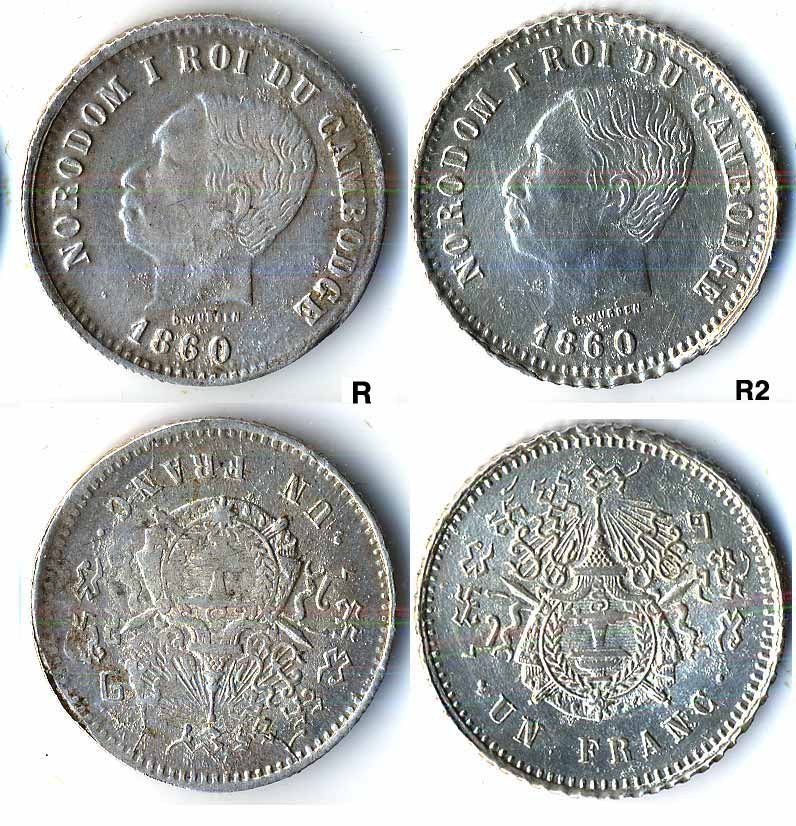
Begin with the design pairing, which is the quickest identifier. One face shows a royal profile portrait tied to the Norodom royal house, usually with a legend naming Cambodia and the ruler; the other shows a heraldic coat of arms—the Cambodian royal arms—together with the value and date. A royal profile on one side and a coat of arms on the other, at a one-franc value, points squarely to Cambodian franc coinage of the mid 20th century.
Confirm the physical coin. This is a small copper-nickel one-franc: a round, light, base-metal piece with a pale silvery-grey alloy that often tones to a darker or warmer shade in circulation. It is not a large silver coin and should not weigh or feel like one; a modest diameter and light weight are consistent with a minor denomination. A magnet test and simple weight and diameter checks help separate it from unrelated look-alikes struck in other metals.
Read the legends and date. Look for the numeral "1" with the word franc, the name of the kingdom, and a date in the 1950s–1960s range. The lettering places the coin in the franc period around Cambodian independence, before the riel system was fully in force, and helps distinguish it from later riel-denominated Cambodian coins that carry different wording and imagery.
Watch for look-alikes and related types. Cambodian franc coinage spans more than one denomination and design generation, so do not assume every Norodom-portrait or coat-of-arms coin is the one-franc—check the value and diameter. Earlier 19th-century Norodom I coins exist as well and can superficially recall this imagery, but they differ in date, size and often metal. Confirm the denomination rather than relying on the portrait alone.
Apply standard authentication cautions. Genuine coins are struck, with clean lettering and crisp detail in the portrait and the coat of arms. Be wary of cast copies showing soft or blurred detail, seams or surface bubbles, of coins artificially colored or plated, and of any piece offered as a precious-metal version of a denomination that circulated in base metal. When in doubt, weigh and measure the coin and compare it against a reliable catalog of Cambodian coinage.
Frequently asked questions
How do I tell the one-franc from other Cambodian franc coins?
Read the denomination directly. Look for the numeral "1" with the word franc, then confirm the small size and light copper-nickel weight. Other values in the series share similar royal and heraldic imagery, so the stated denomination and diameter are what set the one-franc apart.
Could this be an older Norodom I coin instead?
It can look related, since Norodom-name coinage goes back to the 19th century, but the mid-century one-franc is dated to the 1950s–60s and is a light copper-nickel piece. Check the date, size and metal: earlier Norodom I issues differ in those respects.
The coin looks dark or brassy—is that a problem?
No. Copper-nickel tones with age and handling, so circulated coins often appear darker or warmer than a fresh strike. Toning alone does not indicate a fake; judge authenticity from struck detail, correct weight and diameter instead.
How can I spot a counterfeit?
Genuine coins are sharply struck with clean legends and clear detail in the portrait and coat of arms. Watch for casting seams, bubbles, mushy detail, plating meant to imitate precious metal, or an incorrect weight and diameter, and verify against a standard reference for Cambodian coins when unsure.