
How to Identify the British Silver Lunar Series
A quick visual guide to the Royal Mint's Shengxiao Lunar bullion coins, covering the zodiac reverse designs, monarch obverse, weight, and mint features.
Read the full British Silver Lunar Series encyclopedia entry →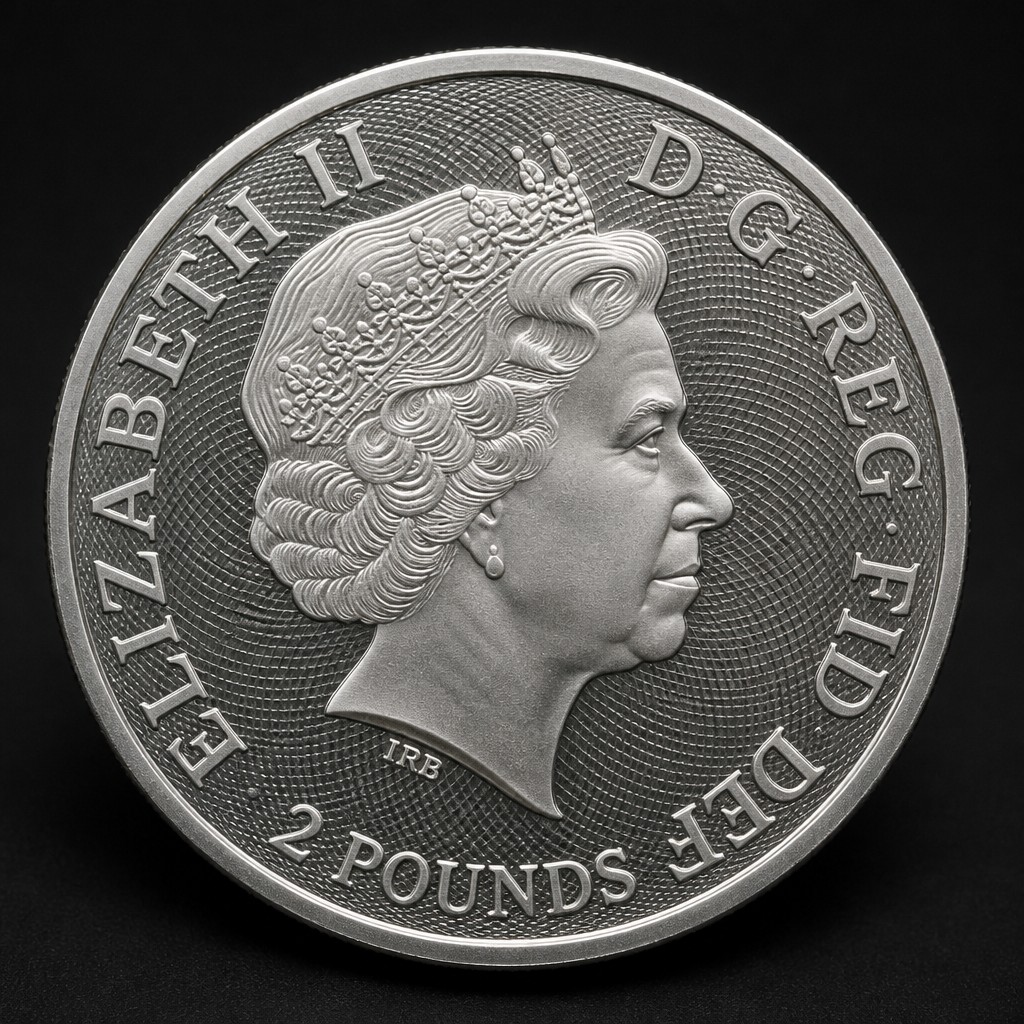
What This Coin Is
The British Silver Lunar Series (officially the Shengxiao Lunar coins) is a bullion program from the Royal Mint that began in 2014 with the Year of the Horse. Each year's coin honors a different animal from the Chinese zodiac, released as one-ounce .999 fine silver pieces with a £2 face value. The series runs on a twelve-year zodiac cycle and is popular with both bullion buyers and collectors who chase full animal sets.
Obverse Design
The obverse carries the current UK monarch's portrait. Coins struck through 2022 show Jody Clark's fifth definitive effigy of Queen Elizabeth II; coins from 2023 onward carry the new King Charles III portrait. Surrounding the portrait is the legend with the monarch's name and titles, along with the denomination "2 POUNDS" and the year of issue.
Reverse Design
The reverse features a large, stylized rendering of that year's zodiac animal (rat, ox, tiger, rabbit, dragon, snake, horse, goat, monkey, rooster, dog, or pig), usually shown in a dynamic pose against a plain or lightly textured field. The words "1 OZ 999 SILVER" appear along the design, and many issues include Chinese characters naming the animal. Designers have varied by year, so artistic style shifts noticeably across the series.
Size, Weight, and Metal
Standard issues are struck in one troy ounce of .999 fine silver, roughly 38.6mm to 40mm in diameter depending on the year's design, with a reeded or plain edge that can vary by release. Some years also include smaller fractional or larger kilo-format versions for collectors.
Mint Marks and Inscriptions
Look for the Royal Mint's small trident-like mint mark or a small privy mark near the rim, along with the date, denomination, and "999" fineness stamp. Because these are bullion coins struck at high volume, the strike should be sharp and uniform with no visible mint mark for standard bullion strikes beyond the date and fineness text.
Telling It Apart From Similar Coins
The British Lunar Series is easy to confuse with other national lunar programs, such as the Australian Perth Mint Lunar Series or the Chinese Gold/Silver Panda-adjacent zodiac issues. The giveaway is the obverse: only the British issue carries the UK monarch's portrait and £2 denomination. Compare the animal artwork style and inscription language to rule out Australian or other Commonwealth lunar coins, which use different reverse art and denominations.
Judging Condition at a Glance
Bullion-grade coins typically show a brilliant, frosty finish with light contact marks acceptable for the grade. Proof and premium finishes (if available for that year) show mirrored fields and frosted devices with no bag marks. Watch for hairline scratches, edge dings, or excessive toning, which lower desirability even though the silver content itself is unaffected.
Authenticity Red Flags
Counterfeits of popular bullion coins are common, so check for correct diameter and weight using a scale and calipers, since fakes are often slightly off-spec or made from base metal with silver plating. A dull or grainy surface, blurry design details, or incorrect font weight in the lettering are warning signs. Genuine coins should ring with a bright, sustained tone when gently tapped, unlike counterfeit alloys.
Frequently asked questions
What metal is the British Silver Lunar Series made of?
It is struck in one troy ounce of .999 fine silver for the standard bullion issue, with some years offering fractional or larger formats.
How can I tell which zodiac animal a coin represents?
The reverse design and any Chinese characters name the animal directly, and the twelve-year cycle means the date on the coin also indicates the corresponding zodiac year.
Does the obverse portrait change over the series?
Yes, coins from 2014 through 2022 show Queen Elizabeth II, while coins from 2023 onward feature King Charles III.
How do I avoid confusing this with the Australian Lunar Series?
Check the obverse denomination and portrait; the British coin says 2 POUNDS with a UK monarch, while Australian lunar coins use Australian dollar denominations and different reverse art.
What size is a standard one-ounce coin?
It is approximately 38.6 to 40mm in diameter, varying slightly by year's design, matching typical one-ounce silver bullion dimensions.