
How to Identify the British Silver Britannia
A guide to identifying the British Silver Britannia by its standing Britannia reverse, royal portrait obverse, silver fineness change in 2013, and common counterfeit warning signs.
Read the full British Silver Britannia encyclopedia entry →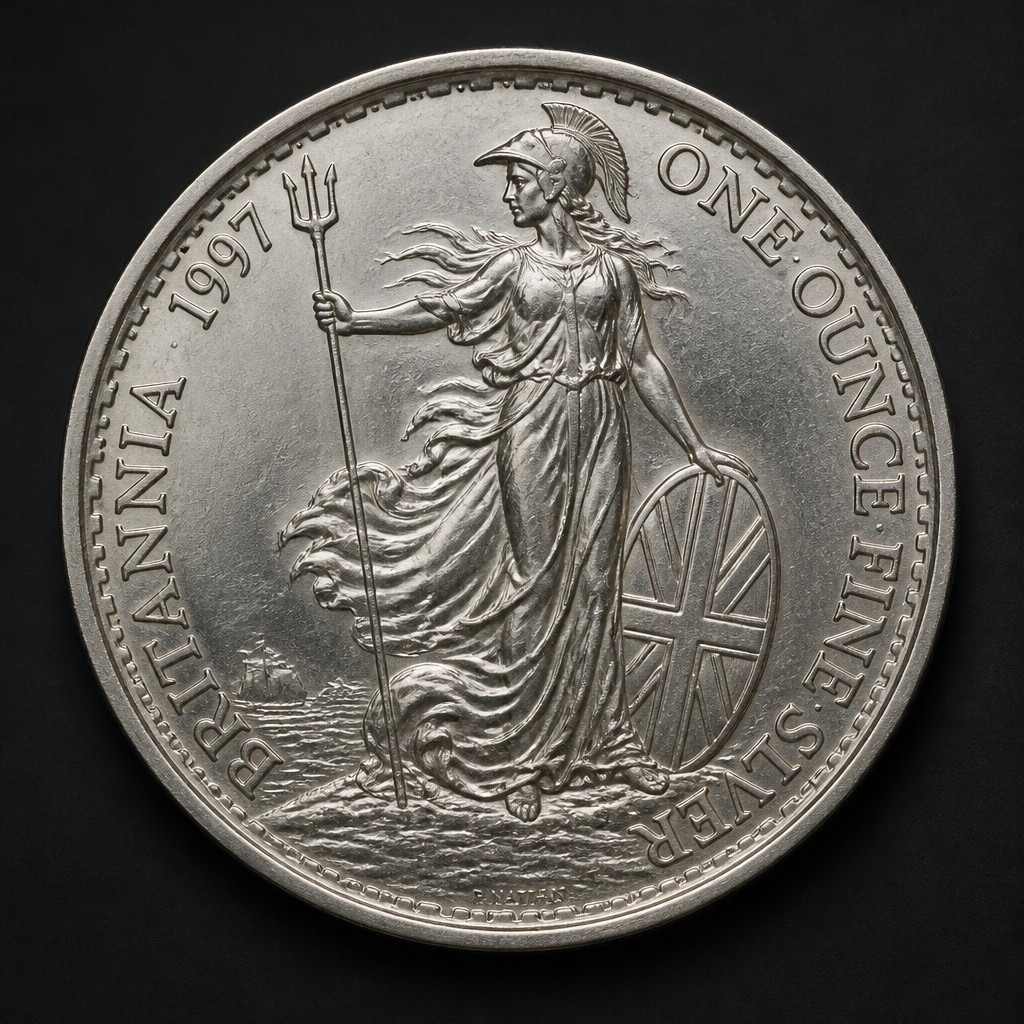
What It Is
The Silver Britannia is the Royal Mint's silver bullion coin, launched in 1997 as a companion to the earlier Gold Britannia. It shares the same national symbolism and has been issued every year since.
Obverse Design
The obverse carries a portrait of the reigning monarch. Coins from 1997 to 2022 show one of the Queen Elizabeth II effigies used during that period, while coins from 2023 onward carry the King Charles III portrait.
Reverse Design
The reverse features Britannia as a standing figure in a flowing robe and helmet, holding a trident and shield, with the sea and waves behind her. Some years used slightly different artistic treatments of the standing Britannia theme. "BRITANNIA" and the date appear on the design.
Size, Weight, Metal, and Edge
From 1997 to 2012, the coin was struck in .958 fine "Britannia silver," a traditional British silver alloy. From 2013 onward, the Royal Mint switched to .999 fine silver. The standard 1 oz coin carries a face value of £2, with a reeded edge; larger multi-ounce and fractional sizes have also been issued.
Mint Marks and Where to Find Them
Silver Britannias are struck only at the Royal Mint and do not carry a separate mint mark. Identification instead relies on matching the design, portrait, and weight to the correct year.
Telling It Apart From Similar Coins
Compare the portrait style to narrow the year range, and note the fineness change in 2013 - pre-2013 coins are a slightly duller alloy rather than pure silver. Genuine silver naturally develops light gray or gold toning over time; a coin that stays perfectly bright for years with an oddly plastic-like sheen may not be genuine silver.
Judging Condition at a Glance
Look for hairline scratches or handling marks on Britannia's robe and shield, and check the sharpness of the waves and lettering. Brilliant uncirculated bullion coins have a satin luster, while proof versions show a deep mirror finish; heavy handling produces a dull, worn look across the highest design points. Coins stored loosely in a drawer or pocket tend to pick up small rim dings and a scattering of fine scratches across the open fields around Britannia's figure, while coins kept in mint capsules or tubes usually retain their original luster with only minimal handling marks.
Authenticity Red Flags
Confirm the coin's weight and diameter match official specifications, check that it is not magnetic, and inspect the edge reeding for consistency. A coin with an unnaturally bright, unchanging surface, incorrect lettering, or a soft and indistinct strike should be examined more closely before assuming it is genuine. Weighing the coin on a precise scale and comparing it against the published gram weight for its size is a simple, reliable first check before looking at any finer design details.
Frequently asked questions
What changed with Silver Britannias in 2013?
The metal changed from .958 fine Britannia silver alloy to .999 fine silver, giving later coins a purer silver content.
Does the Silver Britannia have a mint mark?
No, it is struck only at the Royal Mint and does not carry a separate mint mark.
How do I know the year of a Silver Britannia?
The date is inscribed on the coin, and the portrait style can help narrow the range since different royal effigies were used over the years.
Why doesn't my Silver Britannia show any toning?
Genuine silver typically develops light toning over time; a coin that remains unnaturally bright for years is worth closer inspection.