
How to Identify the British Queen's Beasts Silver Series
A guide to identifying British Queen's Beasts Silver Series coins by their heraldic beast reverse designs, Queen Elizabeth II obverse portrait, and .999 silver purity across the ten-coin series.
Read the full British Queen's Beasts Silver Series encyclopedia entry →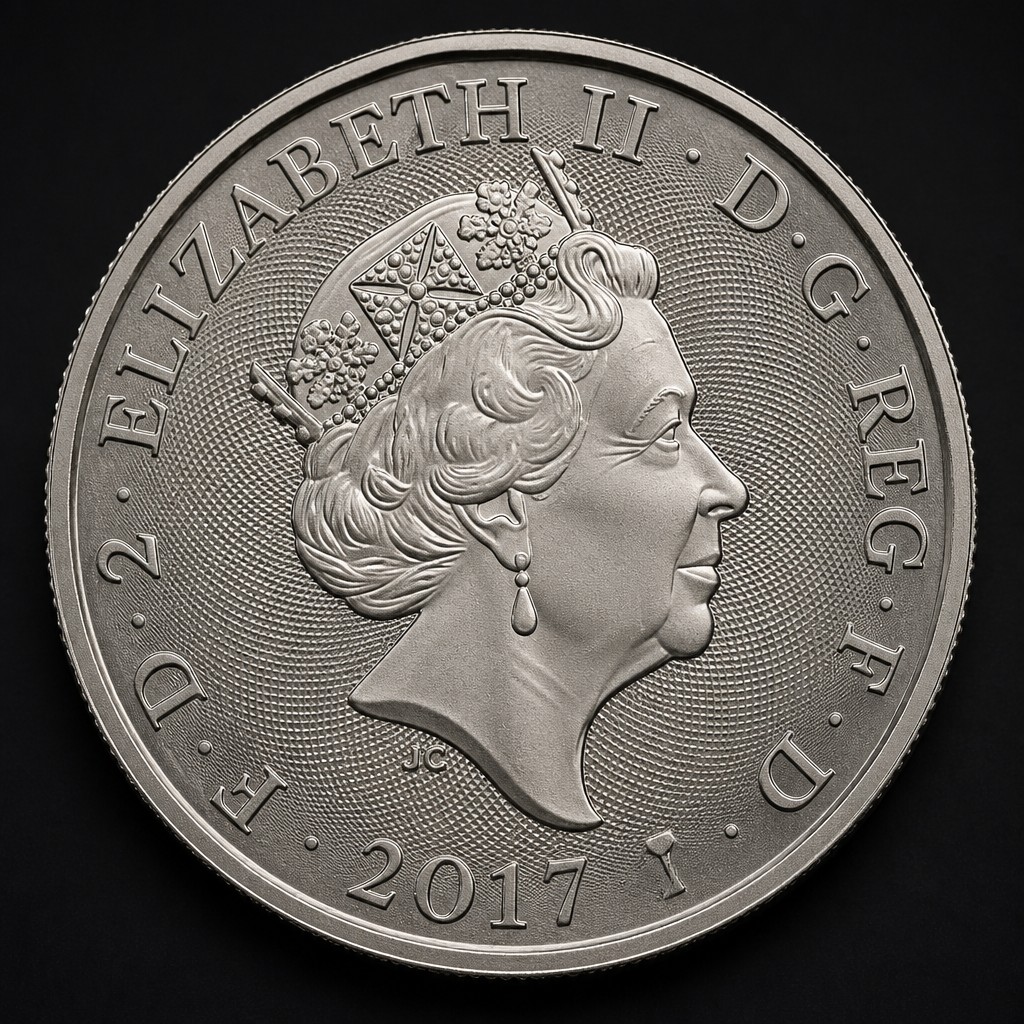
What It Is
The Queen's Beasts Silver Series is a Royal Mint bullion program issued from 2016 to 2021, reviving the ten heraldic statues known as the Queen's Beasts, which were originally created for Queen Elizabeth II's 1953 coronation. Each coin in the series features one beast, and the program proved popular enough that the Royal Mint has continued producing related heraldic bullion designs after the original ten-coin set was completed.
Obverse Design
The obverse carries the Jody Clark portrait of Queen Elizabeth II, used consistently throughout the series' run.
Reverse Design
The reverse of each coin shows one specific heraldic beast standing on a plinth, often bearing or accompanied by a shield - examples include the Lion of England, the Griffin of Edward III, the Red Dragon of Wales, the Unicorn of Scotland, and the White Horse of Hanover, among others across the full ten-coin set.
Size, Weight, Metal, and Edge
Queen's Beasts coins are struck in .999 fine silver, with a £2 face value for the standard 1 oz size. The series was also produced in larger 2 oz, 5 oz, 10 oz, and kilo formats, as well as in gold, with a reeded edge on standard coins.
Mint Marks and Where to Find Them
All coins in the series were struck at the Royal Mint in Llantrisant and do not carry a separate mint mark.
Telling It Apart From Similar Coins
Each coin is identified primarily by which specific beast and heraldic shield or charge appears on the reverse, since the ten animals are visually distinct from one another. The consistent obverse portrait and "£2" denomination help confirm a coin belongs to the standard 1 oz silver series rather than a larger or gold version.
Judging Condition at a Glance
Look for crisp detail in the beast's mane, wings, or fur and in the fine lines of its heraldic shield. Silver develops natural toning over time, and handling marks or scratches reduce eye appeal on an otherwise well-struck coin. A coin still in its original mint capsule typically shows bright, undisturbed luster across the plinth and shield, while a coin that has been handled loose often shows small rim dings and light hairlines across the open field surrounding the beast.
Authenticity Red Flags
Check that the coin's weight and diameter match official specifications for its stated size, confirm it is not magnetic, and examine the heraldic shield details for sharpness, since a blurred or indistinct rendering suggests a lower-quality copy rather than a genuine strike. It is also worth comparing the specific beast and its shield charge against the official list of ten designs, since an unfamiliar or inconsistent combination of animal and heraldry is a sign the coin may not be a genuine series issue.
Frequently asked questions
How many coins make up the Queen's Beasts Silver Series?
Ten coins, each featuring a different heraldic beast, issued between 2016 and 2021.
Whose portrait appears on the obverse?
Queen Elizabeth II, using the Jody Clark effigy consistently across the series.
What sizes were produced?
The standard bullion size is 1 oz with a £2 face value, alongside larger 2 oz, 5 oz, 10 oz, and kilo formats, as well as gold versions.
How do I identify which beast is on my coin?
Compare the animal and its accompanying heraldic shield to the known list of ten beasts, such as the Lion of England, Red Dragon of Wales, or Unicorn of Scotland.