
How to Identify the British Gold Britannia
A guide to identifying the British Gold Britannia by its rotating royal portrait, standing Britannia reverse, gold purity change in 2013, and modern security features.
Read the full British Gold Britannia encyclopedia entry →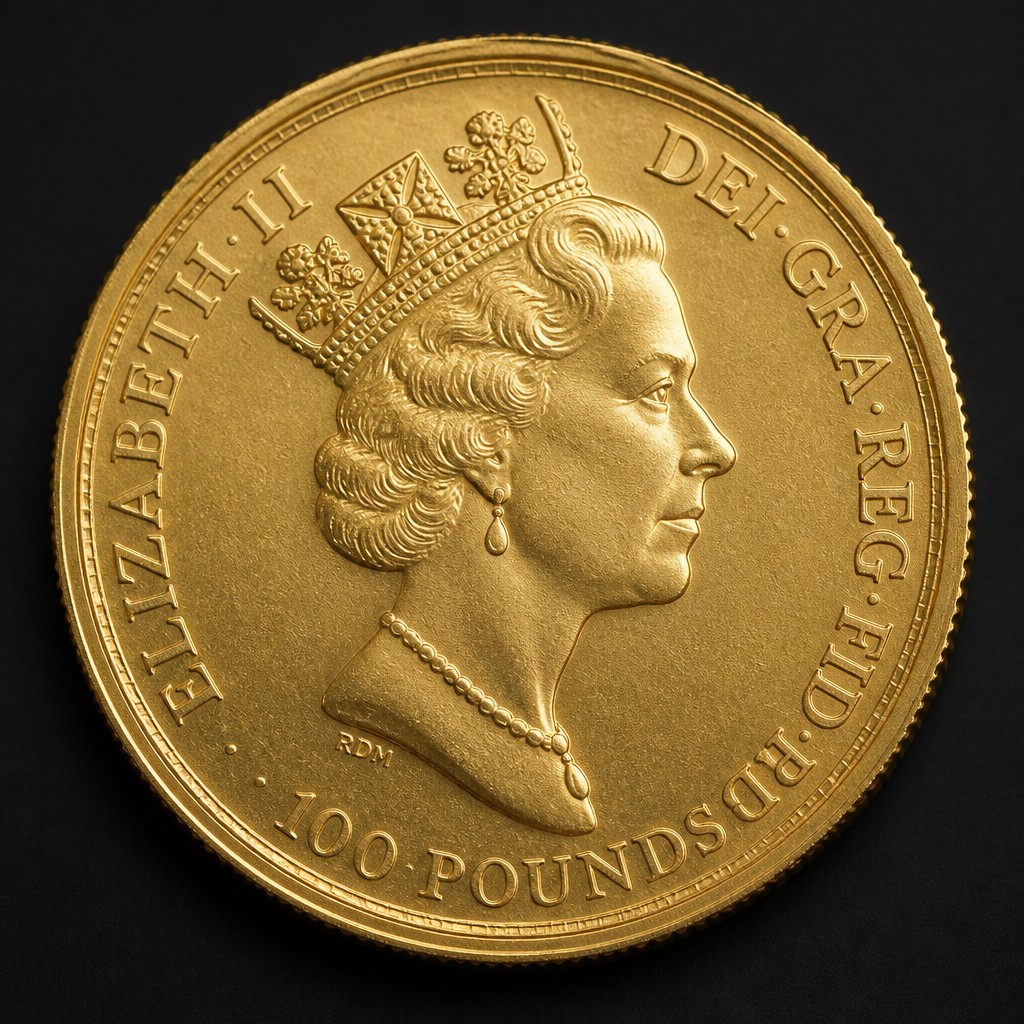
What It Is
The Gold Britannia is the Royal Mint's flagship gold bullion coin, first struck in 1987. It is one of the world's major bullion coin series and has carried several different royal portraits over its history as monarchs and official effigies changed.
Obverse Design
The obverse shows the reigning monarch. Coins from 1987 to 2022 carry one of several portraits of Queen Elizabeth II created over the decades by different Royal Mint engravers, each with slightly different hair and detailing. From 2023 onward, coins carry the effigy of King Charles III.
Reverse Design
The reverse depicts Britannia as a standing female figure wearing a helmet and flowing robe, holding a trident and a shield, with waves at her feet. The word "BRITANNIA" and the year date appear on the coin.
Size, Weight, Metal, and Edge
From 1987 to 2012, Gold Britannias were struck in 22-carat (.917 fine) gold. From 2013 onward, the Royal Mint switched to 24-carat (.9999 fine) gold. Standard face values are £100 (1 oz), £50 (1/2 oz), £25 (1/4 oz), and £10 (1/10 oz), with a reeded edge.
Mint Marks and Security Features
All Gold Britannias are struck at the Royal Mint in Llantrisant and carry no separate mint mark. Since 2019, coins have included added anti-counterfeiting features, including fine micro-text and a pattern of lines within Britannia's shield, along with a latent security mark visible only from certain angles.
Telling It Apart From Similar Coins
The portrait style helps narrow down the approximate year range, since four distinct Elizabeth II effigies were used between 1987 and 2022. The color also shifts slightly - pre-2013 22-carat coins have a marginally warmer, slightly less pure tone than the brighter 24-carat coins from 2013 onward. Compare weight and diameter carefully against a Sovereign or other gold coin of similar size, since these are different specifications.
Judging Condition at a Glance
Because gold does not tarnish, condition is judged by surface marks rather than toning. Look for bag marks or scuffs on Britannia's robe and trident, and check that the lettering and portrait retain crisp, unworn edges. Proof versions show mirror-like fields, while standard bullion strikes have a satin finish. A coin fresh from a mint tube typically shows uniform, undisturbed luster across Britannia's helmet and shield, while one that has been handled or carried loose often shows small edge dings and light hairline scratches across the flat field areas.
Authenticity Red Flags
Check that weight and diameter match the stated denomination, that the coin is not magnetic, and, for coins dated 2019 or later, that the fine security lines in the shield are present and sharp rather than blurred or missing. A weak, blobby strike or incorrect lettering font are also signs of a possible counterfeit. Comparing a suspect coin side by side with a known-genuine example of the same year, or against clear reference photos, is one of the most reliable ways to catch subtle differences in relief depth or lettering style.
Frequently asked questions
What changed with Gold Britannias in 2013?
The purity was increased from 22-carat (.917 fine) to 24-carat (.9999 fine) gold, giving post-2013 coins a slightly brighter color.
How can I tell which monarch is on my coin?
Coins from 1987 to 2022 show one of four Queen Elizabeth II portraits used over the decades; coins from 2023 onward show King Charles III.
Do all Gold Britannias have security features?
No, the added micro-text and shield line pattern were introduced starting with 2019-dated coins; earlier coins do not have them.
What denominations does the Gold Britannia come in?
£100, £50, £25, and £10, corresponding to 1 oz, 1/2 oz, 1/4 oz, and 1/10 oz of gold.