
How to Identify the Britannia (Silver Bullion)
A visual guide to the Royal Mint's silver Britannia bullion coin, identified by its standing Britannia reverse, monarch's portrait obverse, and fine-silver content.
Read the full Britannia (Silver Bullion) encyclopedia entry →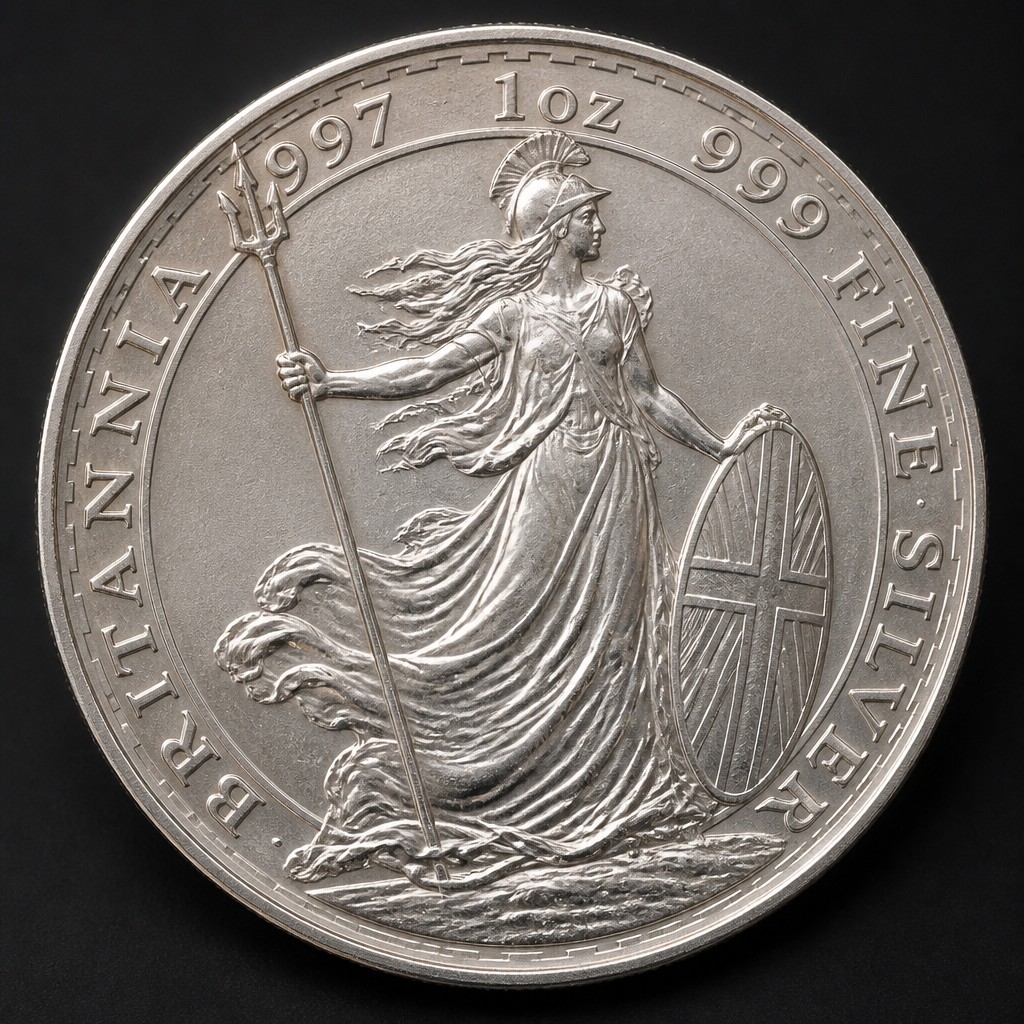
What It Is
The silver Britannia is a bullion coin produced by the Royal Mint since 1997, aimed primarily at investors and collectors rather than circulation. Its face value is nominal compared to its silver content, and it is issued in various weights, most commonly one troy ounce.
Obverse Design and Inscriptions
The obverse shows the reigning monarch's portrait along with the coin's face value (such as "TWO POUNDS" for the standard one-ounce coin) and the year of issue. As the monarch has changed over the coin's run, portraits of Queen Elizabeth II appear on earlier dates and King Charles III on more recent issues.
Reverse Design and Inscriptions
The reverse features a standing figure of Britannia, typically shown holding a trident and shield, with waves at her feet and "BRITANNIA" inscribed. Exact artistic treatments of the standing Britannia design have varied across different years as the Royal Mint periodically refreshed the artwork, but the core standing-figure concept has remained constant.
Size, Weight, Metal, and Edge
The standard one-ounce silver Britannia weighs 31.21 grams (one troy ounce) and measures approximately 38.61 mm in diameter. Coins from 1997 to 2012 were struck in .958 fine silver (Britannia silver standard); from 2013 onward, the Royal Mint moved to .999 fine silver. The edge is reeded on standard bullion strikes.
Mint Marks and Where to Find Them
As a modern Royal Mint product, the silver Britannia does not carry a separate mint mark in the traditional historic sense, since all coins are struck at the Royal Mint in Llantrisant. Recent issues do incorporate covert and overt security features, such as a latent image or micro-text, which can be checked against official Royal Mint descriptions for the specific year.
Telling It Apart From Similar Coins
The silver Britannia is easily distinguished from historic British silver coinage by its modern date, high fineness, and large, uniform bullion-coin format. It differs from the Gold Britannia mainly by its metal color and weight; comparing the two side by side (or checking the stated metal) resolves any confusion.
Judging Condition at a Glance
Bullion coins are generally evaluated for whether they remain in original, unhandled "brilliant uncirculated" condition, since scratches, fingerprints, or milk spotting (a known issue with some silver bullion) can affect desirability. Look for a fully lustrous surface and sharp, unmarked fields.
Authenticity Red Flags
Check that the coin's diameter, weight, and thickness match official Royal Mint specifications precisely, since underweight or incorrectly sized coins are the most reliable sign of a counterfeit. A dull, non-reflective surface, incorrect font style in the lettering, or a magnetic response (genuine silver is not magnetic) are further warning signs. Buying from recognized dealers and checking any included assay certification or tamper-evident packaging for consistency with the issuing year adds an extra layer of confidence.
Frequently asked questions
What is the fineness of the silver Britannia coin?
Coins from 1997 to 2012 are .958 fine silver; from 2013 onward, the Royal Mint switched to .999 fine silver.
How much does a standard silver Britannia weigh?
The standard coin weighs one troy ounce, or 31.21 grams.
Whose portrait is on the silver Britannia?
The reigning monarch at the time of issue; earlier coins show Queen Elizabeth II and more recent issues show King Charles III.
Is the silver Britannia meant for everyday spending?
No, it is a bullion coin aimed at investors and collectors, though it does carry a legal tender face value.