
How to Identify the Australian Silver Kookaburra
A guide to identifying the Australian Silver Kookaburra by its yearly-changing kookaburra reverse, royal portrait obverse, Perth Mint P mintmark, and .999 silver purity.
Read the full Australian Silver Kookaburra encyclopedia entry →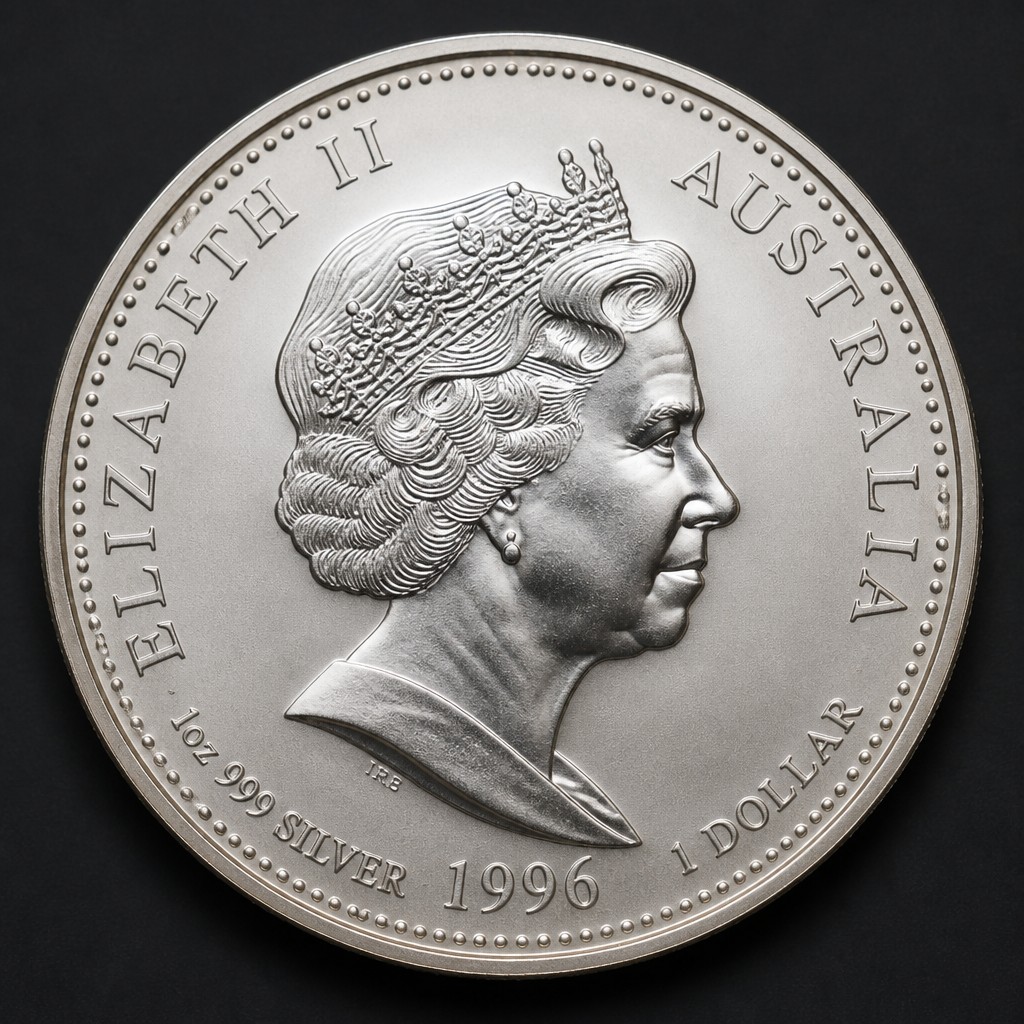
What It Is
The Silver Kookaburra is a bullion coin produced by the Perth Mint since 1990. Like a handful of other world bullion series, its reverse artwork changes nearly every year, making the kookaburra's pose and setting a useful clue to the coin's date.
Obverse Design
The obverse carries a portrait of the reigning monarch - Queen Elizabeth II on coins through 2022, and King Charles III on more recent issues - along with "AUSTRALIA" and the face value.
Reverse Design
The reverse shows a kookaburra, Australia's laughing kingfisher bird, in a new pose or setting most years - perched on a branch, in flight, or with additional birds. The words "AUSTRALIAN KOOKABURRA," the weight and fineness, and the year date appear on the design.
Size, Weight, and Metal
Kookaburra coins are struck in .999 fine silver. The most common size is 1 oz, though the Perth Mint has also issued 2 oz, 10 oz, kilo, and other sizes in various years.
Mint Marks and Where to Find Them
A small "P" mintmark appears within the coin's design field, identifying the Perth Mint as the source. This mark is a helpful quick check alongside the design and date.
Telling It Apart From Similar Coins
Compare the year's kookaburra artwork to the known design for that date, since a mismatch is a warning sign. The Kookaburra is easy to distinguish from the Perth Mint's Koala series by the bird versus koala reverse, and from the Kangaroo series by its different reverse animal and inscription layout.
Judging Condition at a Glance
Silver naturally develops light toning over time. Look closely at the fine feather detail on the kookaburra and the lettering for sharpness; a well-preserved bullion coin shows even satin luster, while handling marks or scratches reduce eye appeal without necessarily indicating a fake. Coins that have been stored in original mint capsules or tubes tend to keep their bright, frosty finish, while loose coins often pick up light rim dings and fine hairlines across the open background fields.
Authenticity Red Flags
Check for the correct "P" mintmark, verify the weight and diameter against official specifications, and be wary of a dull, grainy, or cast-looking surface instead of a crisp, deliberately struck design. A coin that never develops any toning despite age, or that responds to a magnet, should be examined more closely. Comparing the coin's edge reeding and overall diameter against a known-genuine example of the same size is a useful additional check when something about the design looks slightly off.
Frequently asked questions
Why does the kookaburra design change every year?
The Perth Mint has used a new kookaburra image most years since the series began in 1990, making each year's coin visually distinct.
Where is the mint mark on a Silver Kookaburra?
A small 'P' appears within the coin's design field, identifying the Perth Mint.
What sizes does the Silver Kookaburra come in?
The standard size is 1 oz, though 2 oz, 10 oz, kilo, and other sizes have been issued in different years.
How is the Kookaburra different from the Koala coin?
Both are Perth Mint silver bullion coins, but the Kookaburra features a bird on the reverse while the Koala features the eucalyptus-dwelling marsupial.