
How to Identify the Australian Gold Nugget (Kangaroo)
A practical overview of the Perth Mint's gold bullion series, explaining the changing kangaroo reverse, monarch obverse, purity, and how to spot fakes.
Read the full Australian Gold Nugget (Kangaroo) encyclopedia entry →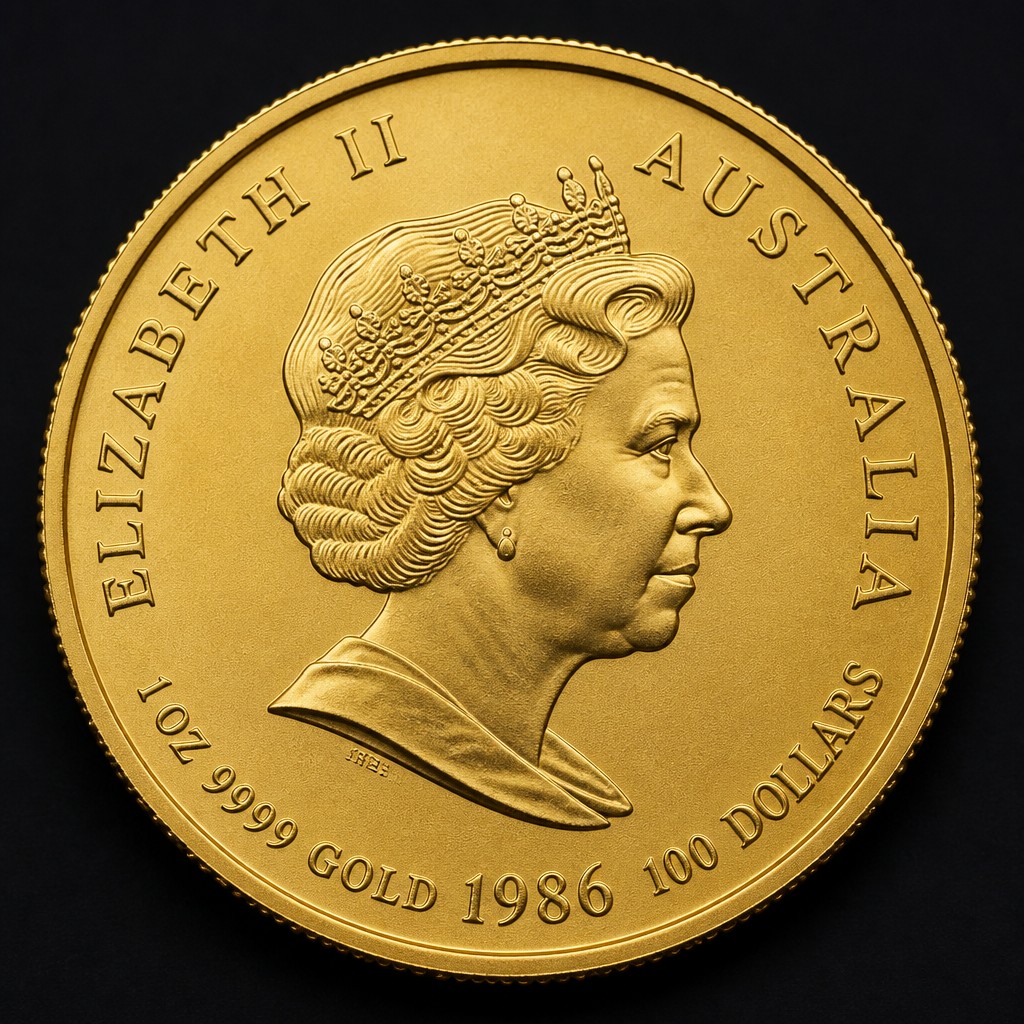
What Is the Coin
The Australian Gold Nugget is a gold bullion coin issued by the Perth Mint since 1986. Early issues (1986-1988) featured images of famous Australian gold nuggets, which is where the name comes from; from 1989 onward the reverse design switched to a kangaroo and the coin is often called the "Gold Kangaroo," though both names remain in common use for the series.
Obverse Design
Every coin carries the effigy of the reigning British monarch on the obverse, since Australia is a Commonwealth realm. Depending on the year, this is one of several Queen Elizabeth II portraits (including the Ian Rank-Broadley and Jody Clark effigies) or, on the newest issues, King Charles III. The face value, "AUSTRALIA," and date surround the portrait.
Reverse Design
The reverse shows a kangaroo, with the specific pose and scene changing every year, making each date visually distinct. The word "AUSTRALIA," the fineness, and the weight are typically included on the reverse alongside the kangaroo artwork.
Size, Weight, Metal & Edge
The coin is struck in .9999 fine gold. The most common size is one troy ounce (31.1 g, 32.1 mm diameter), with fractional weights of 1/2, 1/4, 1/10, and 1/20 oz also produced, each smaller in diameter and lighter in weight, plus larger kilo and larger commemorative sizes. Edges are reeded.
Mint Marks and Identifying Features
As a product of the Perth Mint, genuine coins carry a small "P" mint mark integrated into the design near the kangaroo or in the field, along with the fineness and weight statement. There is no separate "branch mint" system to worry about, since only the Perth Mint strikes this series.
Telling It Apart From Similar Coins
The changing yearly kangaroo design distinguishes this series from other national gold bullion coins like the Canadian Gold Maple Leaf or American Gold Eagle. Collectors should not confuse the early "Nugget" coins (1986-1988), which depict actual gold nuggets rather than a kangaroo, with the later Kangaroo-design coins; both are part of the same official program but look quite different.
Grading and Condition at a Glance
Because this is a bullion product struck in high volumes, most coins are evaluated for surface condition rather than numismatic rarity. Look for full, unworn luster and crisp detail in the kangaroo's fur texture; bag marks and light contact marks are common and generally acceptable for bullion-grade coins.
Authenticity Red Flags
Fakes often show doubled or blurry lettering, incorrect diameter-to-weight ratios, or a reverse kangaroo pose that does not match any officially issued year. Since gold is dense and non-magnetic, checking specific gravity or using a precise scale and caliper against official Perth Mint specifications for the claimed year and weight is an effective first screen.
Frequently asked questions
Why do some coins say Nugget and others show a kangaroo?
The design changed in 1989 from actual gold nugget images to a kangaroo motif; both eras belong to the same official Perth Mint bullion program.
Does the kangaroo design change every year?
Yes, the kangaroo pose and scene are updated annually, so each date has a unique reverse image.
What purity is the gold?
.9999 fine (24 karat) gold.
Where is the mint mark located?
A small 'P' for Perth is incorporated into the coin's design field.