
How to Identify the Antoninianus of Numerian
A collector's guide to spotting a Numerian antoninianus by its radiate portrait, reverse type, mint marks, and brassy metal.
Read the full Antoninianus of Numerian encyclopedia entry →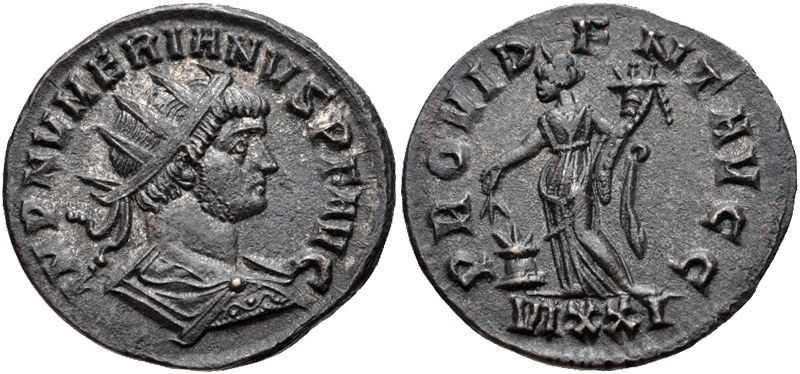
Start with the obverse portrait. A genuine antoninianus of Numerian shows a male bust facing right wearing a radiate crown of pointed spikes rather than a laurel wreath. Read the encircling legend carefully: an imperial titulature built around NVMERIANVS, such as IMP NVMERIANVS AVG or IMP C M AVR NVMERIANVS AVG, is what confirms the ruler. The name is the single most reliable diagnostic, because the portrait style is shared by many rulers of the period.
Next examine the reverse. Expect either a Victory striding forward with a wreath and palm branch, or a single standing figure, a deity or personification, holding identifying attributes: Providentia with a wand and cornucopia, Sol raising a hand, Fortuna with a rudder, or Pax with an olive branch. The reverse legend names the type, so matching the figure's attributes to that legend is the key attribution step.
Check the exergue and fabric. Late radiates of this reign often carry a mint mark and officina letter in the exergue beneath the reverse figure, which can help pin the coin to a specific mint such as Rome, Ticinum, Lugdunum, Siscia, or one of the eastern mints. The metal is a brass or bronze alloy, sometimes with traces of original silvering; a brown, brassy, or patchily silvered surface is normal, while a bright white or heavy piece deserves scrutiny.
Measure the coin. Diameter should fall roughly in the 20-23 mm range with a weight near 3-4.5 grams. Coins far outside these figures, or with a suspiciously smooth, seamed, or bubbly surface, may be casts or modern reproductions.
Beware of look-alikes. Antoniniani of Numerian's father Carus and brother Carinus share the same radiate format, reverse types, and mint marks, so always confirm the obverse name before attributing. When authenticity or precise attribution matters, compare the exact obverse and reverse legends and the mint mark against a standard reference such as RIC rather than relying on the portrait alone.
Frequently asked questions
What is the fastest way to attribute this coin?
Read the obverse legend for NVMERIANVS and confirm the radiate crown; that narrows it to Numerian, then use the reverse legend and mint mark to name the exact type.
Could this be a coin of Carus or Carinus instead?
Yes. Carus, Carinus, and Numerian used the same radiate format and reverse types, so always verify the emperor's name in the obverse legend before attributing the coin.
What do the letters under the reverse figure mean?
They are the mint mark and officina (workshop) letter in the exergue, which identify where and in which workshop the coin was struck and help with precise attribution.
Why isn't my coin shiny silver?
By the 280s the antoninianus was a brass or bronze alloy with only a thin silver wash, so a brown or brassy surface with little or no silvering is normal and not a sign of a fake.