
How to Identify the American Gold Eagle
A collector's checklist for confirming a U.S. Gold Eagle — the Saint-Gaudens Liberty obverse, weight legends, alloy tone, and authentication cautions.
Read the full American Gold Eagle encyclopedia entry →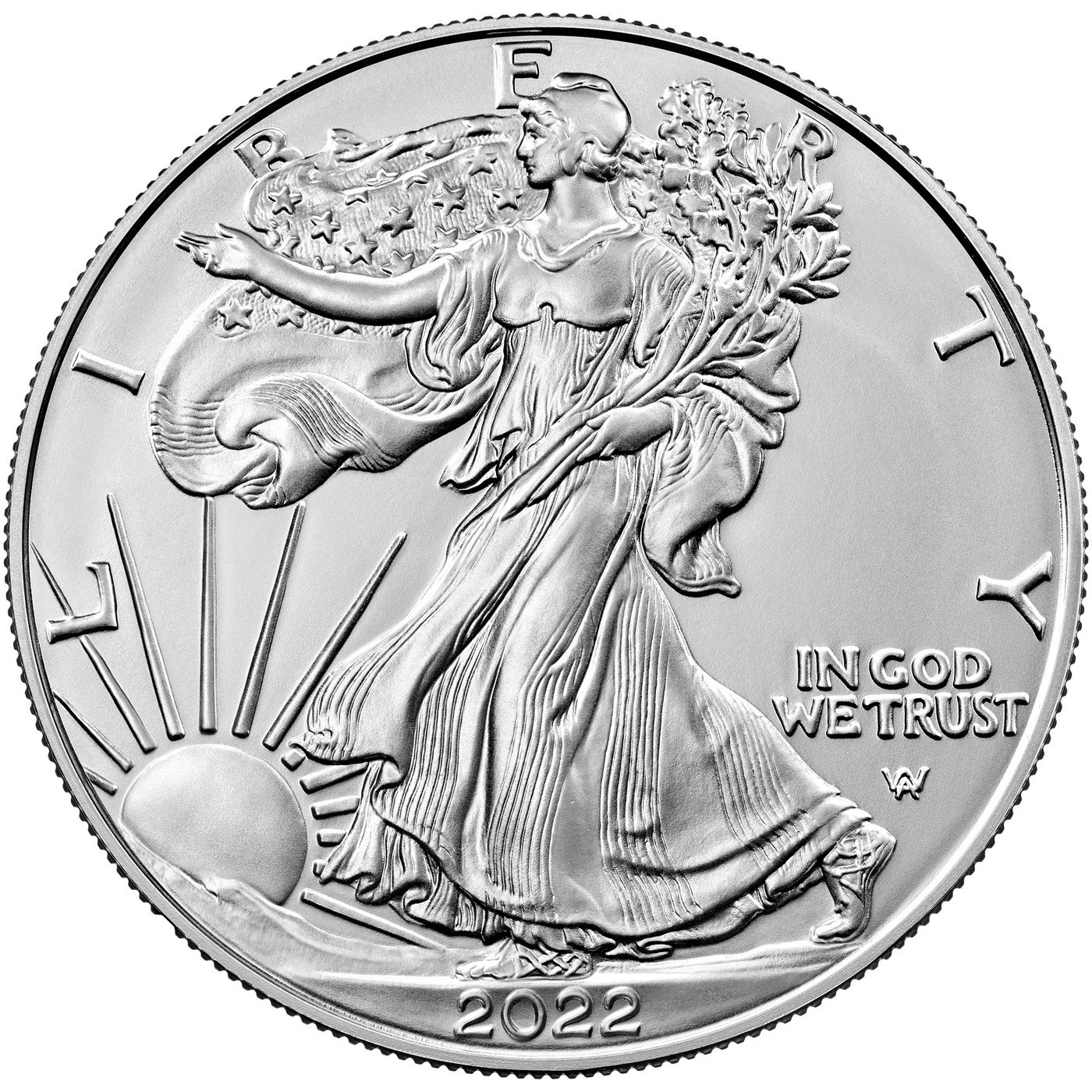
Start with the obverse, which is the single most recognizable feature. The American Gold Eagle shows Augustus Saint-Gaudens's Liberty striding forward, a lit torch held high in one hand and an olive branch in the other, framed by a sunburst and the Capitol dome, with LIBERTY curving along the rim and the date at the right. On the 2017 coin shown, that date reads 2017. If your coin instead shows a Liberty head, a standing eagle alone, or a portrait, it is not a Gold Eagle.
Turn to the reverse to confirm size and era. Coins dated 1986 through mid-2021 carry the Miley Busiek family-of-eagles design: a flying eagle above a nest with a female eagle and young. The reverse also spells out the gold content and face value — "1 OZ. FINE GOLD ~ 50 DOLLARS" on the largest coin, with matching legends on the 1/2 oz ($25), 1/4 oz ($10), and 1/10 oz ($5). Reading this legend is the fastest way to tell which of the four sizes you hold.
Check the metal and dimensions. Gold Eagles are 22-karat, so the color is a warm, slightly rosy gold rather than the bright lemon tone of .999 fine coins like the Maple Leaf; this alloy is normal and not a sign of a fake. Each size has a defined diameter and weight (the one-ounce coin is 32.7 mm and weighs about 33.9 g gross to deliver a full ounce of pure gold). A calibrated scale and caliper are your best friends: correct gross weight and diameter together are strong authenticity indicators.
Mind the mint mark. Plain bullion coins have no mint mark. A "W" beneath the date signals a proof or burnished West Point issue — a different, more valuable product — so don't confuse the two. Look-alikes to rule out include the Saint-Gaudens $20 double eagle (an older, larger circulating coin with the same Liberty but different legends and no ounce statement), gold-plated copies, and privately made rounds that borrow the Liberty image but lack the exact legends.
When value is significant, verify rather than assume. Counterfeits exist, especially of the one-ounce coin. Confirm gross weight to the tenth of a gram, check the diameter, and be wary of any coin that is under- or over-weight, magnetic, or shows soft, mushy details. For high-value purchases, buy from established dealers and consider coins certified by a recognized grading service, which authenticate the metal and design.
Frequently asked questions
How can I tell a Gold Eagle from a Saint-Gaudens $20 double eagle?
Both share the striding Liberty, but the double eagle is an older circulating coin marked TWENTY DOLLARS with no ounce statement, while the Gold Eagle's reverse spells out its fine-gold weight and a $5–$50 face value and shows the nesting-eagles design.
Does the warm color mean my coin is fake?
No. Gold Eagles are 22-karat gold alloyed with silver and copper, giving a warmer, slightly rosy hue than pure .999 coins. That tone is expected and is not evidence of a counterfeit.
What quick test helps confirm authenticity?
Check gross weight and diameter against published specs for the coin's size — a genuine one-ounce coin weighs about 33.9 g at 32.7 mm. Correct weight and size, non-magnetic metal, and crisp design detail together are strong indicators; high-value coins are best authenticated by a professional grading service.