
How to Identify the 5 Bolivares
A collector's checklist for the silver 5 bolivares: the Bolivar Libertador portrait, the Venezuelan coat of arms, size and metal, and cautions on look-alikes and fakes.
Read the full 5 Bolivares encyclopedia entry →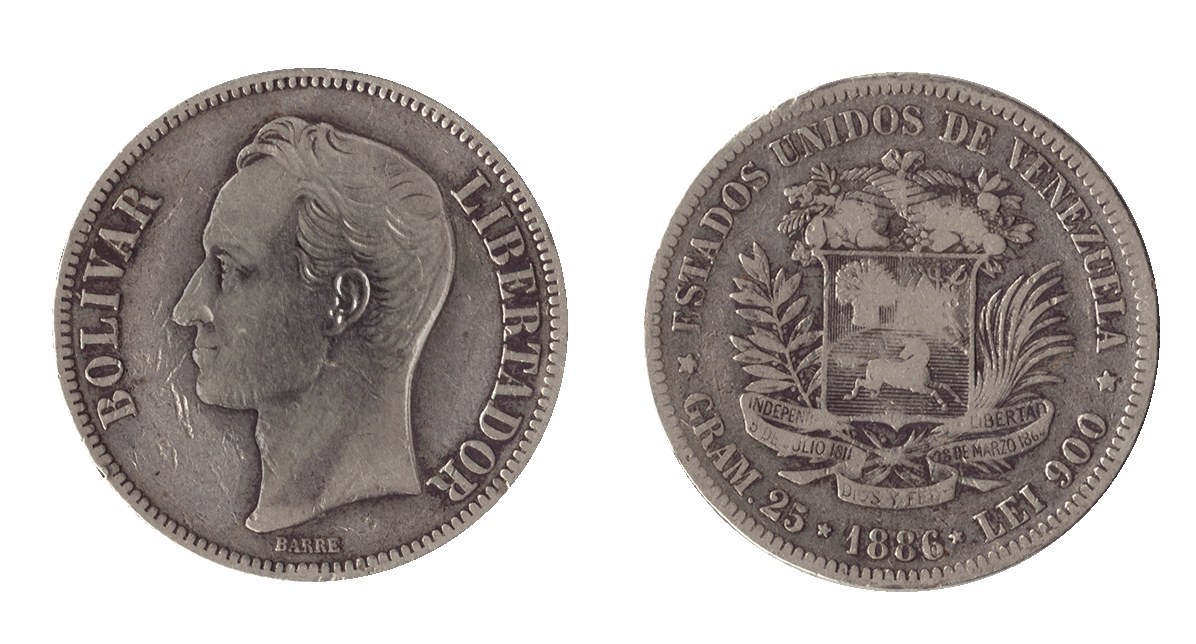
Start with the portrait side, because it names the subject directly. Look for a head of a man facing left accompanied by the legend BOLIVAR LIBERTADOR. That inscription identifies Simon Bolivar and immediately ties the coin to Venezuela's bolivar coinage, separating it from generic Latin American silver that shows liberty heads or personified figures instead of a named individual.
Turn to the other side and read the arms. You should see the Venezuelan coat of arms: a shield divided into sections with a wheat sheaf, an array of arms or flags, and a galloping horse, set between two cornucopias and framed by branches and a national ribbon. Encircling it is the legend naming the republic, and the design also carries the denomination and the statements of weight and fineness typical of standard silver crowns. Read the date carefully; on the pictured coin it is 1886, placing it in the early bolivar silver series.
Confirm the physical traits next. This is a large, heavy silver coin of crown size. Weigh and measure it against published specifications for the type and expect a clean ring characteristic of high-fineness silver. A coin that is noticeably light, undersized, or dull-sounding should be treated with caution. Because pieces of this denomination were struck at more than one facility across the run, check any small mint or engraver marks against references rather than assuming a single source.
Be careful not to confuse it with other nineteenth-century silver crowns and pesos from across Latin America and Europe, which share a similar size and silver look because they follow the same weight standard. The specific pairing of the named Bolivar Libertador portrait with the Venezuelan quartered arms and cornucopias, plus legends naming the republic and a period date such as 1886, is what separates this type from Mexican, Peruvian, Bolivian, and French-standard silver.
Finally, watch for authenticity problems common to popular silver crowns. Inspect Bolivar's hair and facial detail and the shield's devices for the crispness of a struck coin rather than the soft, grainy look of a cast copy, and check the edge and fields for tooling, added or altered digits in the date, or filed seams. For any valuable example, favor coins authenticated by a reputable grading service and compare weight and diameter to trusted references before buying.
Frequently asked questions
What is the quickest way to recognize this coin?
Match two things: a left-facing head with the legend BOLIVAR LIBERTADOR on one side, and the Venezuelan coat of arms with cornucopias and a quartered shield on the other. Together with legends naming the republic and a period date such as 1886, that pairing identifies the type.
How do I read the date and denomination?
The date appears within the coat-of-arms side; on the pictured example it is 1886. The 5 bolivares denomination is stated on the same side alongside the coin's weight and fineness, which is standard for silver issues of this crown size.
How do I keep from confusing it with other silver crowns?
Many nineteenth-century silver crowns share this size and metal because they follow the same weight standard. Rely on the imagery and wording: the named Bolivar Libertador portrait plus the Venezuelan arms and cornucopias, with legends naming the republic, set it apart from Mexican, Peruvian, and European issues.
What should I check to guard against fakes?
Confirm weight and diameter against published figures, listen for a true silver ring, and inspect the portrait and shield for sharp struck detail rather than soft cast surfaces. Examine the date for altered digits, and for valuable pieces buy coins authenticated by a reputable grading service.