
How to Identify the 5 Aurar
A quick collector's guide to confirming Iceland's Kingdom-era bronze 5 aurar by its legends, crown, date range, and metal.
Read the full 5 Aurar encyclopedia entry →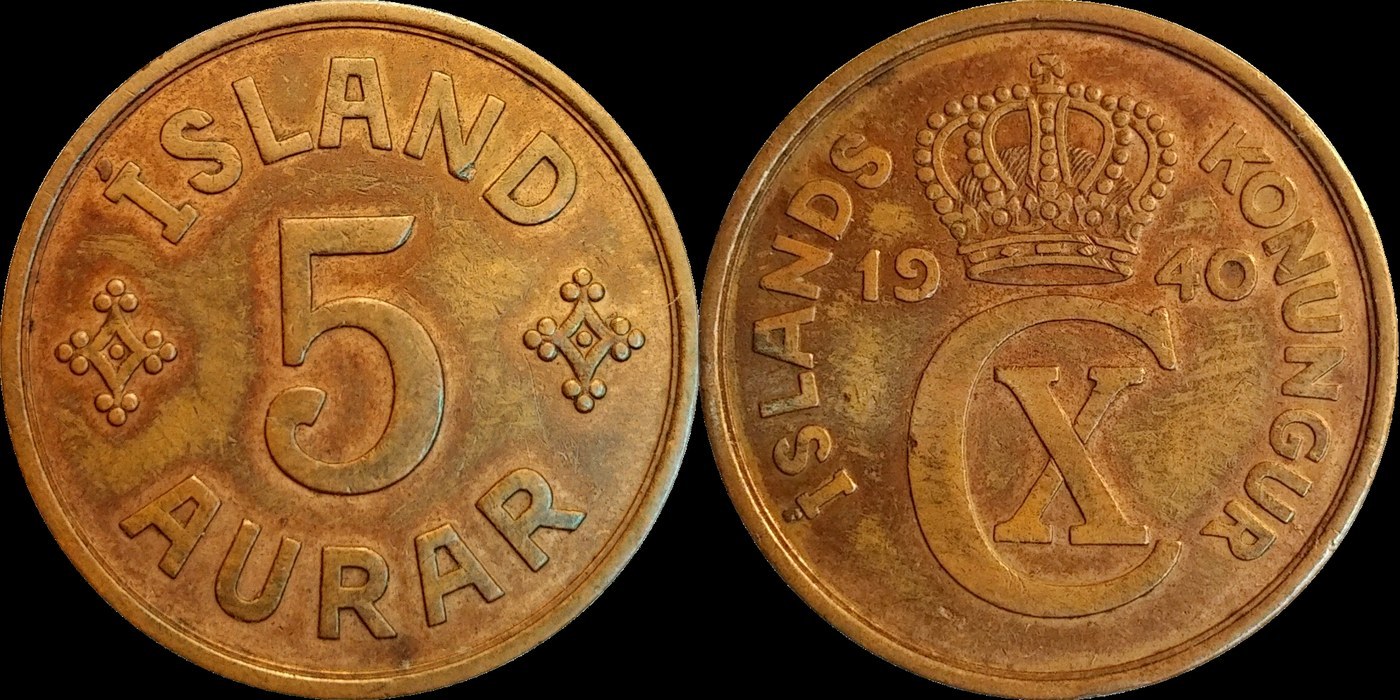
Start with the written legends, which are the fastest way to confirm this coin. One face reads ÍSLAND next to a large numeral 5; the other reads KONUNGDÓMUR ÍSLANDS around a crowned design. That "Kingdom of Iceland" wording is the decisive diagnostic — it marks a monarchy-era coin and rules out later republican issues.
Check the obverse for a bold 5 framed by small decorative cross or floral ornaments in the corners. On the reverse, confirm a crown sitting above the X-form motif, with a four-digit date integrated into the design. The date should fall within 1926-1942; anything outside that window is not this type.
Confirm the metal and size. This is a copper-bronze minor coin, so it should feel light and show a warm brown color — fresh red-brown through to dark chocolate or olive patina. It will not be silvery; a white or gray tone suggests a different coin, plating, or cleaning.
Watch for look-alikes and cautions. Other Icelandic small denominations (such as 1, 2, or 10 aurar) share the crown-and-legend style but show a different numeral, so read the value carefully. Be wary of harshly cleaned coins with unnaturally bright or streaky surfaces, and of tooled dates. When a specific year matters for value, compare weight, diameter, and design against a specialist catalog, and consider third-party grading for higher-value examples.
Frequently asked questions
What is the single best feature to check first?
The reverse legend KONUNGDÓMUR ÍSLANDS. It confirms a Kingdom-era coin; combined with the numeral 5 and ÍSLAND on the obverse, it pins down the type.
How do I tell it apart from other aurar denominations?
Read the numeral. The 1, 2, 10, and 25 aurar coins use the same crown-and-legend styling but display different values, so the digit is what distinguishes them.
Should the coin look silver or brown?
Brown. It is copper-bronze, so it should show warm reddish-brown to dark brown tones. A silvery or gray appearance points to a different coin or a plated or cleaned surface.
How can I be sure a date hasn't been altered?
Examine the date under magnification for tooling, re-engraving, or mismatched wear. If the coin's value hinges on a scarce year, seek third-party authentication before paying a premium.