
How to Identify the 2005 Minnesota State Quarter Extra Tree (Doubled Die)
A visual guide to the 2005 Minnesota quarter doubled-die variety, which shows an extra tree in the shoreline tree line on the reverse.
Read the full 2005 Minnesota State Quarter Extra Tree (Doubled Die) encyclopedia entry →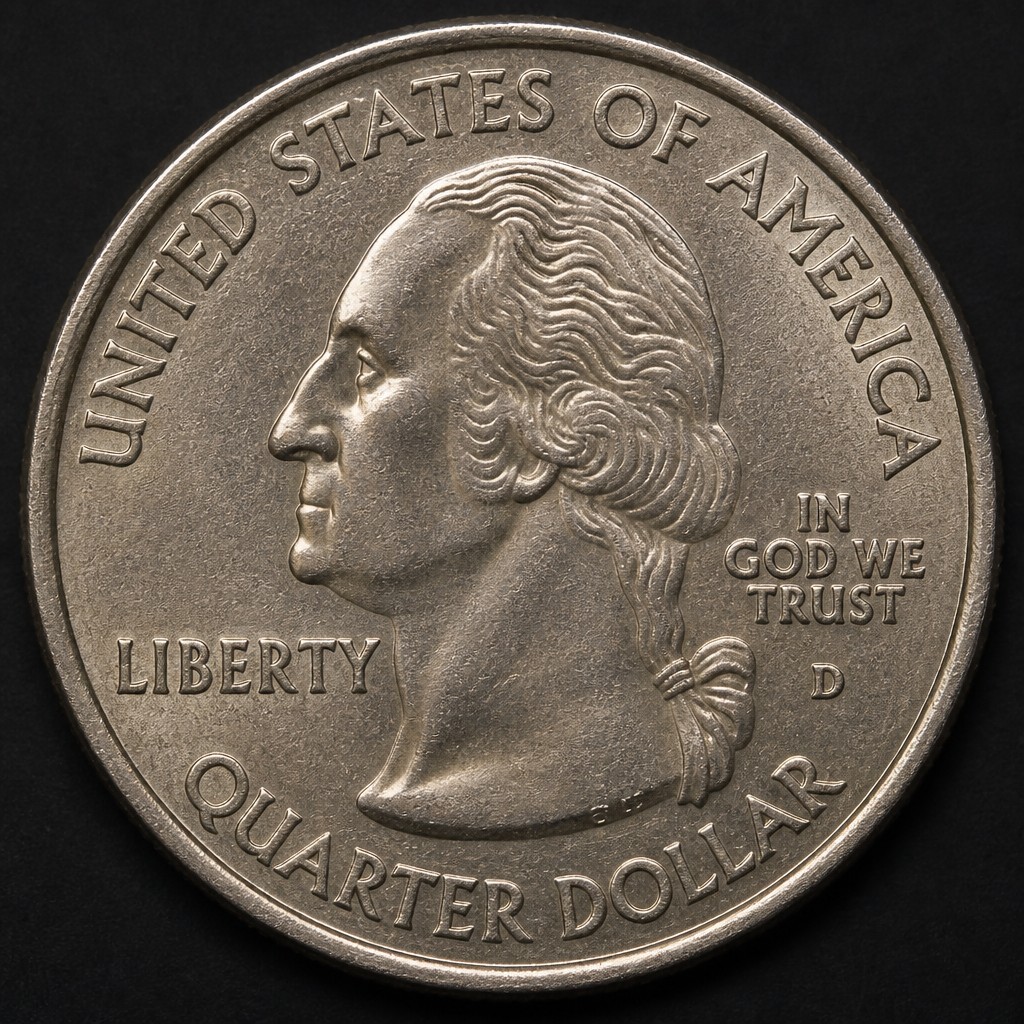
What It Is
The 2005 Minnesota quarter, issued in the 50 State Quarters series, has a known doubled-die variety in which an extra tree appears among the tree line along the shore on the reverse, alongside a fishing scene. It is a hub or die doubling error rather than an intentional design feature.
Obverse (Front)
The obverse shows the standard 1999-2008 series Washington portrait facing left, with "LIBERTY," "IN GOD WE TRUST," "UNITED STATES OF AMERICA," and the date "2005."
Reverse (Back)
The normal Minnesota reverse depicts two anglers fishing from a boat on a lake, with loons flying overhead and a tree-lined shore and rock formation in the background. "MINNESOTA," the phrase "LAND OF 10,000 LAKES," and "1858" (year of statehood) surround the scene. On the doubled-die variety, one of the trees along the shoreline shows a duplicated outline, appearing as an extra or doubled tree trunk and canopy.
Size, Weight, Metal, and Edge
It measures 24.3 mm in diameter, weighs 5.67 grams, and has a reeded edge, consistent with all clad-era State Quarters.
Mint Marks
The mint mark appears on the obverse to the right of Washington's ponytail. The extra tree variety has been reported from both the Philadelphia ("P") and Denver ("D") mints.
How to Spot the Extra Tree
Focus on the tree line along the water's edge, to the left of the fishing boat. Under magnification, look for a second trunk or a doubled canopy outline overlapping a normal tree; the doubling is subtle and is easiest to confirm by comparing against a normal-date Minnesota quarter side by side.
Telling It Apart From Similar Coins
The Minnesota fishing scene is unique among State Quarters, so there is no risk of confusing the base design with another state. The main challenge is separating genuine die doubling from strike doubling (a shelf-like, flat smear caused by a loose or bouncing die) or from simple die wear, both of which lack the crisp, rounded second image of true hub doubling.
Grading at a Glance
Check Washington's cheek and the fine lines of his hair on the obverse, and the boat, water ripples, and loons on the reverse for flatness. Because this variety is most valuable in higher mint-state grades, look for full luster and a sharply defined doubled tree outline free of bag marks or scuffs.
Authenticity Red Flags
Be wary of coins where an "extra tree" has been added by hand engraving rather than originating from the die; genuine doubling shows a rounded, second-image profile consistent with the coin's normal relief and luster, while artificial additions often look scratched-in, too sharp-edged, or interrupt the surrounding field's original mint texture.
Frequently asked questions
What does the extra tree variety look like?
A tree along the lake shoreline on the reverse shows a doubled trunk or canopy outline, appearing as if two overlapping trees were struck instead of one clean tree shape.
Is the extra tree the same kind of error as the Wisconsin extra leaf?
No. The Wisconsin extra leaf is generally attributed to an added design element on the die, while the Minnesota extra tree is classified as a doubled-die variety, caused during the die-making process when the design hub shifts slightly between impressions.
Which mints produced the Minnesota extra tree variety?
Examples have been documented from both Philadelphia and Denver strikes.
How do I confirm doubling versus a scratch?
Genuine doubled-die doubling shows a rounded, raised second outline with the same metal flow and luster as the rest of the design; a scratch or damage mark is typically incised, sharp-edged, and disrupts the surface luster.