
How to Identify the 20 Soles de Oro
A collector's checklist for Peru's gold 20 soles de oro: the seated Liberty obverse, gold size and metal, dates, and authentication cautions.
Read the full 20 Soles de Oro encyclopedia entry →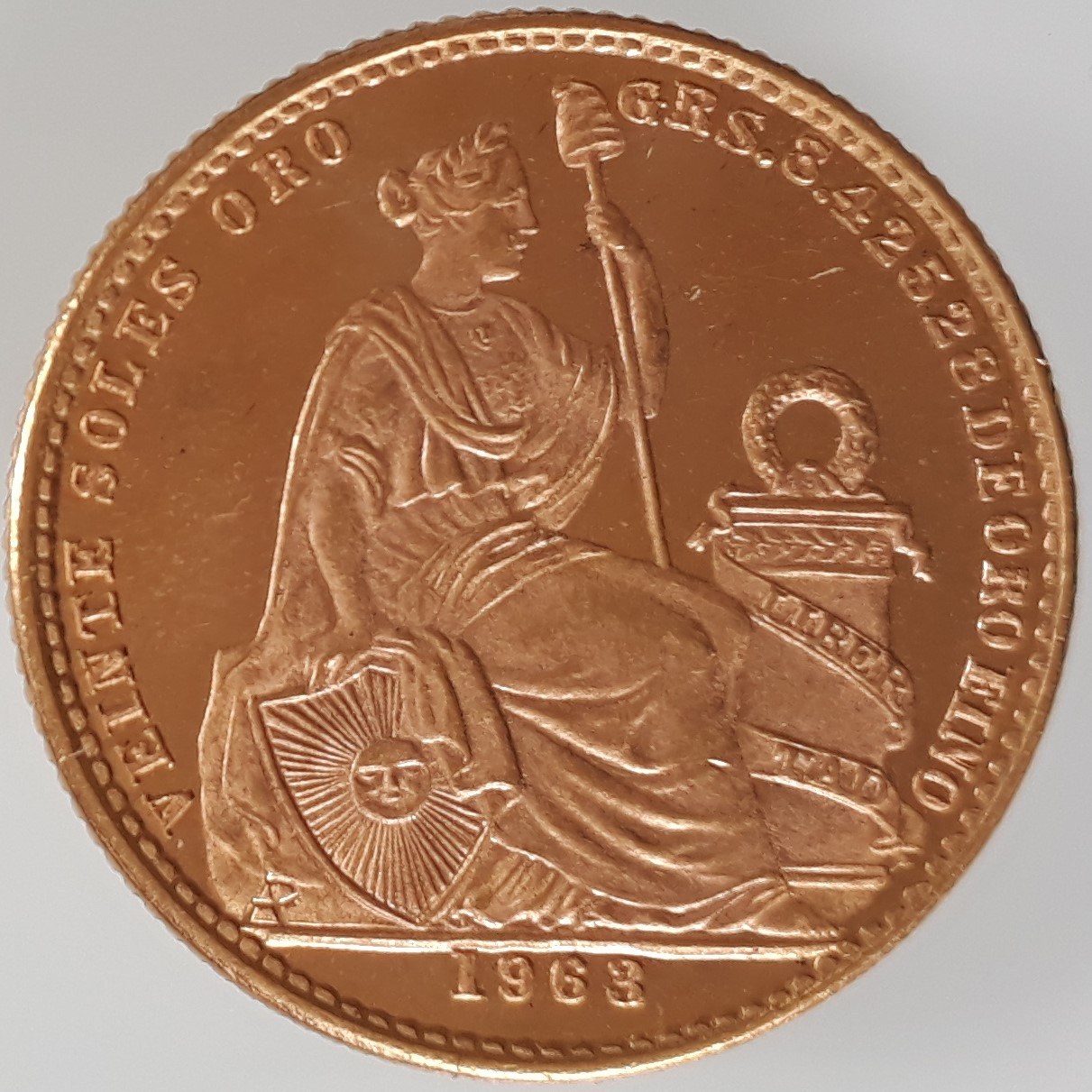
Begin with the obverse figure, because it identifies the type at a glance. Look for a seated Liberty (Libertad Sentada): a female figure wearing a liberty cap or crown, holding a torch, with a radiant sun symbol in the field. Paired with a small gold coin inscribed for Peru, this design places the piece in the gold sol series. The denomination reading 20 soles de oro confirms the specific value.
Read the legends and the date. The country name and the twenty-soles denomination separate this coin from Peru's other gold and silver issues, and the year, here 1963, fixes it within the mid-century gold sol production. Matching the date to a published reference helps confirm it is a recognized issue rather than an anomaly.
Check the physical characteristics. This is a gold coin in the size class of a minor gold piece, not a large crown, with the warm color and heft appropriate to gold. Weigh and measure it and compare against the documented diameter, weight, and fineness for the 20 soles de oro; a piece markedly off in any of these deserves scrutiny. Genuine strikes should show crisp detail in Liberty's figure and clean, even lettering.
Examine the reverse directly, since it is not shown in an obverse-only image. On this type the reverse conventionally carries Peru's coat of arms with the denomination and date. Verify that both sides agree with references, as a mismatched or generic reverse is a warning sign.
Beware of counterfeits and gold-plated fakes, which are a real concern for any small gold coin. Watch for cast copies with seam lines or grainy fields, soft or blurry lettering, and coins that are underweight or the wrong diameter. Suspicious color or a magnetic response points to a plated base-metal fake. When value or authenticity is in doubt, have the coin weighed, specific-gravity tested, or examined by a specialist in Latin American gold coinage.
Frequently asked questions
What is the fastest way to confirm this is a Peru 20 soles de oro?
Check the obverse for a seated Liberty with cap or crown, torch, and a radiant sun, then read the twenty-soles denomination and Peru inscriptions on a small gold coin. Confirm the date and the coat-of-arms reverse against a reference.
How can I tell a genuine gold example from a plated fake?
Genuine coins match the documented weight, diameter, and fineness and show the warm color of gold with crisp detail. Underweight or wrong-size pieces, seam lines, grainy fields, or any magnetic response suggest a plated or cast fake; when unsure, get a specific-gravity test or expert opinion.
Does the date matter for identification?
Yes. The 20 soles de oro was struck across the mid-twentieth-century gold sol period, and the year, here 1963, pins the coin to a specific issue. Some dates are scarcer than others, so confirm it against published references.
The reverse is not shown in my photo. What should it look like?
On this type the reverse conventionally carries Peru's national coat of arms together with the denomination and date. Always verify the actual reverse, since a generic or mismatched design is a red flag for a fake or a misidentified coin.