
How to Identify the 1999 Susan B. Anthony Dollar
The final-year Susan B. Anthony dollar, struck to meet demand for dollar coins before the Sacagawea dollar launched, sharing the same design as the 1979-1981 issues.
Read the full 1999 Susan B. Anthony Dollar encyclopedia entry →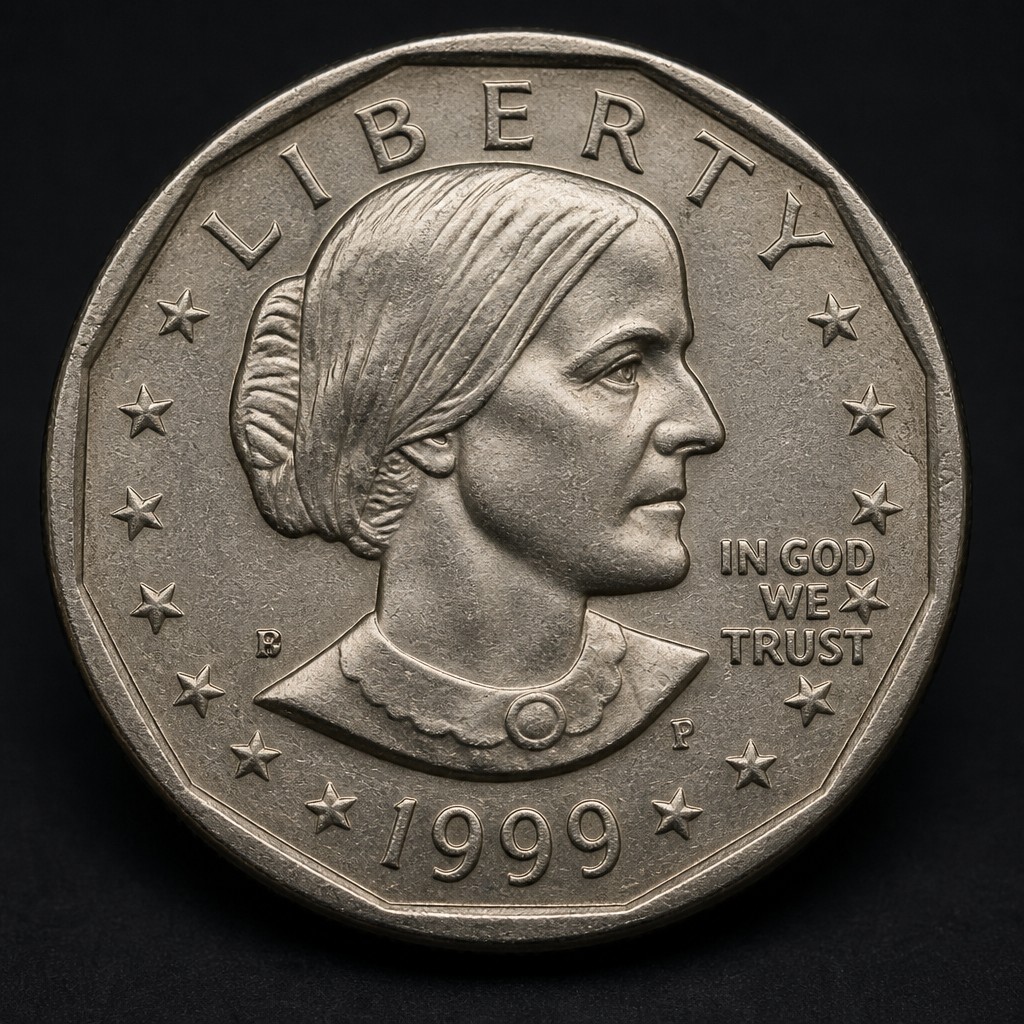
What It Is
After the Susan B. Anthony dollar was discontinued following its unpopular 1979-1981 run, the Mint struck one more batch dated 1999 to meet demand for dollar coins in vending machines and transit systems while the new golden Sacagawea dollar was being prepared for its 2000 release.
Obverse Design
The obverse is unchanged from the original design: a right-facing portrait of Susan B. Anthony by Frank Gasparro, with LIBERTY above, IN GOD WE TRUST to the left, and the date below.
Reverse Design
The reverse also carries over the original design, showing an eagle landing on the moon with Earth in the background, surrounded by UNITED STATES OF AMERICA and ONE DOLLAR.
Size, Weight, Metal, and the Eleven-Sided Border
Specifications match the original run: 26.5 mm diameter, 8.1 grams, copper-nickel clad composition, reeded edge, and the same eleven-sided inner border around the rim used to distinguish it from the quarter.
Mint Marks
1999 dollars were struck at Philadelphia ("P") and Denver ("D") for circulation, plus a San Francisco ("S") proof version, with the mint mark located on the obverse below Anthony's bust and above the date.
Telling It Apart From Similar Coins
Because the design is identical to the 1979-1981 issues, the date is the only way to distinguish a 1999 coin from its earlier counterparts. Compared to the Sacagawea dollar that followed in 2000, the Anthony dollar's dull silver-gray copper-nickel color and smaller, more angular eleven-sided border are the key visual differences from Sacagawea's golden color and rounder rim treatment.
Judging Condition at a Glance
Since 1999 dollars were produced specifically to meet a short-term demand and many were saved rather than circulated, uncirculated examples are relatively easy to find. Still, check Anthony's hair and facial detail and the eagle's feather details on the reverse for any wear if evaluating a circulated example.
Authenticity Red Flags
Because these coins were struck alongside a brief return to production after an 18-year gap, verify that the date reads clearly as "1999" and shows no signs of alteration from an earlier date, which would be inconsistent with genuine mint records. Confirm the coin's weight and diameter match specifications, and be cautious of any example with an unusual color suggesting the wrong metal composition.
Frequently asked questions
Why was the Susan B. Anthony dollar brought back in 1999?
To meet ongoing demand for dollar coins in vending and transit systems while the Sacagawea dollar was being prepared for its 2000 release.
How is the 1999 coin different from the 1979-1981 versions?
The design is identical; only the date distinguishes it, since production had stopped after 1981 and resumed just for 1999.
Where is the mint mark located?
On the obverse, below Anthony's bust and above the date.
Which mints struck the 1999 Anthony dollar?
Philadelphia and Denver for circulation, and San Francisco for proof coins.
How does the 1999 Anthony dollar compare visually to the Sacagawea dollar?
It has a dull silver-gray copper-nickel color and an eleven-sided inner border, compared to the Sacagawea dollar's golden color and different rim treatment.