
How to Identify the 1999 New Jersey State Quarter
A visual guide to the 1999 New Jersey State Quarter, one of the first five releases in the 50 State Quarters program, covering its Washington Crossing the Delaware reverse and mint marks.
Read the full 1999 New Jersey State Quarter encyclopedia entry →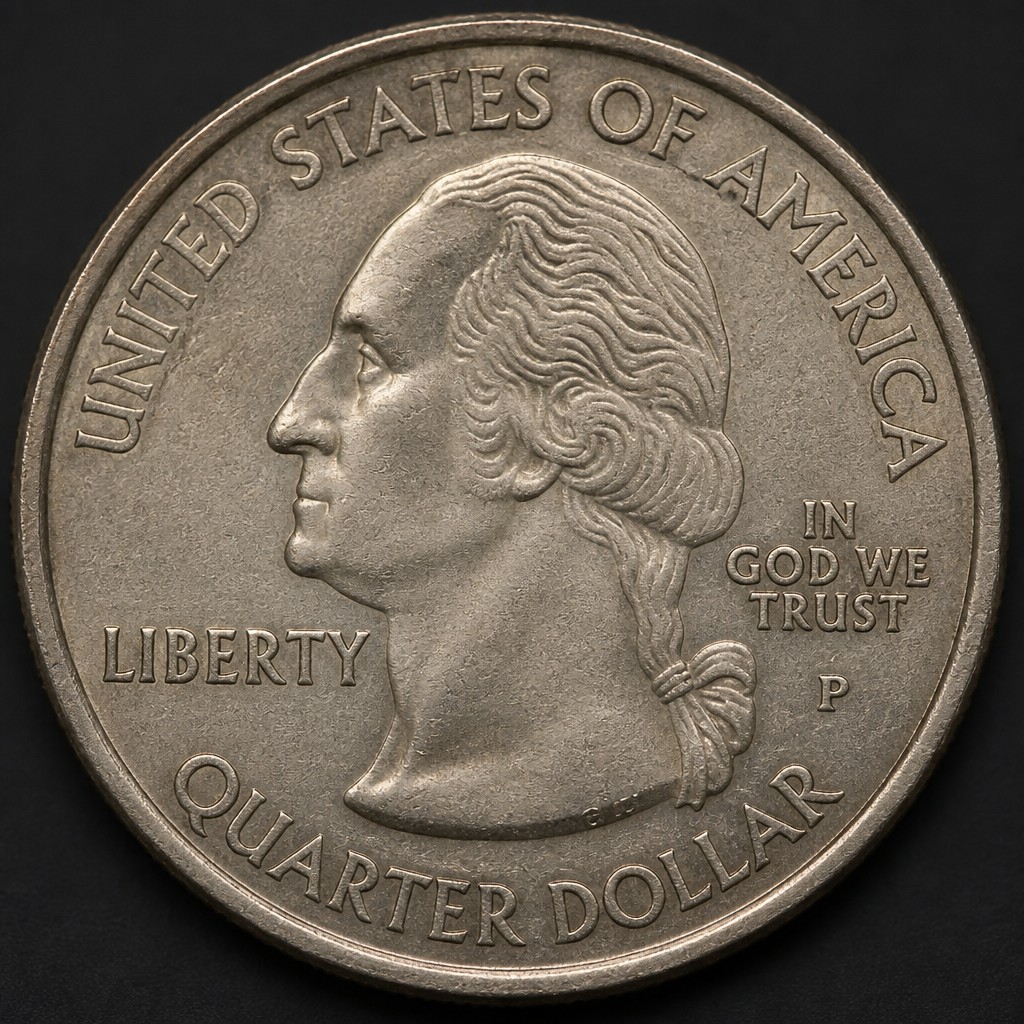
What It Is
The 1999 New Jersey quarter was one of the first five coins issued in the U.S. Mint's 50 State Quarters program, which ran from 1999 to 2008. It honors New Jersey, the third state to ratify the Constitution.
Obverse (Front)
The obverse uses the standard modified Washington portrait seen on all State Quarters. George Washington faces left, with "LIBERTY" above his head, "IN GOD WE TRUST" to the left of his neck, "UNITED STATES OF AMERICA" arcing along the top rim, and the date "1999" below the bust.
Reverse (Back)
The reverse depicts General Washington and his troops crossing the Delaware River in a rowboat, based on the famous Emanuel Leutze painting. "NEW JERSEY" arcs above the scene, "CROSSROADS OF THE REVOLUTION" curves below, and "1787" (the year New Jersey became a state) appears at the bottom along with "QUARTER DOLLAR."
Size, Weight, Metal, and Edge
Standard circulation strikes measure 24.3 mm across and weigh 5.67 grams, made of a copper core clad with a copper-nickel outer layer. The edge is reeded. Silver proof versions, sold only in special sets, weigh 6.25 grams and are 90% silver, though they still show a reeded edge.
Mint Marks
The mint mark sits on the obverse, just to the right of Washington's ponytail above the date. "P" indicates Philadelphia, "D" indicates Denver, and "S" (found only on proof coins from collector sets) indicates San Francisco.
Telling It Apart From Similar Coins
Because all 1999 quarters share the same obverse, identification comes down to the reverse artwork and state name. The rowboat crossing scene and "CROSSROADS OF THE REVOLUTION" motto are unique to New Jersey and won't be confused with Delaware's caesar rodney reverse, Pennsylvania's Commonwealth statue, Georgia's peach and live oak sprig, or Connecticut's Charter Oak.
Grading at a Glance
Check the high points first: Washington's cheekbone and hair curls on the obverse, and the folds of the flag and the oarsmen's raised arms on the reverse. Flattening or loss of fine lines in these areas indicates circulation wear, while sharp, frosty details suggest a higher grade or uncirculated example.
Authenticity Red Flags
Common clad New Jersey quarters are inexpensive and rarely counterfeited. Be cautious of coins advertised as "silver" without proof-set provenance, coins with a noticeably different diameter or an edge lacking the visible copper-colored core stripe expected on clad issues, or details that look mushy or overly shiny compared to a normal mint strike.
Frequently asked questions
How can I tell if my 1999 New Jersey quarter is silver or regular clad?
Check the edge: clad coins show a thin copper-colored stripe between the outer layers, while 90% silver proof versions do not. Silver examples also weigh slightly more (6.25 g vs 5.67 g) and only came from special proof sets, never regular circulation.
Where is the mint mark on a 1999 New Jersey quarter?
It's on the obverse (front), just to the right of Washington's ponytail, directly above the date.
Why does the reverse show a rowboat scene?
It depicts Washington's Christmas 1776 crossing of the Delaware River, a pivotal Revolutionary War moment that took place partly on New Jersey soil, reflected in the motto "CROSSROADS OF THE REVOLUTION."
Is the 1999 New Jersey quarter rare?
No. It was struck in the hundreds of millions for circulation at both the Philadelphia and Denver mints, so common examples have little to no premium over face value.