
How to Identify the 1988 Seoul Olympics Coins
South Korea issued a large series of silver and gold commemoratives for the 1988 Seoul Olympics. Look for won denominations, sports motifs, and Korean inscriptions.
Read the full 1988 Seoul Olympics Coins encyclopedia entry →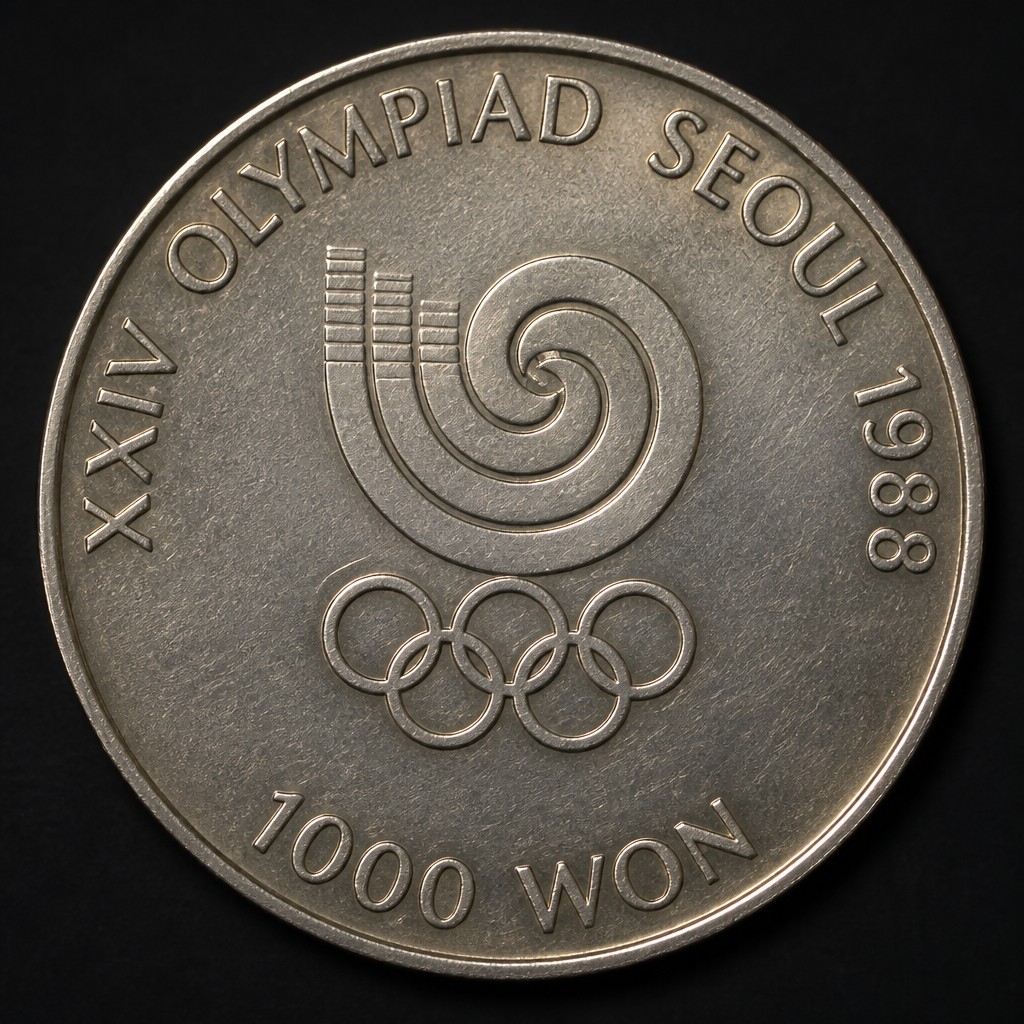
What These Coins Are
For the 1988 Summer Olympics in Seoul, South Korea produced an extensive multi-year commemorative program in silver and gold, issued in stages from 1986 through 1988. The coins depict Olympic sports, traditional Korean culture, and the Games' emblems, and were sold internationally to collectors.
Obverse Design and Inscriptions
Designs vary across the series, often showing Olympic sports such as boxing, cycling, or torch-bearing, or traditional Korean scenes and dancers. Inscriptions appear in Korean (Hangul and sometimes Hanja) naming the event and often the Seoul 1988 Olympic emblem. The specific motif identifies each coin.
Reverse Design and Inscriptions
The reverse typically carries the denomination in won, the Seoul Olympic logo of the samtaeguk swirl with rings, the year, and the issuing authority. The clearly marked won value and Olympic emblem tie the coins to the series.
Size, Weight, Metal and Edge
The silver coins were issued mainly in 5,000 won and 10,000 won denominations, struck in .925 silver, while gold coins carry higher won values in fine gold. Sizes and weights vary by denomination; the larger silver pieces are broad and hefty with reeded edges.
Mint Marks and Where to Find Them
The coins were produced by the Korea Minting and Security Printing Corporation. There is generally no letter mint mark; instead the issuing authority is named in Korean. Proof and uncirculated finishes distinguish collector versions of the same design.
Telling It Apart From Similar Coins
The won denomination, Korean inscriptions, and Seoul 1988 samtaeguk-and-rings emblem separate these from other nations' Olympic coins. Silver pieces are white metal and marked 5,000 or 10,000 won; gold pieces are yellow and carry higher values. Match the sport or cultural motif to the specific issue.
Judging Condition at a Glance
Examine the athlete figures and fine cultural detail for sharpness. Proof coins have mirror fields and frosted designs and should be near-perfect; uncirculated coins are lustrous with possible light marks. Because most were sold in sets, heavy wear is uncommon.
Authenticity Red Flags
Confirm the metal, weight, and diameter against the specific denomination's specifications, since the series spans many types. Genuine coins show crisp Korean lettering and a clean reeded edge. Be cautious of pieces with incorrect weight or soft, blurry details suggesting a cast copy.
Frequently asked questions
What denominations were the Seoul Olympic silver coins?
They were mainly 5,000 won and 10,000 won pieces struck in .925 silver.
How do I recognize a Seoul 1988 coin?
Look for the samtaeguk swirl-and-rings Olympic emblem, Korean inscriptions, and a won denomination.
Are there gold coins in the series?
Yes, the program included gold commemoratives with higher won face values alongside the silver issues.
Do these coins have a mint mark letter?
No, they name the Korea Minting and Security Printing Corporation rather than using a letter mark.