
How to Identify the 1984 Los Angeles Olympics Commemorative Dollar
The US struck silver dollars for the 1984 LA Olympics, dated 1983 and 1984 with two designs. Look for the discus thrower or Olympic Coliseum motifs.
Read the full 1984 Los Angeles Olympics Commemorative Dollar encyclopedia entry →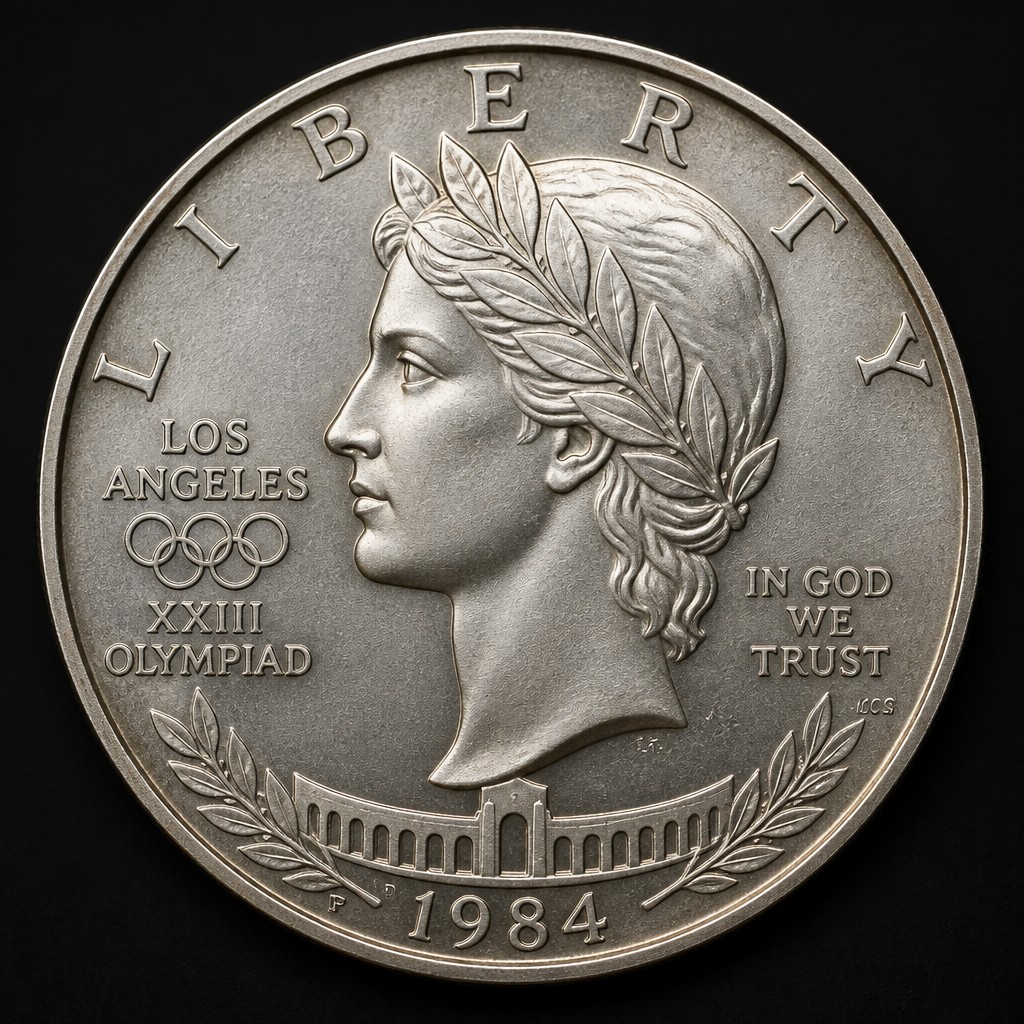
What These Coins Are
To mark the 1984 Summer Olympics in Los Angeles, the United States Mint issued silver commemorative dollars in two designs across two years. These were among the first modern US commemoratives, sold to collectors to raise funds for the Games. Both are 90% silver dollars distinct from circulating coinage.
Obverse Design and Inscriptions
The 1983 dollar shows a modern rendition of a discus thrower inspired by classical sculpture, with LIBERTY and the date. The 1984 dollar depicts the Los Angeles Memorial Coliseum with its iconic arched entrance and Olympic torch imagery. IN GOD WE TRUST and LIBERTY appear on the obverse.
Reverse Design and Inscriptions
Both coins carry a reverse featuring an eagle, with UNITED STATES OF AMERICA, ONE DOLLAR, E PLURIBUS UNUM, and Olympic inscriptions. The reverse eagle design ties the two dates together as a series, so the obverse motif tells you which year and design you hold.
Size, Weight, Metal and Edge
Each is a standard silver dollar size: 38.1 mm in diameter, weighing 26.73 grams, struck in 90% silver and 10% copper, with a reeded edge. These specifications match other US silver dollar commemoratives of the era.
Mint Marks and Where to Find Them
These dollars were struck at Philadelphia (P), Denver (D), and San Francisco (S), with the mint mark on the obverse. Uncirculated versions came from all three mints, while proofs came from San Francisco. Check near the date or lower field for the small letter.
Telling It Apart From Similar Coins
The discus thrower (1983) and Coliseum (1984) motifs, combined with Olympic inscriptions, distinguish these from other silver dollar commemoratives. The two-year, two-design structure is a hallmark of the LA Olympic issue. There was also a 1984 gold ten-dollar coin, but it is smaller and gold-colored.
Judging Condition at a Glance
Inspect the athlete's torso and the Coliseum arches for sharpness. Proof coins show deeply mirrored fields with frosted devices and should be pristine; uncirculated coins are lustrous but may have minor marks. Silver toning is normal and does not indicate wear.
Authenticity Red Flags
As 90% silver coins, they should weigh 26.73 grams and measure 38.1 mm. Verify the reeded edge and crisp lettering. Because these were sold in protective packaging, coins with heavy wear may have been mishandled rather than circulated; compare details to genuine reference images if in doubt.
Frequently asked questions
Why are there two different designs?
The 1983 dollar shows a discus thrower and the 1984 dollar shows the LA Memorial Coliseum, issued across two years for the Games.
How much silver do they contain?
Each is 90% silver, weighing 26.73 grams and measuring 38.1 mm, the standard US silver dollar size.
Where is the mint mark?
On the obverse near the date; look for P, D, or S depending on the mint that struck it.
Was there also a gold Olympic coin?
Yes, a 1984 ten-dollar gold coin was issued, but it is smaller and gold-colored, not a silver dollar.