
How to Identify the 1980 Moscow Olympics Silver Rouble
The Soviet Union issued silver commemorative roubles for the 1980 Moscow Olympics. Look for Olympic sport and landmark motifs with Cyrillic inscriptions and the USSR emblem.
Read the full 1980 Moscow Olympics Silver Rouble encyclopedia entry →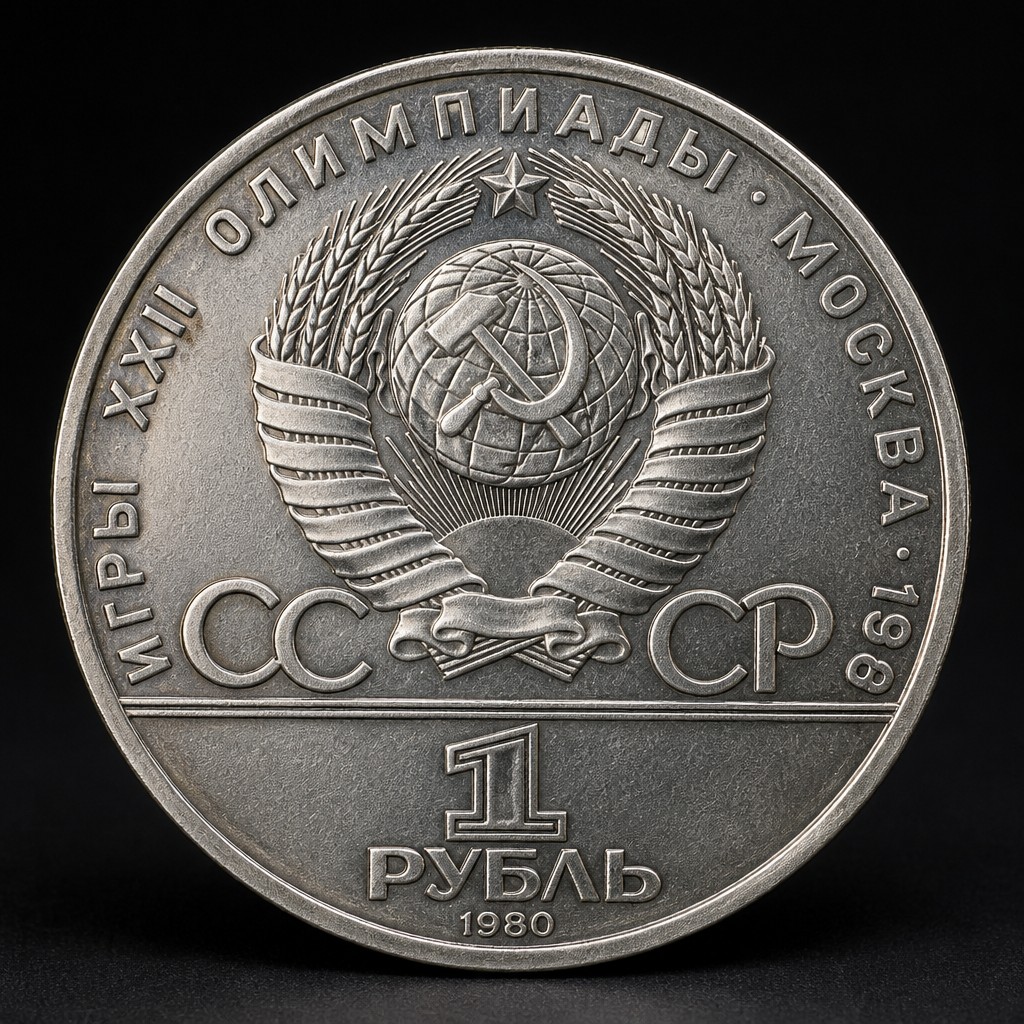
What These Coins Are
Ahead of the 1980 Summer Olympics in Moscow, the Soviet Union struck an extensive commemorative coin program in silver, gold, platinum, and copper-nickel. The silver pieces, denominated in 5 and 10 roubles, depict Olympic sports and Soviet cities and landmarks. They were sold to collectors worldwide to help fund the Games.
Obverse Design and Inscriptions
The obverse typically shows the state emblem of the USSR, the coat of arms with sheaves of wheat and the globe, above the country name and denomination in Cyrillic. The year and the denomination in roubles appear here. This side is consistent across the series.
Reverse Design and Inscriptions
The reverse carries the commemorative motif: an Olympic sport such as weightlifting, wrestling, or the high jump, or a scene of a Soviet city, together with the Moscow 1980 Olympic logo of stylized rings and a tower. Cyrillic inscriptions name the subject. This side identifies each coin.
Size, Weight, Metal and Edge
The 5 rouble silver coins are 33 mm and about 16.7 grams, while the 10 rouble coins are 39 mm and about 33.3 grams, both struck in .900 fine silver with reeded edges. The larger 10 rouble pieces are noticeably heavy and broad.
Mint Marks and Where to Find Them
The coins were struck at the Leningrad and Moscow mints. Mint identification appears in the edge inscription or is inferred from the issue; unlike some series there is no prominent single-letter mark on the face. Proof and uncirculated finishes distinguish collector versions.
Telling It Apart From Similar Coins
The Olympic rings and Moscow tower logo separate these from ordinary Soviet roubles, which show only the emblem and denomination. Copper-nickel one-rouble Olympic coins of the same era exist but are lighter, magnetic in feel, and lack the silver ring and heft of the precious-metal issues.
Judging Condition at a Glance
Examine the athlete figures and architectural detail for sharpness. Proof coins have mirrored fields and frosted designs and should be nearly flawless; uncirculated coins are lustrous but may show light contact marks. Toning on silver is normal.
Authenticity Red Flags
Given their popularity, counterfeits and privately silver-plated copies exist. Confirm the correct weight and diameter for the 5 or 10 rouble denomination, check for crisp Cyrillic lettering, and verify the reeded edge. A coin that is underweight or non-magnetic testing inconsistent with silver warrants caution.
Frequently asked questions
What denominations are the silver Olympic roubles?
They come as 5 rouble coins around 16.7 grams and 10 rouble coins around 33.3 grams, both .900 silver.
How do I know a coin is from the 1980 Olympics?
Look for the Moscow 1980 logo of stylized rings beneath a tower and an Olympic sport or city scene on the reverse.
Are all the Olympic coins silver?
No. The program also included copper-nickel one-rouble coins, which are lighter and not precious metal.
What is on the obverse?
The Soviet state emblem with the denomination and country name in Cyrillic, consistent across the series.