
How to Identify the 1971 Doubled Die Obverse Lincoln Cent
A Lincoln Memorial Cent showing doubling in the date and lettering on the obverse, resulting from a misaligned hub impression during die production that year.
Read the full 1971 Doubled Die Obverse Lincoln Cent encyclopedia entry →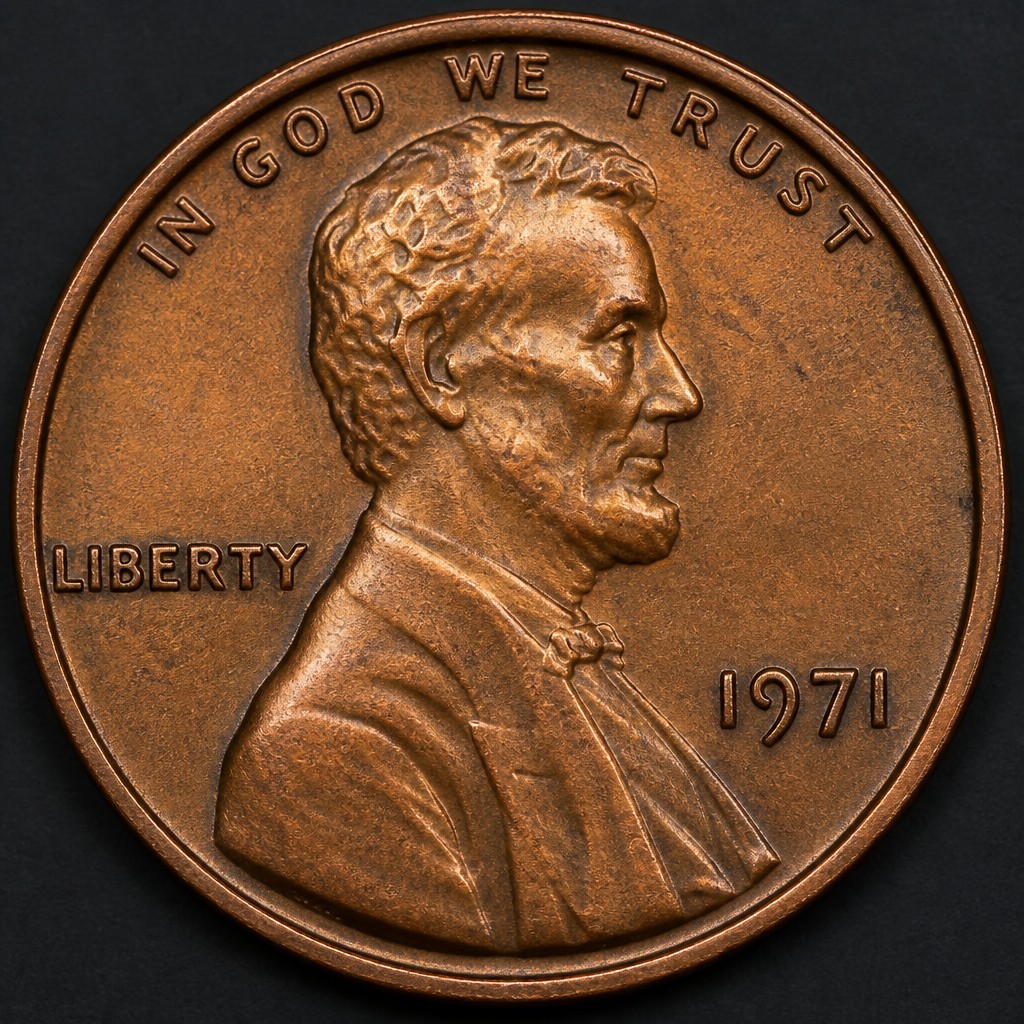
What It Is
The Lincoln Memorial Cent was produced from 1959 to 2008. The 1971 doubled die obverse (DDO) is a recognized die variety where the working die received two slightly offset hub impressions, leaving a secondary, shifted outline visible on parts of the design. It is less famous than the 1955 or 1972 doubled dies but shows a similar type of doubling.
Obverse Design and Inscriptions
The obverse shows Lincoln's portrait facing right, with "IN GOD WE TRUST" above, "LIBERTY" to the left of the bust, and the date to the right. On this variety, doubling is most often noted in the date numerals and in "LIBERTY," appearing as a raised, parallel secondary line under magnification.
Reverse Design and Inscriptions
The reverse depicts the Lincoln Memorial, with "UNITED STATES OF AMERICA" above, "E PLURIBUS UNUM" in smaller letters, and "ONE CENT" below the building. The reverse is unaffected by this obverse-only doubling and matches a standard 1971 cent.
Size, Weight, Metal, and Edge
The coin measures 19 mm in diameter and weighs 3.11 grams, composed of a bronze alloy of 95% copper with 5% tin and zinc (the copper-plated zinc composition was not introduced until 1982). The edge is plain.
Mint Marks and Where to Find Them
The mint mark, when present, is located on the obverse below the date. No mint mark indicates Philadelphia, "D" indicates Denver, and "S" indicates San Francisco (used mainly for proof coins by 1971). This doubled die variety is generally associated with Philadelphia-struck coins.
Telling It Apart From Similar Coins
Examine the suspected doubling under 5x-10x magnification and compare it to a normal 1971 cent. A genuine hub doubled die shows a rounded, well-formed secondary line of consistent width running alongside the primary design element, while machine or strike doubling, which is far more common on cents from this era, tends to look flat and shelf-like rather than fully separated and rounded.
Judging Condition at a Glance
Check Lincoln's cheek, jaw, and coat lapel for smoothing from wear, and inspect the Memorial's columns and steps on the reverse for sharpness. A coin with strong, well-defined lettering and a legible date makes it much easier to confirm genuine doubling than a heavily worn or low-grade example.
Authenticity Red Flags
Be cautious of coins where the doubling appears to be a scratch, smudge, or added material rather than a raised, integrated feature of the coin's original strike. Also compare the doubling pattern carefully to reference images of the known 1971 variety, since strike doubling and other common die deterioration effects are frequently mistaken for, or misrepresented as, a true doubled die on this date.
Frequently asked questions
Is the 1971 doubled die as valuable as the 1955 doubled die?
No, it is generally less dramatic and less well known than the famous 1955 doubled die, though it remains a recognized variety showing genuine hub doubling.
Where should I look for doubling on this coin?
Check the date and the word LIBERTY on the obverse under magnification for a raised, parallel secondary outline.
How do I avoid confusing this with strike doubling?
True hub doubling looks rounded and fully separated from the primary design, while strike doubling looks flat, shallow, and shelf-like; comparing to reference photos of the confirmed variety helps clarify the difference.
What metal composition should a 1971 cent have?
It should be a solid bronze alloy of 95% copper with 5% tin and zinc, since the copper-plated zinc cents did not begin until 1982.