
How to Identify the 1969-S Doubled Die Obverse Lincoln Cent
A famous San Francisco Lincoln cent variety showing strong doubling on LIBERTY, the motto, and the date, caused by a hub doubling error during die production.
Read the full 1969-S Doubled Die Obverse Lincoln Cent encyclopedia entry →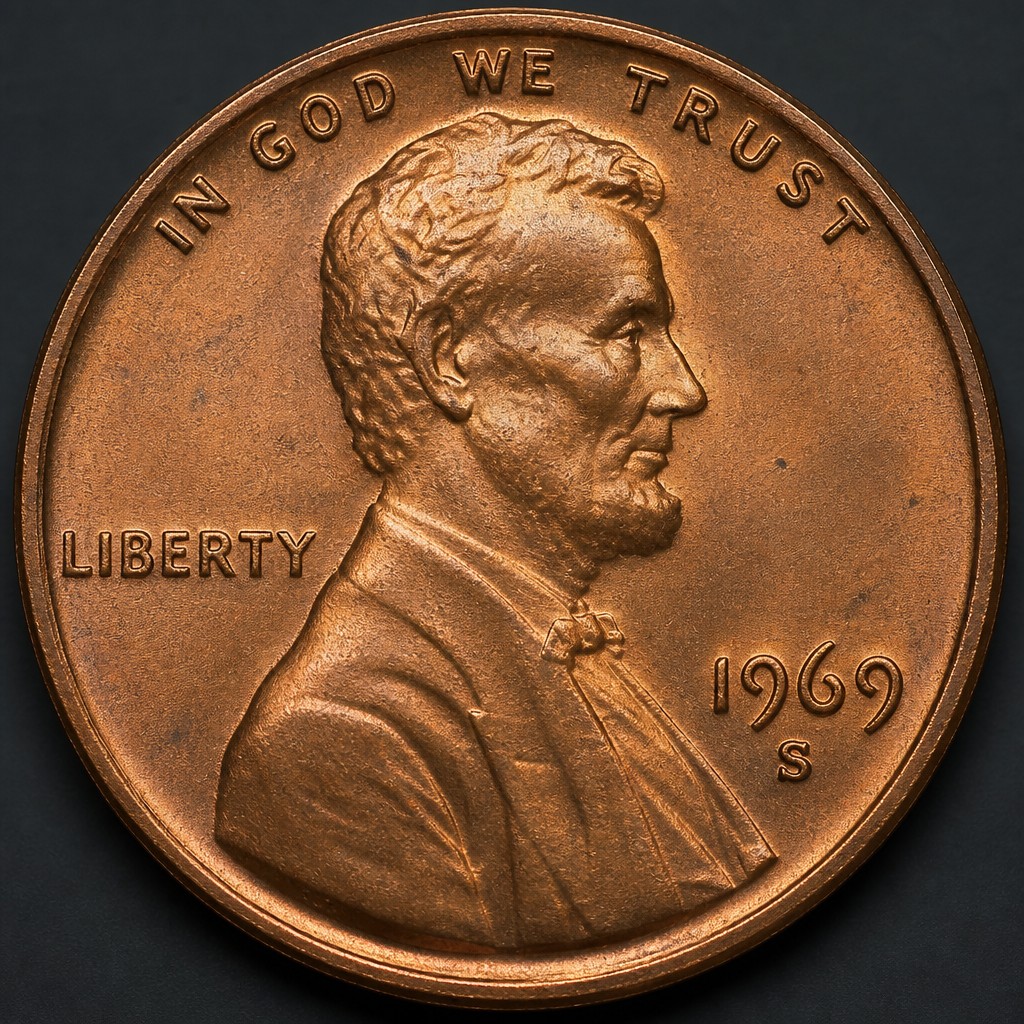
What the Coin Is
The 1969-S Doubled Die Obverse (DDO) Lincoln cent is a scarce die variety of the regular 1969-S bronze cent, created when the working die received two misaligned impressions from the hub during manufacture. It is considered one of the most significant Lincoln cent varieties, alongside the 1955 and 1972 doubled dies.
Obverse Design & Inscriptions
The obverse shows Abraham Lincoln's bust facing right, with LIBERTY at the left rim, IN GOD WE TRUST arching above his head, and the date at the lower right. On the doubled die, look for clear separation or doubling in the letters of LIBERTY, in IN GOD WE TRUST, and in the numerals of the date. The doubling should appear as a distinct, rounded second image rather than a flat smear.
Reverse Design & Inscriptions
The reverse depicts the Lincoln Memorial building with ONE CENT above it, UNITED STATES OF AMERICA around the top rim, and E PLURIBUS UNUM in small letters just above the memorial's roofline. The reverse of this variety is normal and does not show doubling.
Size, Weight, Metal & Edge
Like all 1969 cents, this coin is struck in bronze (95% copper, 5% tin and zinc), weighs about 3.11 grams, measures 19.05mm in diameter, and has a plain edge.
Mint Mark
A small "S" mint mark appears below the date, confirming a San Francisco strike. Only 1969-S cents carry this doubled die; Philadelphia and Denver cents of 1969 do not have this variety.
Telling It Apart From Similar Coins
The biggest source of confusion is "machine doubling," a common minting effect where letters look slightly shifted or flattened on one side. True hub doubling, as seen on this variety, shows a rounded, complete second image with separation between the two impressions, most visible under magnification on LIBERTY and the motto.
Judging Condition at a Glance
Check Lincoln's cheek, jaw line, and hair for smoothing, and examine the steps and columns of the Memorial for wear. A coin with sharp, unworn details on these high points suggests light circulation or mint state preservation.
Authenticity Red Flags
Because genuine examples carry significant value, this date and mint combination is a frequent target for alteration. Watch for cents with an added or tooled "S" mint mark, artificially applied doubling, or doubling that appears only on a single letter rather than matching the known pattern across LIBERTY, the motto, and the date. Inconsistent luster or a mismatched, freshly toned surface can also indicate tampering.
Frequently asked questions
How can I tell real doubling from machine doubling?
Genuine hub doubling shows a rounded, complete second image with visible separation, especially in LIBERTY and the motto. Machine doubling usually looks like a flat, shelf-like smear on one side of a letter and is far more common but not valuable.
Where is the mint mark on this coin?
The small S mint mark sits below the date on the obverse, confirming a San Francisco strike.
Does the reverse show any doubling?
No, the doubling on this variety is confined to the obverse; the Lincoln Memorial reverse is normal.
What metal is a 1969-S cent made of?
It is struck in bronze, 95% copper with 5% tin and zinc, unlike the later copper-plated zinc cents introduced in 1982.