
How to Identify the 1969-S Doubled Die Lincoln Cent
A guide to recognizing the rare San Francisco 1969-S doubled die obverse cent and avoiding confusion with common machine doubling or altered mint marks.
Read the full 1969-S Doubled Die Lincoln Cent encyclopedia entry →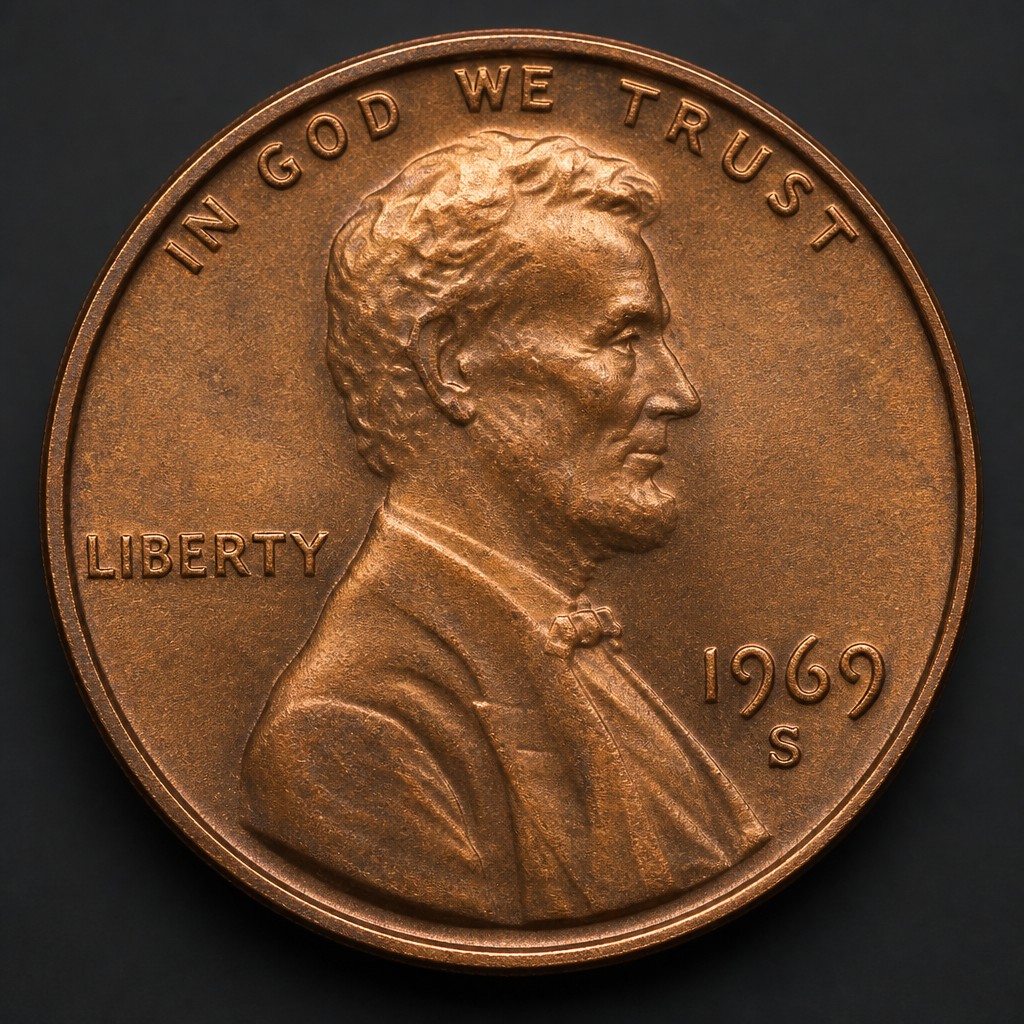
What It Is
The 1969-S Doubled Die Obverse is a scarce Lincoln Memorial cent variety struck at the San Francisco Mint, caused by doubling introduced into the working die during the hubbing process used to transfer the design. It is considered one of the more valuable and dramatic doubled-die Lincoln cents, alongside the better-known 1955 and 1972 doubled dies.
Obverse Design
The standard Memorial cent obverse (Lincoln facing right, "IN GOD WE TRUST" above, "LIBERTY" to the left, date to the right) shows strong, rounded doubling on "LIBERTY," "IN GOD WE TRUST," and the date "1969," most visible under magnification along the tops and edges of the letters and numerals, where the second impression sits slightly offset from the primary design.
Reverse Design
The reverse is the standard Lincoln Memorial building design, showing the columned Memorial building, "ONE CENT" below, and "UNITED STATES OF AMERICA" arched above; it shows no doubling on this variety.
Size, Weight, and Metal
Struck in the pre-1982 bronze alloy of 95% copper with tin and zinc, weighing about 3.11 grams, measuring 19 mm across, with a plain edge, consistent with the standard specification for cents of this period.
Mint Marks
An "S" mint mark appears below the date on the obverse, confirming a San Francisco strike. A genuine example must show both the correct doubling pattern and a mint mark whose shape, size, and position match other verified 1969-S cents from the same period.
Telling It Apart From Look-Alikes
Because genuine examples are valuable, this date attracts alterations, including mint marks added to Philadelphia or Denver 1969 cents to mimic the "S," or ordinary machine-doubled 1969-S cents sold as if they were the true doubled die. Genuine doubling on this variety is rounded and clearly separated in the lettering and date; machine doubling looks flat, shallow, and smeared, and it typically does not reproduce the specific, well-documented doubling pattern of the recognized variety.
Judging Condition
As with any circulated Memorial cent, check for wear on Lincoln's cheekbone, hairline, and coat lapel, and note whether the doubling itself remains sharp or has been worn down along with the rest of the design. Well-preserved examples where both the doubling and the mint mark are crisp and undamaged are the most desirable to collectors.
Authenticity Red Flags
Given the significant value gap between a genuine 1969-S doubled die and an ordinary cent of the same date, be cautious of an added or re-engraved "S" mint mark; look for tooling marks, an unnatural or inconsistent shape, or a mint mark that sits in a slightly different position than on verified genuine examples. Compare the doubling pattern closely against reliable reference images rather than relying on a seller's description alone before assuming a coin is genuine.
Frequently asked questions
Why is the 1969-S doubled die so valuable?
It combines a scarce mint mark year with a dramatic, well-defined doubled die, and few genuine examples are confirmed.
How can I check if the S mint mark is genuine?
Compare its shape, size, and placement to verified 1969-S cents and look for signs of tooling or an added mark.
Does machine doubling count as this variety?
No, machine doubling is a common, low-value effect that looks flat and shaved rather than truly doubled.
What metal should a 1969-S cent be?
95% copper bronze alloy, weighing about 3.11 grams, since the zinc cent didn't start until 1982.