
How to Identify the 1967 Centennial Silver Dollar (Goose)
Canada's dual-dated 1867–1967 silver dollar marking the country's Centennial, featuring a Canada goose in flight designed by artist Alex Colville.
Read the full 1967 Centennial Silver Dollar (Goose) encyclopedia entry →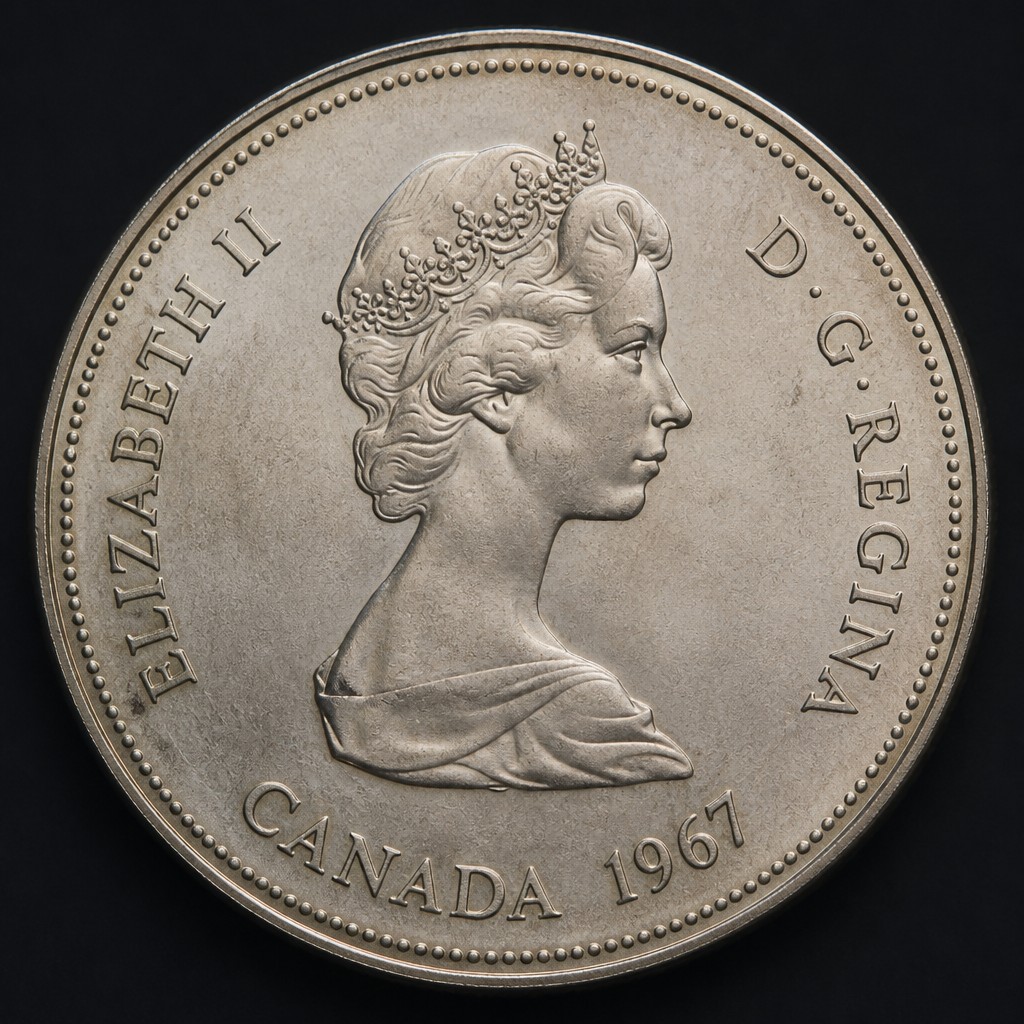
What Is This Coin?
This coin was struck to celebrate 100 years since Canadian Confederation and was the last circulating Canadian silver dollar before the denomination switched to nickel the following year. It's part of a full set of Centennial wildlife designs that replaced regular reverses across all denominations in 1967. Its combination of historical significance and genuine silver content has made it one of the most widely saved and recognized Canadian dollars among casual collectors and the general public alike.
Obverse Design
The obverse shows Queen Elizabeth II's portrait used on Canadian coinage through the mid-1960s, with the legend "ELIZABETH II DEI GRATIA REGINA" surrounding the bust and no date on this side. This was the final year this particular obverse portrait style appeared on the circulating dollar before later effigy updates.
Reverse Design
The reverse, designed by Alex Colville, depicts a Canada goose in flight over water, wings outstretched, with "1867" and "1967" flanking the bird instead of a single date. "CANADA" appears above the design. This flying goose composition is unmistakable and among the most recognizable of all Canadian commemorative coins.
Size, Weight & Metal
The coin is struck in .800 fine silver, weighing about 23.33 grams with a diameter of 36 mm and a reeded edge — matching prior Voyageur-era dollars in size, since the switch to smaller nickel dollars didn't happen until 1968.
Mint Marks & Where to Find Them
No mint mark appears on this Ottawa-struck coin. Specimen versions sold in that year's Centennial gift sets often display a noticeably sharper strike and brighter, more cameo-like finish than ordinary circulation strikes, which is a useful clue when comparing two examples side by side.
Telling It Apart From Similar Coins
The dual date "1867–1967" immediately identifies this as the Centennial issue rather than a regular-date dollar. The flying goose design is also unique to this year, unlike the Voyageur canoe scene used in most surrounding years. It should not be confused with the smaller nickel dollars introduced starting in 1968, which are noticeably lighter and lack the same rich silver luster.
Judging Condition at a Glance
Wear shows first on the goose's wingtips and breast, along with the queen's hair on the obverse. A coin with sharp feather detail and full separation in the wing feathers indicates a higher grade, while worn coins show a smoothed, less distinct bird shape. Because so many examples were saved directly from circulation in 1967, choice uncirculated pieces with strong luster are more attainable for this date than for many earlier commemorative dollars.
Authenticity Red Flags
Given the popularity of this issue, watch for coins with blurred or indistinct feather detail (a sign of casting), incorrect weight or diameter, or poorly defined edge reeding. Because millions of genuine examples exist, there's less incentive to counterfeit common circulated grades, but basic physical checks are still worthwhile for higher-value uncirculated or specimen pieces. If a coin is sold as part of an original 1967 Centennial gift set, confirm the packaging and finish are consistent with genuine mint-issued sets from that year.
Frequently asked questions
Why does this coin show two dates?
It commemorates Canada's Confederation Centennial, so it displays 1867 (Confederation) alongside 1967 (the anniversary year) rather than a single date.
Who designed the goose reverse?
Artist Alex Colville designed the flying Canada goose reverse as part of a full set of Centennial wildlife designs used across denominations that year.
Is the 1967 goose dollar silver?
Yes, it's struck in .800 fine silver, the last year Canada's circulating dollar used this composition before switching to nickel in 1968.
How can I tell a circulation strike from a specimen set version?
Specimen pieces from official Centennial sets typically show a sharper strike and brighter, more mirror-like or frosted finish compared to the softer look of average circulated coins.