
How to Identify the 1964 Charlottetown-Quebec Silver Dollar
A Canadian commemorative silver dollar marking the centennial of the 1864 Charlottetown and Quebec Conferences that paved the way toward Confederation.
Read the full 1964 Charlottetown-Quebec Silver Dollar encyclopedia entry →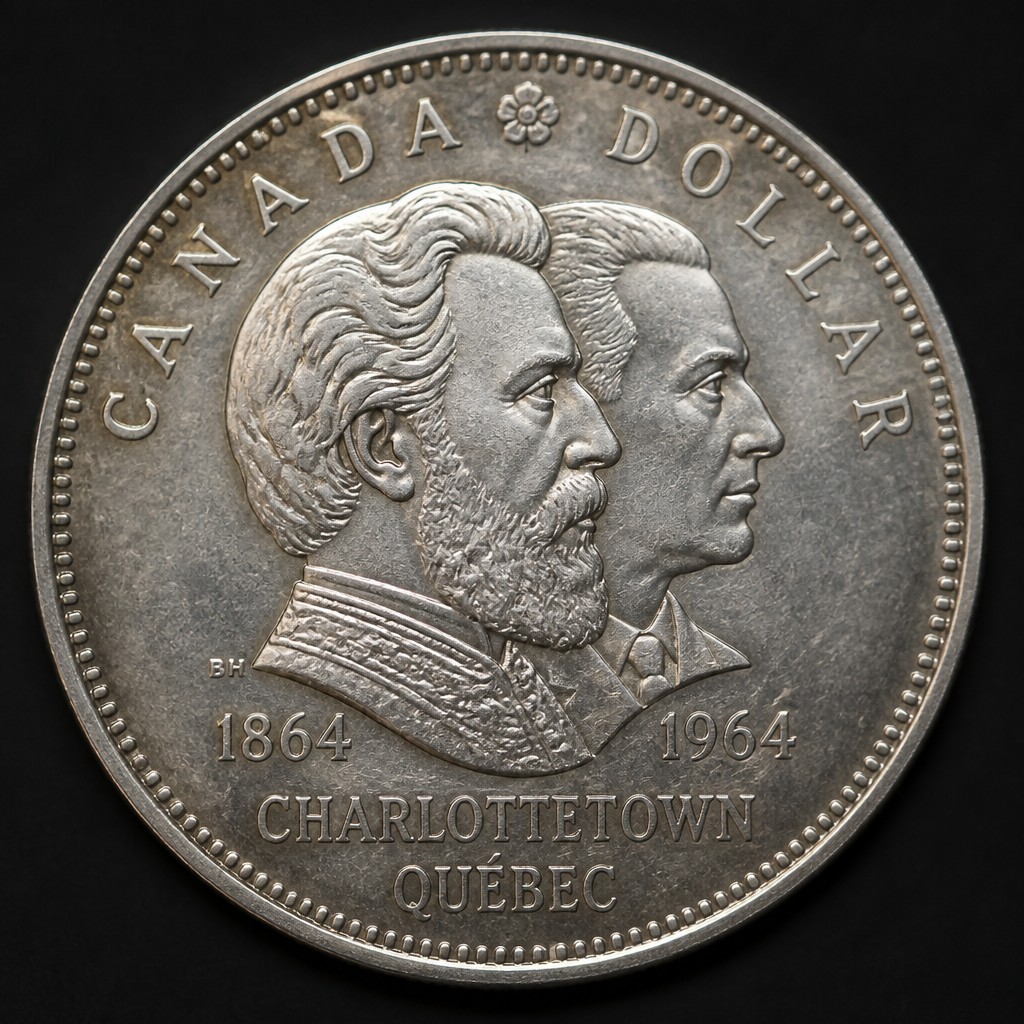
What Is This Coin?
This coin commemorates the 100th anniversary of the 1864 Charlottetown and Quebec Conferences, the meetings that set Confederation in motion. It was the last regular commemorative silver dollar issued before Canada's 1967 Centennial year. Its modern, abstract styling marked a departure from the pictorial commemorative designs of earlier decades and reflected changing artistic tastes in mid-20th-century coin design.
Obverse Design
The obverse carries Queen Elizabeth II's portrait from the design series used from 1953 through 1964, distinguishable from the updated portrait introduced the following year in 1965. This makes the obverse itself a useful dating clue when comparing Elizabeth II-era Canadian coins, since even a worn or partially readable reverse can often be roughly dated just from the obverse portrait style.
Reverse Design
The reverse, designed by Dinko Vodanovic (the winner of a public design competition), features a stylized floral emblem combined with a torch-like motif, flanked by the dates "1864" and "1964." "CANADA" completes the inscription, giving the coin a more abstract, modern look compared to earlier pictorial commemorative dollars.
Size, Weight & Metal
It is struck in .800 fine silver, weighing approximately 23.33 grams with a diameter of 36 mm and a reeded edge, matching other Canadian silver dollars of the period. This was among the last Canadian dollars struck in this traditional large silver format before commemorative dollars began shrinking in size and moving to nickel later in the decade.
Mint Marks & Where to Find Them
No mint mark appears on this Ottawa-struck coin. Identification depends on the distinctive floral and torch reverse design paired with the flanking centennial dates, since there is no mint-specific marking to rely on.
Telling It Apart From Similar Coins
The abstract floral/torch design is unlike any earlier Canadian commemorative dollar, which tended toward literal pictorial scenes (ships, buildings, wildlife). The two flanking dates, 1864 and 1964, immediately confirm the centennial theme rather than a regular circulation issue.
Judging Condition at a Glance
Wear shows first on the raised petals and torch details at the center of the reverse, along with the queen's hair on the obverse. A coin with sharply defined floral elements and full luster in the surrounding fields indicates better preservation than one with smoothed, indistinct central detail. Because the design sits fairly flat across the coin's surface, even small amounts of handling wear can be noticeable to a careful eye compared with more deeply relieved pictorial designs.
Authenticity Red Flags
Look for blurred or mushy detail in the central floral design (a common sign of casting), incorrect weight or diameter, and poorly formed edge reeding. Genuine coins show crisp, well-struck relief throughout the design with clean, evenly spaced lettering. Because this design's abstract shapes leave less room for the small pictorial errors seen on scene-based commemoratives, focus mainly on overall sharpness, correct weight, and edge quality when assessing authenticity.
Frequently asked questions
What historical event does this coin commemorate?
It marks the 100th anniversary of the 1864 Charlottetown and Quebec Conferences, key meetings that led toward Canadian Confederation.
Who designed the reverse?
Dinko Vodanovic designed the stylized floral and torch reverse after winning a public design competition.
How is this coin different from earlier commemorative dollars?
Unlike earlier pictorial designs showing ships or buildings, this reverse uses an abstract floral and torch motif rather than a literal scene.
How can I tell this apart from a 1965 dollar using the obverse?
The 1964 coin uses the earlier Elizabeth II portrait style used from 1953–1964, while 1965 introduced an updated portrait, giving each a slightly different look.