
How to Identify the 1944 Steel Cent
A guide to the rare 1944 steel cent transitional error, including how weight and magnetism separate genuine examples from altered dates and plated fakes.
Read the full 1944 Steel Cent encyclopedia entry →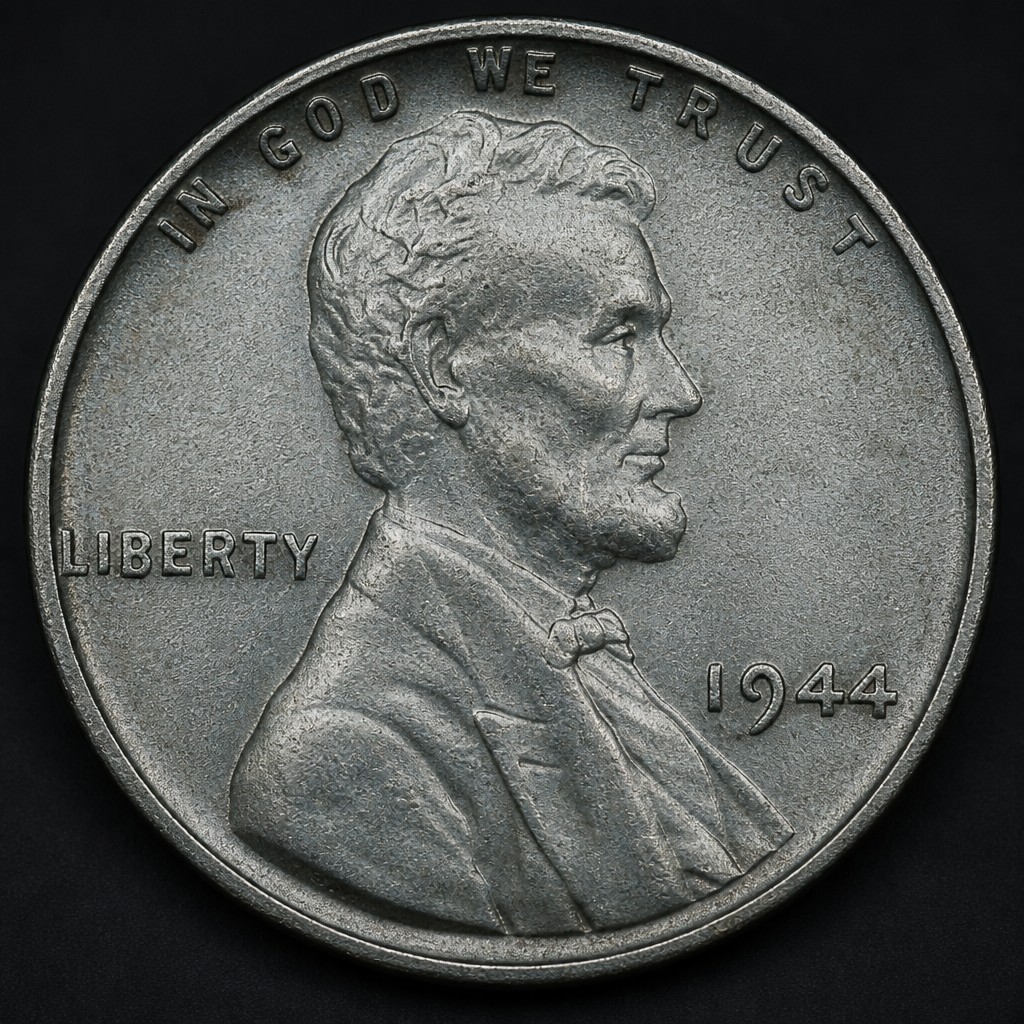
What It Is
After using zinc-coated steel planchets in 1943, the Mint returned to a copper-based alloy in 1944, made largely from salvaged shell-casing brass left over from wartime ammunition production. A small number of leftover steel planchets from 1943 were mistakenly struck with 1944 dies at the start of the following year, producing the rare 1944 steel cent, a transitional error running in the opposite direction from the better-known 1943 bronze cent.
Obverse Design
Standard Wheat cent obverse: Lincoln facing right, "IN GOD WE TRUST" above his head, "LIBERTY" to the left, and the date "1944" to the right.
Reverse Design
Standard Wheat cent reverse with two curved wheat stalks framing "ONE CENT," "UNITED STATES OF AMERICA," and "E PLURIBUS UNUM" above center.
Size, Weight, and Metal
A genuine 1944 steel cent is zinc-coated steel, weighing about 2.7 grams — noticeably lighter than a normal 1944 brass cent, which weighs about 3.11 grams. It is also magnetic, unlike the normal copper-alloy 1944 cent, which will not respond to a magnet at all.
Mint Marks
Known genuine examples exist from Philadelphia (no mint mark), Denver ("D"), and San Francisco ("S"), all extremely scarce, with only a small number of authenticated pieces documented from each mint.
Telling It Apart From Similar Coins
Use a magnet as the first test: a genuine 1944 steel cent is attracted to it, while a normal 1944 cent is not. Watch for 1943 steel cents that have had their date altered to read "1944," and for normal 1944 bronze cents that have been zinc-plated to mimic a steel cent's pale color; check weight and surface consistency in either case, since plated fakes often show an uneven, overly bright, or dull coating rather than the Mint's original galvanized finish.
Judging Condition
As with the 1943 bronze cent, verifying authenticity through a weight check and a magnet test takes priority over cosmetic grading, since genuine examples are rare enough that any candidate coin needs careful testing before its condition is even worth discussing.
Authenticity Red Flags
Watch closely for a "1943" date that has been altered to read "1944," which often leaves tool marks or an unnatural shape in the last digit under magnification, and for ordinary 1944 bronze cents that have been plated to look steel-colored, which will fail a simple weight check and often show plating wear revealing the coppery metal underneath at high points of the design.
Frequently asked questions
Is a genuine 1944 steel cent magnetic?
Yes, because it's struck on a leftover zinc-coated steel planchet, unlike the normal 1944 bronze cent.
How much should it weigh?
About 2.7 grams, versus about 3.11 grams for a normal 1944 cent.
What's a common way this coin is faked?
Altering a 1943 steel cent's date to read 1944, or plating a normal 1944 cent to look steel-colored.
Which mints have known genuine examples?
Philadelphia, Denver, and San Francisco, though all are extremely rare.