
How to Identify the 1938-D Walking Liberty Half Dollar
The 1938-D Walking Liberty half dollar is a semi-key date from the Denver Mint, recognized by its comparatively low mintage within the series.
Read the full 1938-D Walking Liberty Half Dollar encyclopedia entry →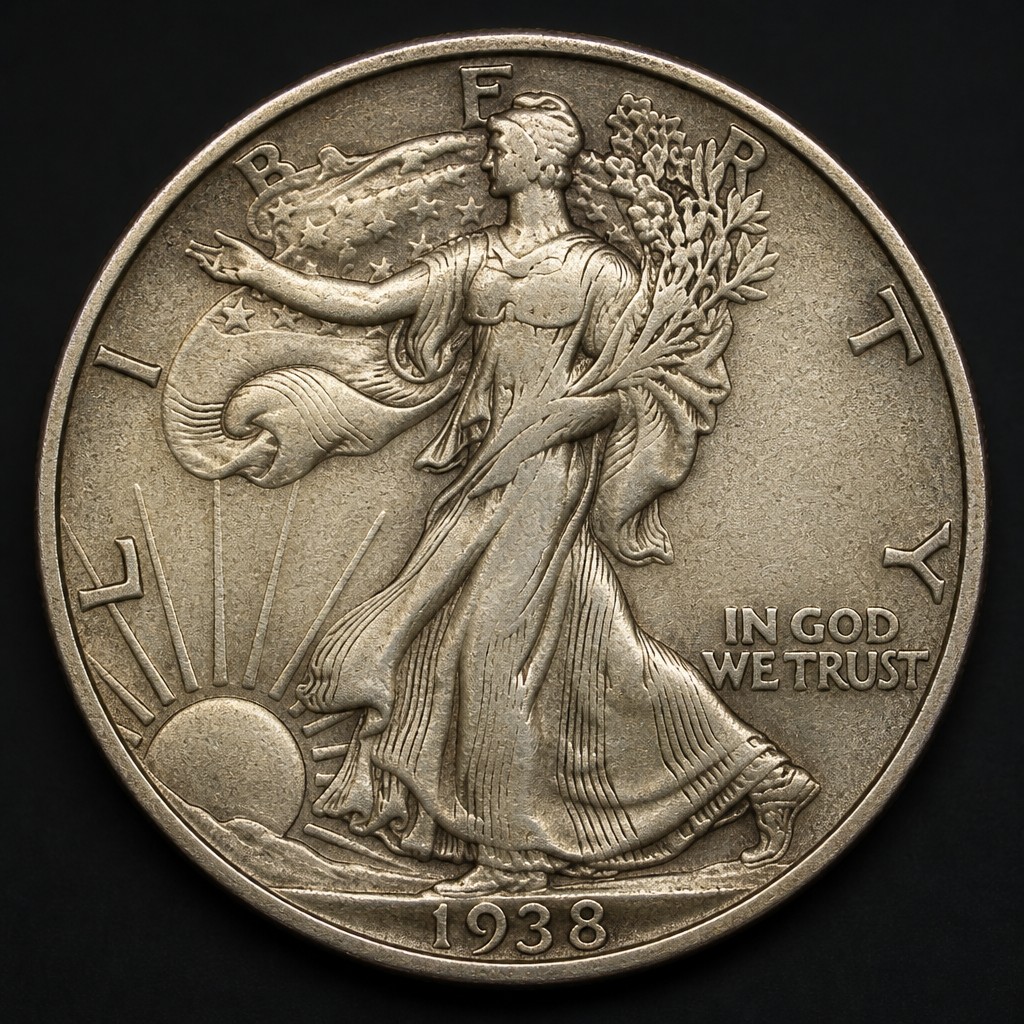
What It Is
The 1938-D half dollar is part of the long-running Walking Liberty series designed by Adolph A. Weinman. Struck at the Denver Mint, it had a noticeably smaller production run than most other Depression-era dates in the series, giving it semi-key status among collectors.
Obverse Design
Liberty strides forward wrapped in an American flag, an olive branch cradled in her left arm and her right arm extended toward the sunrise. "LIBERTY" arches across the top, "IN GOD WE TRUST" sits beside her legs, and the date is at the bottom rim.
Reverse Design
An eagle stands on a rocky perch with wings partially spread beside a small pine sapling. "UNITED STATES OF AMERICA" arches over the top, "HALF DOLLAR" curves along the bottom, and "E PLURIBUS UNUM" is lettered vertically near the eagle.
Size, Weight, and Edge
Like all Walking Liberty halves, the 1938-D is 30.6mm in diameter, weighs 12.5 grams, is 90% silver and 10% copper, and has a reeded edge.
Mint Marks
The "D" mint mark sits on the reverse, just to the left of "HALF DOLLAR" and above the tip of the olive branch. A clear, unblemished "D" in that position confirms a genuine Denver strike; compare its size and font to reference photos of the era.
Telling It Apart From Similar Coins
Since the overall design is identical across many years, the date and mint mark combination together identify a 1938-D. Because it is a lower-mintage date, verify the "8" in "1938" has not been altered from another digit and that the mint mark has not been added or moved from a common date coin.
Judging Condition at a Glance
Wear first appears on Liberty's left leg, the horizontal skirt lines, and the eagle's breast and thigh feathers. A coin retaining bold, rounded detail in these spots grades higher, while smooth, flattened areas indicate a well-circulated example.
Authenticity Red Flags
Look closely at the mint mark for signs of tooling, an uneven surface around it, or a font mismatch, since semi-key dates are sometimes created by altering common coins. Confirm the coin's weight and diameter fall within normal silver half dollar tolerances, and be wary of dull, artificially toned, or unusually light examples.
Frequently asked questions
What makes the 1938-D half dollar semi-key?
The Denver Mint struck a smaller number of half dollars in 1938 compared to most other years in the series, making surviving examples scarcer.
Where is the mint mark located?
On the reverse, to the left of HALF DOLLAR and just above the olive branch tip.
How can I tell if the mint mark is genuine?
Compare its size, shape, and position to verified genuine examples, and check under magnification for solder marks or tooling that would indicate it was added.
What parts of the coin show wear first?
Liberty's left leg and skirt lines on the obverse, and the eagle's breast and thigh feathers on the reverse.