
How to Identify the 1931-S Lincoln Wheat Cent
A guide to the 1931-S Lincoln cent, a semi-key San Francisco date, covering its design, mint mark, and the added-mint-mark fakes to watch for.
Read the full 1931-S Lincoln Wheat Cent encyclopedia entry →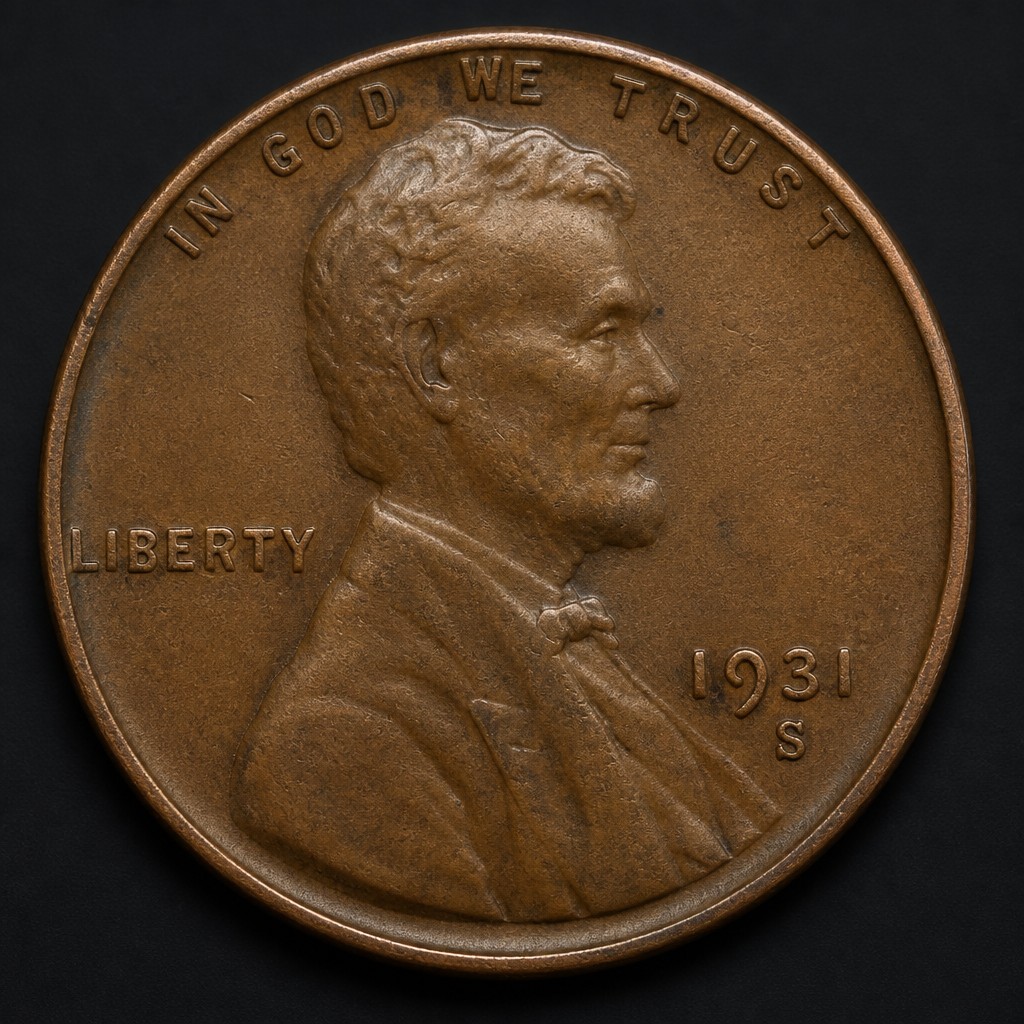
What It Is
The 1931-S is a semi-key date in the Lincoln Wheat cent series, notable for its comparatively low mintage from the San Francisco Mint during the early years of the Great Depression, when reduced commercial demand for new coinage led the Mint to strike far fewer cents than in a typical year.
Obverse Design
Standard Wheat cent obverse: Lincoln facing right, "IN GOD WE TRUST" above his head, "LIBERTY" to the left, and the date "1931" to the right of his shoulder.
Reverse Design
Standard Wheat cent reverse with two curved wheat stalks framing "ONE CENT," "UNITED STATES OF AMERICA," and "E PLURIBUS UNUM" above center.
Size, Weight, and Metal
Struck in 95% copper bronze alloy, with tin and zinc making up the balance, weighing 3.11 grams, measuring 19 mm across, with a plain edge.
Mint Mark
A small "S" appears below the date on the obverse, identifying a San Francisco strike, positioned close to the rim in the same general area used for Denver's "D" on other dates.
Telling It Apart From Similar Coins
Distinguish it from the far more common 1931 (no mint mark, Philadelphia) and 1931-D (Denver) cents by confirming the presence, size, and shape of the "S" mint mark. Genuine mint marks from this era were hand-punched individually into each working die, so they tend to have a slightly organic, hand-cut look rather than the perfectly uniform appearance of a later machine-applied mark.
Judging Condition
Because many surviving 1931-S cents were recognized and saved by collectors at the time, aware of the year's unusually low mintage, a meaningfully larger share exist in better preserved condition than is typical for coins of this general era. Check Lincoln's cheek, hair, and the wheat stalks on the reverse for the smoothing associated with circulation wear to arrive at an accurate grade.
Authenticity Red Flags
This date is a frequent target for counterfeit mint marks added to common, inexpensive 1931 Philadelphia cents. Warning signs include an "S" that looks unusually flat, too uniform in shape, glued or soldered on, or positioned differently than on verified genuine coins, along with any surface disturbance, discoloration, or roughness around the mint mark suggesting it was added to the coin after it left the Mint.
Frequently asked questions
Why is the 1931-S considered scarce?
Its mintage was low, only about 866,000 pieces, because coin demand fell during the Depression.
How do I know the S mint mark is genuine?
Compare its shape and placement to verified examples and check for signs of tooling or added metal.
Are many 1931-S cents found in nice condition?
Yes, more than usual for the era, because collectors recognized the low mintage at the time and saved examples.
What is the coin's composition?
95% copper bronze alloy, weighing about 3.11 grams.