
How to Identify the 1913 Barber Half Dollar
The 1913 Barber half dollar is a recognized key date, struck in low numbers at Philadelphia near the end of the series' run.
Read the full 1913 Barber Half Dollar encyclopedia entry →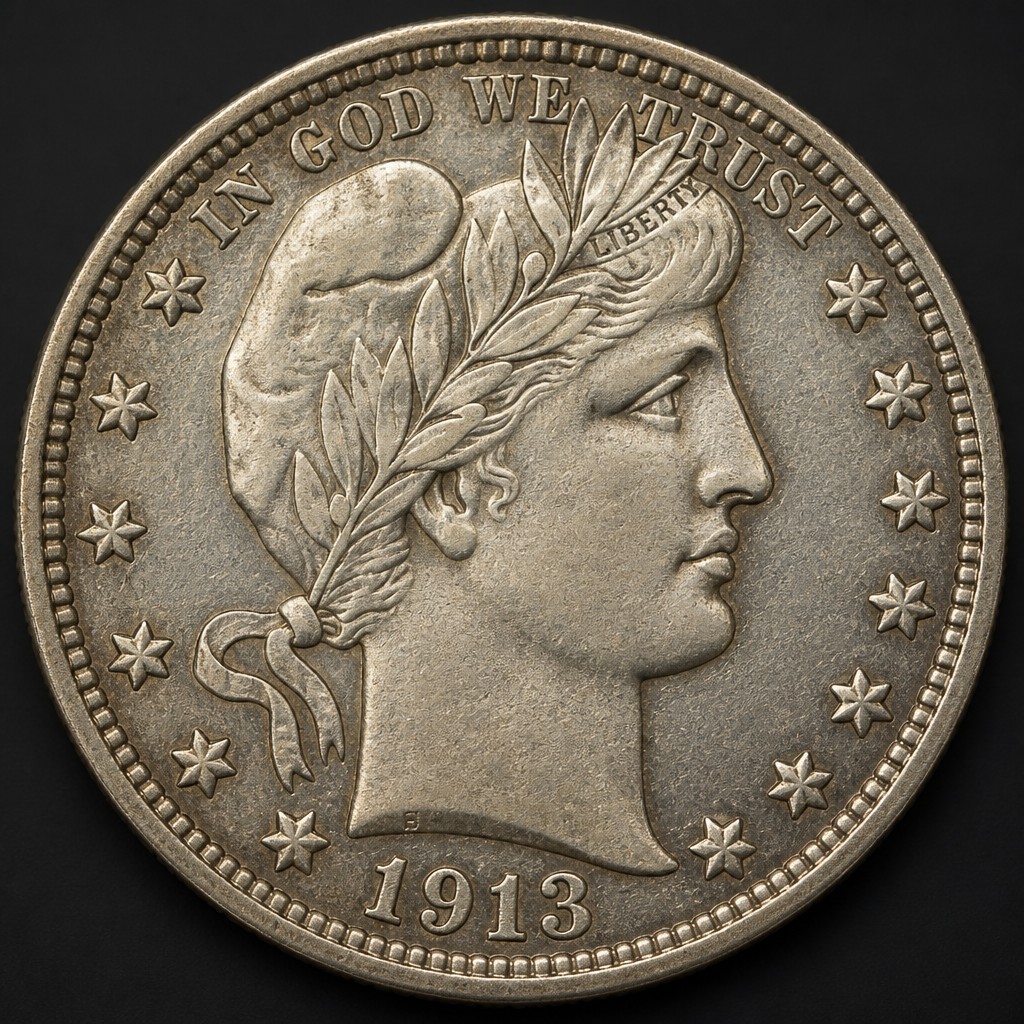
What It Is
The 1913 half dollar belongs to the Barber series designed by Charles E. Barber and struck from 1892 to 1915. The Philadelphia issue that year had a notably low mintage, making it one of the scarcer dates collectors seek within the series.
Obverse Design
A right-facing Liberty head wears a laurel wreath cap inscribed "LIBERTY" on the band, surrounded by thirteen stars, with the date below.
Reverse Design
A heraldic eagle grasps an olive branch and arrows, a shield on its chest, beneath a ribbon reading "E PLURIBUS UNUM." "UNITED STATES OF AMERICA" arches over the top and "HALF DOLLAR" along the bottom.
Size, Weight, and Edge
The coin measures 30.6mm in diameter, weighs 12.5 grams, is composed of 90% silver and 10% copper, and has a reeded edge.
Mint Marks
The mint mark location, when present, is on the reverse below the eagle near the ribbon bow above "HALF DOLLAR." The 1913 Philadelphia issue carries no mint mark; 1913-D and 1913-S issues also exist and show "D" or "S" in that same spot, though the Philadelphia coin is the key date of the three.
Telling It Apart From Similar Coins
Since the Barber design is unchanged throughout the series, confirming the date "1913" and the absence of a mint mark is essential to identify the Philadelphia key date. Compare worn digits carefully against similar-looking dates, since a partially worn "3" can sometimes resemble other numerals.
Judging Condition at a Glance
Look at Liberty's cheek and hairline for smoothing, and the eagle's breast and wing feathers for flattening. A coin with crisp lines in these spots and strong rims typically grades higher, while heavily worn examples show a smooth, low-relief eagle and Liberty portrait.
Authenticity Red Flags
Because the 1913 Philadelphia issue is a genuine key date, check for an added mint mark meant to disguise a coin as a rarer variety, altered date digits, or tooling marks around the rim. Confirm the coin's weight and diameter match standard specifications, and be cautious of unusually smooth or grainy surfaces suggesting a cast reproduction.
Frequently asked questions
Why is the 1913 Barber half dollar a key date?
The Philadelphia Mint struck a notably small number of half dollars in 1913, making it scarcer than most other dates in the series.
Does the 1913 Barber half dollar have a mint mark?
The Philadelphia issue has no mint mark; 1913-D and 1913-S coins show D or S below the eagle on the reverse.
How can I confirm the date is genuine and not altered?
Examine the digits under magnification for tool marks or an uneven surface that suggests a different date was reshaped into a 1913.
What should I compare against reference photos?
The mint mark's absence or presence, its exact position and font if present, and the overall wear pattern on Liberty's cheek and the eagle's feathers.