
How to Identify the 1912-S Liberty Head Nickel
How to recognize the only San Francisco-minted Liberty Head Nickel, a key date from the final year of regular production of the series.
Read the full 1912-S Liberty Head Nickel encyclopedia entry →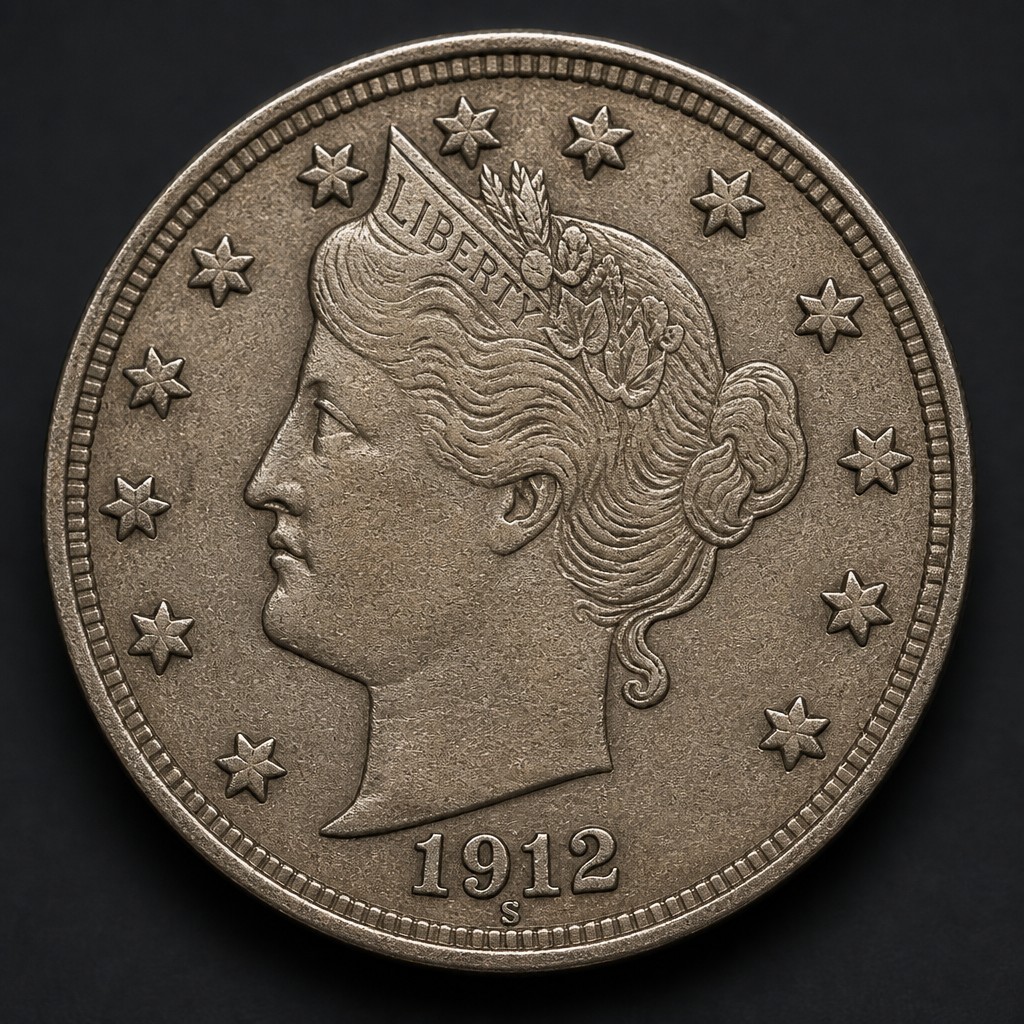
What It Is
The 1912-S Liberty Head Nickel is the only Liberty Head Nickel ever struck at the San Francisco Mint and comes from the final year of the series' regular production before the design was replaced by the Buffalo Nickel the following year. Its low mintage makes it one of the most sought-after dates for collectors trying to complete the series by date and mint mark, and it is widely regarded as the true key date of the Liberty Head Nickel series among coins that were officially released.
Obverse Design
The obverse shows Liberty's head facing left, with a coronet inscribed LIBERTY across the front. Stars surround the portrait near the rim, and the date appears below the bust truncation.
Reverse Design
A large Roman numeral V sits at the center of the reverse, framed by a wreath of corn, wheat, cotton, and tobacco leaves. UNITED STATES OF AMERICA curves around the top rim, and CENTS is lettered beneath the wreath at the bottom of the design.
Size, Weight, Metal, Edge
The coin is 21.2mm in diameter, weighs 5.00 grams, is composed of 75% copper and 25% nickel, and has a plain edge.
Mint Marks
Look below the wreath on the reverse, near the ribbon bow, for a small "S." This mark confirms a San Francisco strike. 1912 is also notable as the first year Denver struck Liberty Head Nickels, marked with a "D" in the same general location, so always check the mint mark carefully rather than assuming its origin based on date alone.
Telling It Apart from Similar Coins
Since 1912 nickels can carry no mint mark (Philadelphia), a "D" (Denver), or an "S" (San Francisco), examine the small mint mark area closely with a loupe, as it is easy to overlook or misread when the coin has any wear or toning in that spot. The "S" mint mark on this date is notably scarce compared to the Philadelphia and Denver issues of the same year, which is part of why it commands such attention from collectors.
Grading at a Glance
Check Liberty's hair and cheek for early wear on the obverse, as these are the first areas to show flattening. On the reverse, the ribbon bow and the fine leaf details in the wreath wear down quickly, so a coin with these details still crisp and a well-defined V typically grades higher than one with soft, blended features.
Authenticity Red Flags
Because of its value, watch for an added or altered "S" mint mark on a common Philadelphia coin, or a mint mark that appears re-cut, misshapen, or inconsistent in size compared to genuine examples. Also be alert to reworked or smoothed surfaces near the mint mark, which can indicate an attempt to disguise an alteration or hide evidence of a mint mark having been added after striking.
Frequently asked questions
Where is the mint mark on a 1912-S nickel?
On the reverse, below the wreath near the ribbon bow.
Why is the 1912-S considered rare?
It is the only Liberty Head Nickel struck at San Francisco and had a notably low mintage.
What other mint marks exist for 1912 Liberty Nickels?
Philadelphia coins have no mint mark, and 1912 was also the first year Denver struck this design, marked with a small D.
How can I check for a faked S mint mark?
Compare its size, shape, and placement to verified genuine examples, and look for tool marks or unusual surface texture nearby.