
How to Identify the 1894-S Barber Dime
A factual overview of the 1894-S Barber dime, one of the rarest coins in American numismatics, covering its design and why any claimed example demands extreme scrutiny.
Read the full 1894-S Barber Dime encyclopedia entry →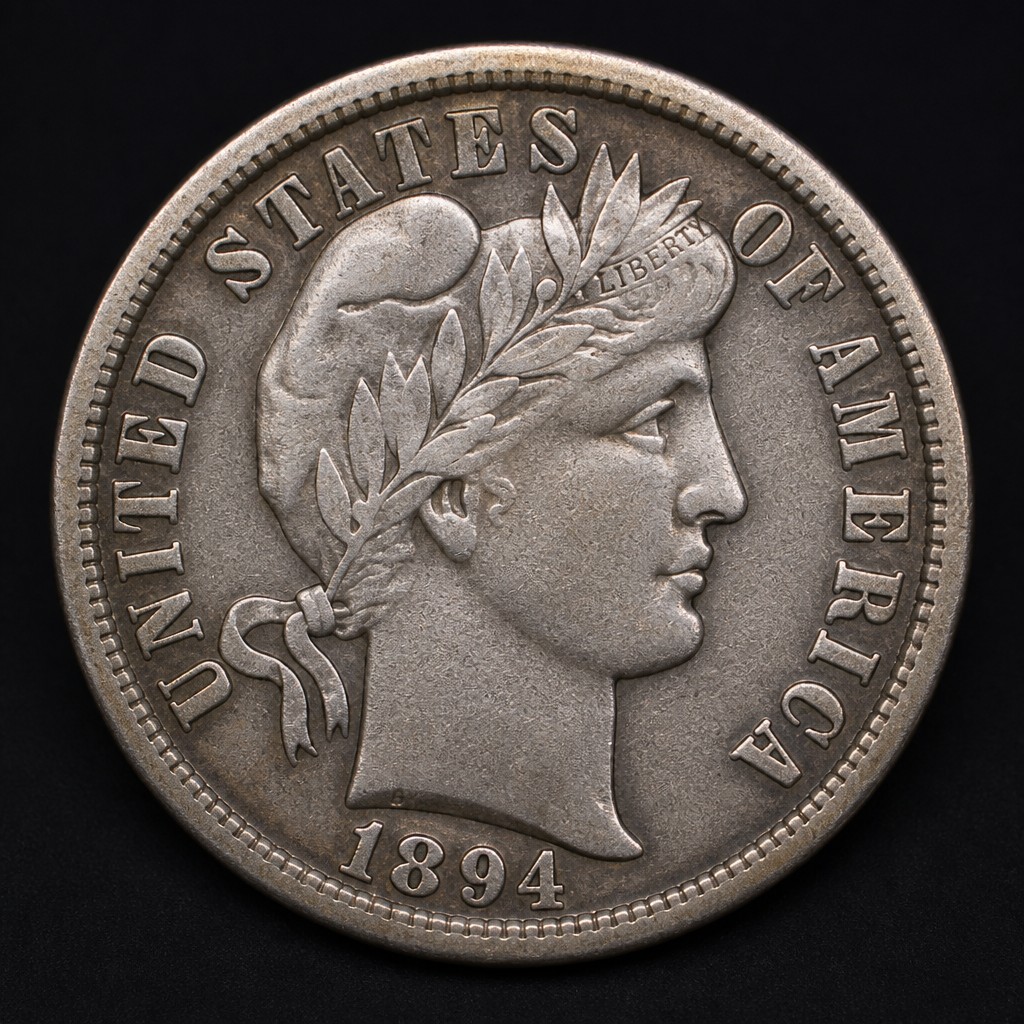
What It Is
The 1894-S dime is a Barber dime, designed by Charles E. Barber and part of a series struck from 1892 to 1916. Records indicate only a small handful of pieces were struck at the San Francisco Mint that year, and today it is regarded as one of the most famous rarities in all of American coinage, with fewer than ten examples known to survive; the reasons behind the tiny mintage have been debated by researchers for well over a century.
Obverse Design
Liberty faces right wearing a laurel wreath cap with LIBERTY inscribed on the headband. UNITED STATES OF AMERICA arches around the border, thirteen stars line the rim, and the date sits at the bottom, a design shared with every other date in the Barber dime series.
Reverse Design
The reverse shows the value "ONE DIME" within a wreath tied with a ribbon bow at the bottom, and the mint mark, when present, sits just below the wreath, above the bow.
Size, Weight, Metal, and Edge
Like other Barber dimes, it measures about 17.9mm in diameter, weighs approximately 2.5 grams in a 90% silver alloy, and has a reeded edge.
Mint Marks
An "S" mint mark, denoting the San Francisco Mint, is the defining feature of this issue and appears on the reverse just below the wreath.
Telling It Apart From Similar Coins
Because so few genuine examples exist and their individual histories are well documented among specialists, distinguishing a real 1894-S from an ordinary Barber dime is less about general design and more about matching a specific coin to its known population and pedigree, something that requires the resources and reference material of an experienced grading service.
Judging Condition at a Glance
Surviving specimens range from heavily circulated to proof-like condition; general Barber dime wear points, such as the hair above Liberty's ear and the wreath ribbon on the reverse, apply, but grading a coin of this significance is a matter for specialist numismatists and major grading services rather than a casual visual check.
Authenticity Red Flags
Given that so few genuine examples are known and their whereabouts are largely documented, any 1894-S dime encountered outside of a known, pedigreed population should be treated with extreme skepticism. The most common way a fake of this date is created is by adding an "S" mint mark to a common 1894 Philadelphia dime or by altering another date. Careful examination of the mint mark for correct size, font, and placement, along with the surrounding surface for tooling or an inconsistent texture, can reveal an alteration, but certification and pedigree research from a top-tier grading service are essential before any example should be considered genuine.
Frequently asked questions
How many 1894-S dimes are known to exist?
Fewer than ten examples are documented today, making it one of the rarest coins in American numismatics.
Where is the mint mark located?
On the reverse, just below the wreath and above the ribbon bow.
Should I assume a coin marked '1894-S' is genuine?
No. Because genuine examples are so few and well documented, any unverified example should be treated with extreme caution.
What is a common way this date is faked?
By adding a fake 'S' mint mark to a common 1894 Philadelphia dime, or by altering the date on another year's dime.