
How to Identify the 1889-CC Morgan Dollar
The 1889-CC Morgan Dollar, struck at the Carson City Mint with a low mintage of 350,000, is a major key date especially scarce in higher grades.
Read the full 1889-CC Morgan Dollar encyclopedia entry →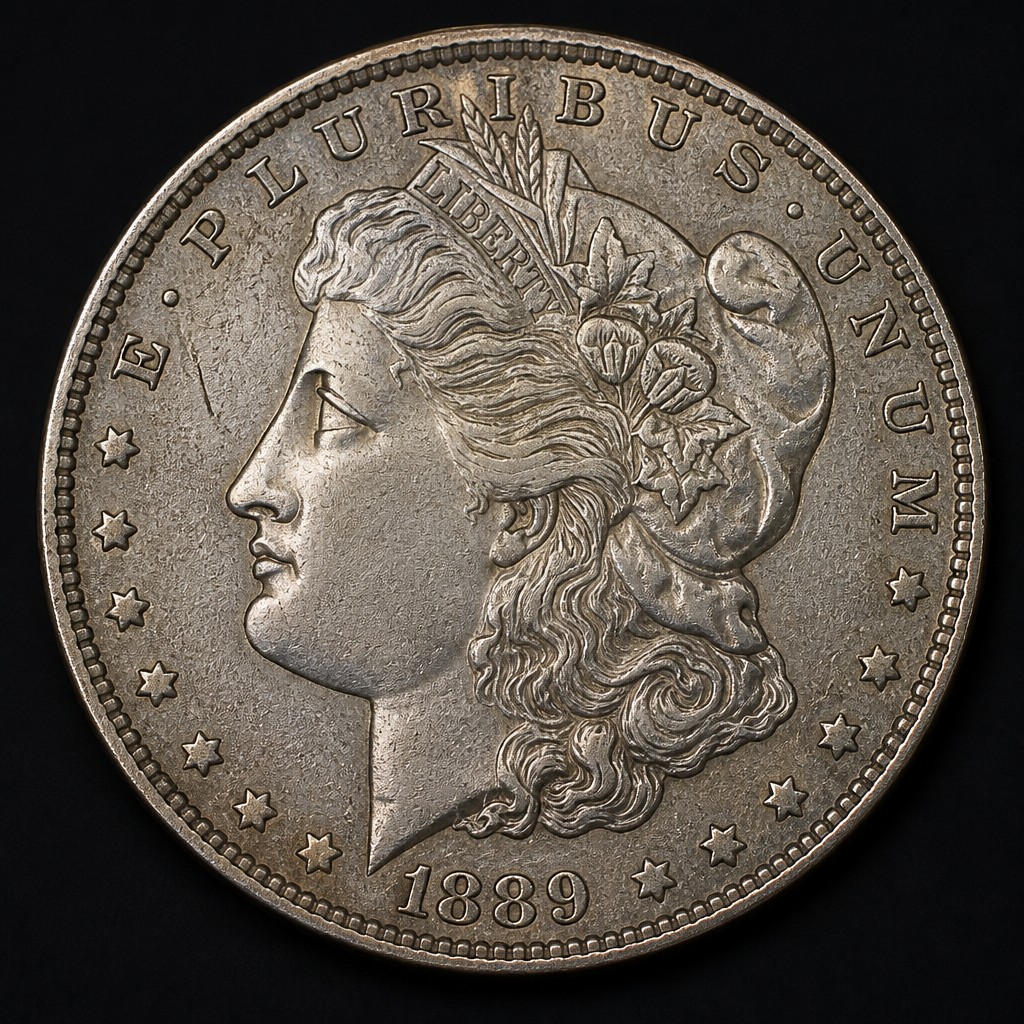
What It Is
The 1889-CC Morgan Dollar was struck at the Carson City Mint in Nevada, one of the more romanticized branch mints of the American West. With a mintage of 350,000, it is one of the scarcer Carson City dates and is widely regarded as a key date of the Morgan dollar series, particularly in higher uncirculated grades.
Obverse Design
Liberty faces left wearing a cap, with wheat and cotton forming a wreath behind her head. "E PLURIBUS UNUM" arcs above, stars surround the portrait, and "1889" is below.
Reverse Design
An eagle with wings spread holds an olive branch and arrows, encircled by a wreath. "UNITED STATES OF AMERICA" arcs above, "ONE DOLLAR" below, and "IN GOD WE TRUST" appears just above the eagle.
Size, Weight & Metal
Struck in 90% silver, 10% copper, the coin weighs 26.73 grams, measures 38.1 mm across, and has a reeded edge, matching all other Morgan dollars.
Mint Marks
Look on the reverse, below the wreath bow near the bottom rim, for the double-letter "CC" mint mark used exclusively by the Carson City Mint. The style and spacing of these two letters should match genuine Carson City output of the period.
Telling It Apart from Similar Coins
Since 1889 Morgans were also struck at Philadelphia (no mark), New Orleans ("O"), and San Francisco ("S"), correctly reading the mint mark is the key step — a "CC" mint mark is considerably scarcer than the other mints' 1889 output. Compare the "CC" letters' size, font, and placement against verified genuine Carson City coins, since this mint mark is a frequent target for alteration.
Grading at a Glance
Wear appears first on Liberty's hair above her ear and on the eagle's breast feathers. Because Carson City coins were often stored in government vaults for decades before release, some dates are more available in high uncirculated grades than their mintage alone would suggest — but the 1889-CC specifically remains scarce and condition-sensitive even in mint state.
Authenticity Red Flags
The 1889-CC is a frequent target for counterfeiters and alterers, most often by adding a fake "CC" mint mark to a genuine Philadelphia, New Orleans, or San Francisco 1889 coin. Examine the mint mark under magnification for the correct genuine Carson City punch style, natural luster and color blending with the surrounding surface, and the absence of tooling marks, scratches, or an artificially applied appearance around the letters. Given the value difference between a genuine CC coin and an altered one, professional third-party authentication is strongly recommended before relying on a visual inspection alone.
Frequently asked questions
What makes the 1889-CC Morgan Dollar a key date?
It has a low mintage of 350,000 from the Carson City Mint and is especially scarce in higher uncirculated grades.
Where is the mint mark on this coin?
On the reverse, below the wreath bow near the bottom rim; genuine examples show 'CC' for Carson City.
Why is this date frequently faked?
Its significant value premium over common-date Morgans makes it a common target for added or altered 'CC' mint marks.
Why are some Carson City Morgans available in high grades despite low mintages?
Many Carson City dollars sat in government vaults for decades before release, preserving some dates in better condition than expected, though the 1889-CC remains scarce overall.