
How to Identify the 1883 With Cents Liberty Head Nickel
How to recognize the corrected 1883 Liberty Head Nickel design that added the word CENTS to the reverse to stop gold-plating scams.
Read the full 1883 With Cents Liberty Head Nickel encyclopedia entry →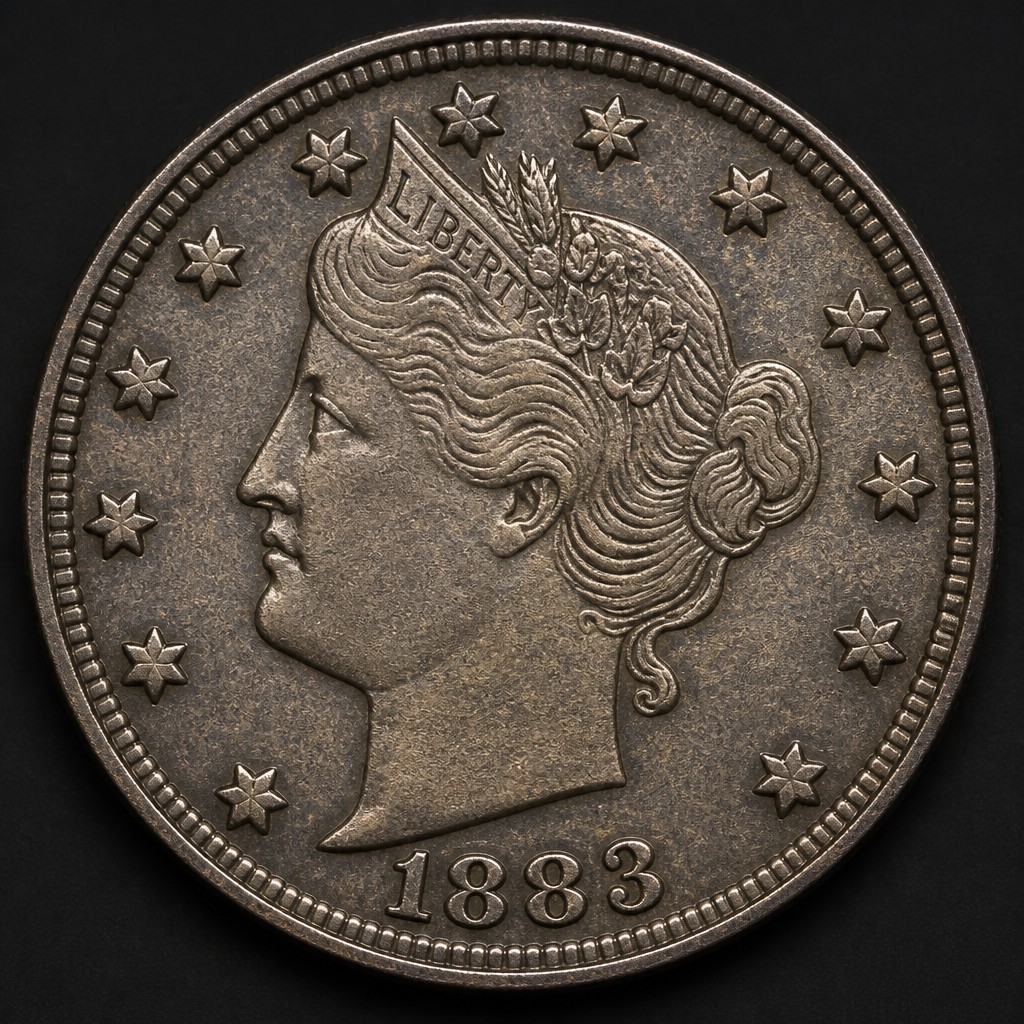
What It Is
The 1883 With Cents Liberty Head Nickel is the corrected version of the Liberty Head design released later in 1883, after the Mint added the word CENTS to the reverse. This change was made to stop the practice of gold-plating the earlier No Cents version and passing it off as a $5 gold coin, a scam that had embarrassed the Mint and caused real confusion among merchants and the public. The With Cents design, once introduced, remained essentially unchanged for the rest of the Liberty Head Nickel series through 1912.
Obverse Design
The obverse shows Liberty's head facing left, wearing a coronet inscribed LIBERTY. Stars ring the portrait near the rim, and the date is placed below the bust truncation.
Reverse Design
A large Roman numeral V sits at the center, encircled by a wreath of corn, wheat, cotton, and tobacco leaves. UNITED STATES OF AMERICA arcs around the top rim, and the word CENTS appears in small letters beneath the wreath at the bottom, the key addition distinguishing this coin from the earlier version struck the same year.
Size, Weight, Metal, Edge
The coin is 21.2mm in diameter, weighs 5.00 grams, is composed of 75% copper and 25% nickel, and has a plain edge.
Mint Marks
All 1883 With Cents Liberty Head Nickels were struck at the Philadelphia Mint and show no mint mark on the reverse, consistent with all Philadelphia coinage of the period.
Telling It Apart from Similar Coins
The presence of CENTS below the wreath is the clear marker separating this coin from the earlier 1883 No Cents variety struck at the start of the year. Despite common assumptions, the With Cents version was actually produced in greater numbers over the balance of the year than the No Cents version struck earlier in 1883, so relative rarity between the two varies by condition and grade rather than by the With Cents type being automatically scarcer or more valuable.
Grading at a Glance
Check Liberty's hair and cheek for the first signs of wear on the obverse. On the reverse, the small CENTS lettering and the ribbon bow at the base of the wreath are good places to judge strike sharpness and wear, since they are fine details that flatten quickly with circulation and are often the first parts of the design to lose definition.
Authenticity Red Flags
Be cautious of coins where the CENTS lettering looks added, re-engraved, or oddly spaced compared to genuine examples, since altering a No Cents coin to simulate the With Cents version would require adding text that was never part of the original die and would typically leave visible evidence. Look for tool marks, inconsistent letter spacing, or surface disturbances in that area under magnification before accepting a coin as an unaltered original.
Frequently asked questions
Why was the word CENTS added to the reverse?
To prevent people from gold-plating the earlier No Cents version and passing it off as a $5 gold coin.
Is the 1883 With Cents nickel rarer than the No Cents version?
It was actually minted in larger numbers over the rest of the year, so rarity depends more on condition than on which variety it is.
Where exactly does CENTS appear on the coin?
In small letters directly beneath the wreath on the reverse, below the large V.
Does this coin have a mint mark?
No, all 1883 With Cents nickels were struck at Philadelphia, which did not use a mint mark at the time.